one afternoon i was picking up my kids from school when i heard seething words from a pink-faced man who – evidently – wasn’t a fan of cyclists.
he angrily scolded me from his truck sitting in traffic: i bent one little rule and he wasn’t havin’ it.
in that moment i paused. whatever my pink-faced future friend believed about me, we are still part of my same human family.
whatever one’s identity, we’re all under the same umbrella, each crowed with God-given dignity. perhaps we live [or vote] differently, pink-faced man and i, but if i try could i find common ground with this guy?
i ask: why?
there’s a big election in a couple of months: it’s kamala harris or donald trump. we hinge our hopes on our favorite one. big data algorithms confirm what we chose two decades ago; there’s no questioning what we [think] we know.
[Note: I usually devote my blog posts to spirituality in the Christian tradition, and there is deep spirituality within cycling; but today I’m focusing on a few simple aspects of biking in my area. The content will apply, to some degree, to many cities in North America that are slowly building out infrastructure for cycling].
Like most American cities, Grand Rapids has developed since at least the mid-20th century with cars at the center of the transportation grid. Over the past several decades, however, there have been meaningful efforts at integrating cyclists into the flow of city transit.
For an inside look at how the Grand Rapids community is embracing bike culture, check out Greater Grand Rapids Cycling Coalition. For an inside look at my personal experience over my decade of cycling experience in this city, read on!
There are a host of ways to enjoy a safer, healthier, cheaper lifestyle in West Michigan, and for residents of Grand Rapids, bike commuting is somewhere near the very top of the list. Our city is, in many ways, rather bike-able. This of course depends on where one lives. These maps are profoundly helpful in getting an overview.
On to the juicy part : the 5 tips!
1. Enjoy the Journey [and Smile!]
Biking is pure joy. Is it the rush of air, the smell of fresh-fallen leaves on a Fall ride, or the energy of the city that gives the most pleasure? The answer depends on who’s riding! I love the social dimension of cycling, the fun of exchanging a smile or conversation with fellow cyclists and pedestrians – and drivers too. It’s a little more difficult with drivers because of the separation that doors and windows cause, but most of the time my interactions with drivers are positive.
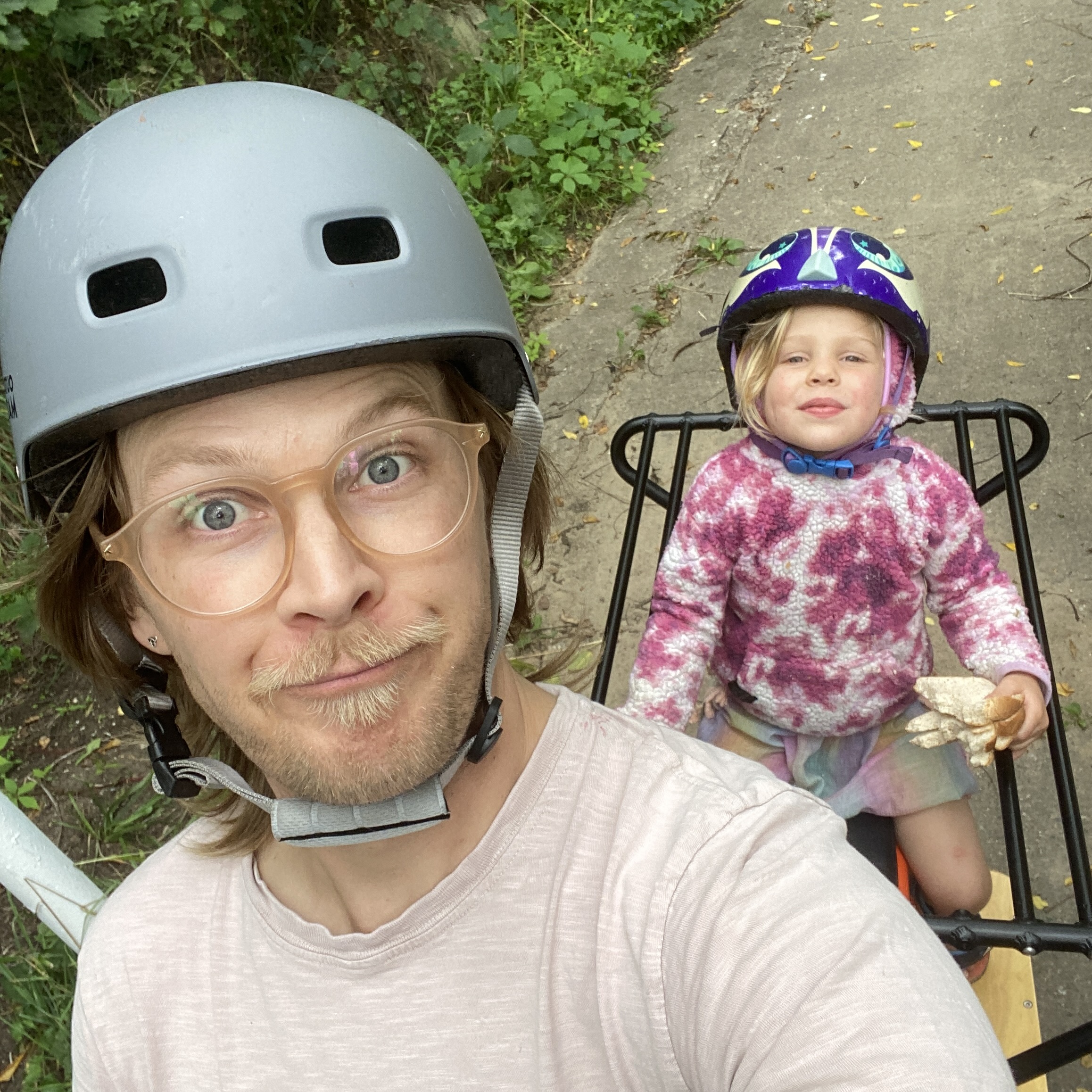
Goofy picture with our youngest kid, Junia
At intersections, especially 4-way stops, there is a routine opportunity to kindly wave a driver on, smile gently, and inject common humanity into the daily commute. According to research, bike commuting is extremely good for our mental, vocational, and financial health too. Just saying.
If American culture has the chance of evolving to genuinely embrace [or even accept] cycling as mainstream, the best advertisement is you and me. Our job is to have fun [getting in shape is the bonus!]. When drivers see us in the open air and sense how much joy is to be found on two wheels, who knows – some might want to join in on the fun.
In my spiritual and religious tradition, there is a longstanding emphasis on care for the natural world. From the very opening words of the Scriptures, we learn the profound beauty and diversity of the natural world God gave us to care for, and the symbolic first people carefully tended to the animals and plants.
From Orthodox Christians to Catholics and Protestants, large swaths of the Christian tradition have emphasized the spiritual practice of simplicity and restricted consumption [ie Mennonites, Free Methodists, Quakers, Catholic Social Teachings].
The earliest biblical roots of stewarding the world we inhabit begins on page 1 of every Bible in the first book, Genesis. In that moving passage of Scripture, we hear in poem form about how YHWH carefully wove together the sky and sea and filled the world with plants and animals.
It is in this edenic world where it all begins, and Adam and Eve are tasked with caring for what had been made.
What joy there is to be found through a slow, quiet, simple life. When I get time in the natural world on a camping trip or bike ride, it replenishes me, and even the small practice of tending my garden and yard restores me.
Fast forward to the present. We now live in a world where we burn over 97 million barrels of poisonous petroleum fuels every day. That is barrels, not gallons, and a barrel of oil is 42 gallons.
Picture it. 4,074,000,000 gallons of oil burned up in a day.
How could this level of consumption not impact the world we live in? How could we expect to pillage our planet home to this degree with impunity? Our air, water, soil, and living organisms keep the score, and humanity is slowly coming to grips with the price of our abuse.
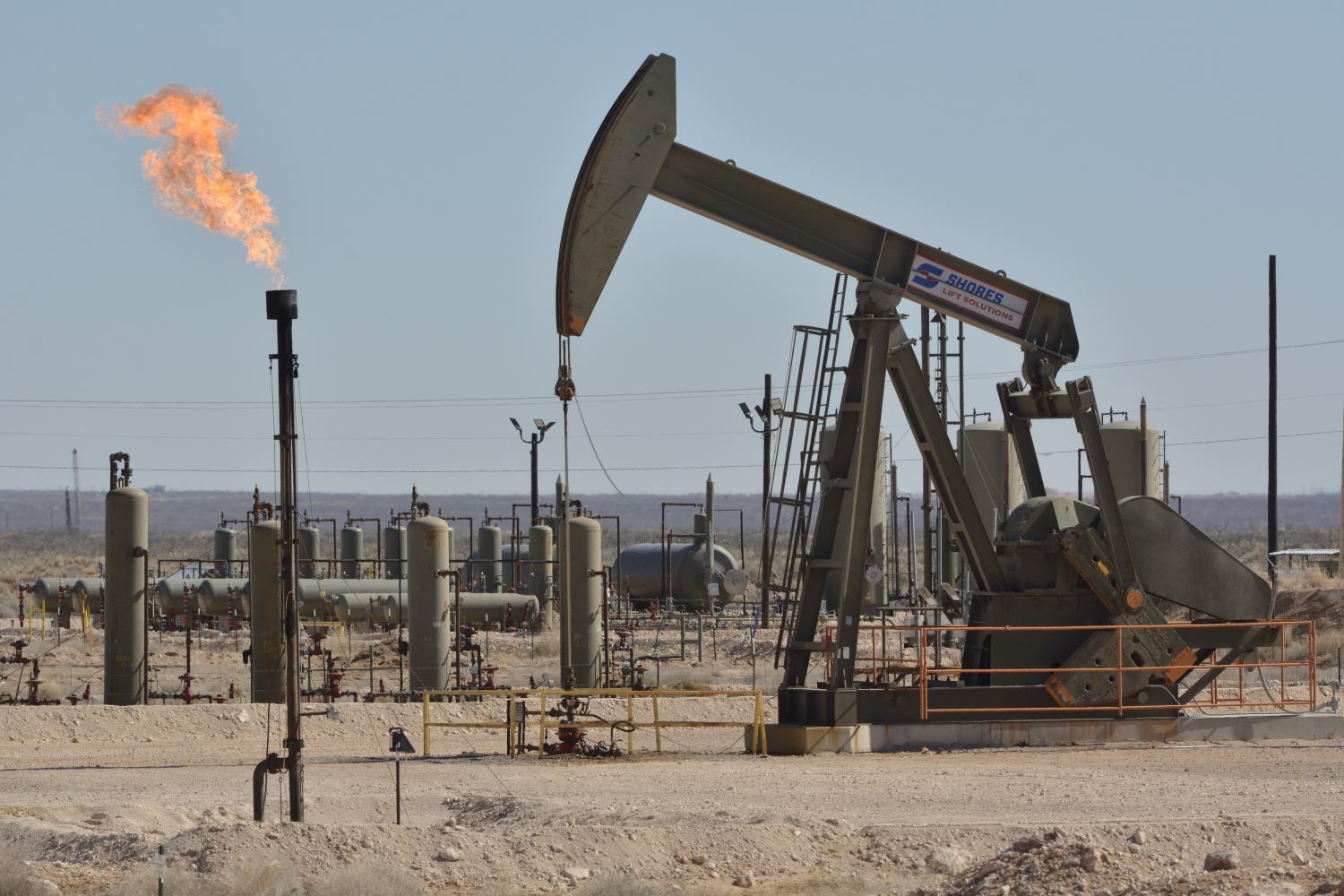
(c)2022/Jerry Redfern – Oil Rigs in East Texas
Scientists give us careful estimates of how much we, as humans, have affected the world, and we are wise to listen to their insights. Even without their data, doesn’t it just ring true that our human activities make a difference? There are over 8 billion people in the world, all with our various levels of consumption, from plastics and petrol to pesticides and other pollutants. It all adds up.
What’s even more sickening is the smug, carefree attitudes regarding regulation from within the oil industry. It’s the very worst of capitalism. If it’s cheaper to “flare” excess flammables, that’s their plan, and who cares that we’re all sharing the same atmosphere.
I sometimes wonder how the world could thrive if billionaires quit buying fuel-hog yachts and G6 planes for themselves [which burn 500 gallons/hour]. At other moments, I am aware of my own excesses. My spouse Kae and I recently traveled to Athens, Greece for our 10 year anniversary, and while we used public transit, I was aghast as I realized how much oil – from jet fuel to diesel to the bunker fuel that powered our Greek ferries – was burned to get us where we longed to go. It saddened me to realize our joy came at such an enormous environmental price.
When I felt sunshine and 72 degrees on a record warm February day here in Grand Rapids, Michigan, it was a terrifying reminder: our planet is swiftly changing, and I myself am part of that change.
On the one hand, I experience existential concern for my kids, my community, and the global community as the changing climate has led to not only increased temperatures, but a corresponding increase in natural disasters. Recently around 1300 hundred pilgrims lost their lives in Saudi Arabia during their Hajj pilgrimage to Mecca. Their organs simply gave out in the 120 degree heat.
On the other hand, I am filled with hope for what lies ahead. There is a 1900 acre solar farm that is planned in Muskegon which will power around 40,000 homes. Cleanup efforts are underway in the Great Lakes region to the tune of $450 million. Positive things are happening locally and globally as we slowly shift to renewable energy.
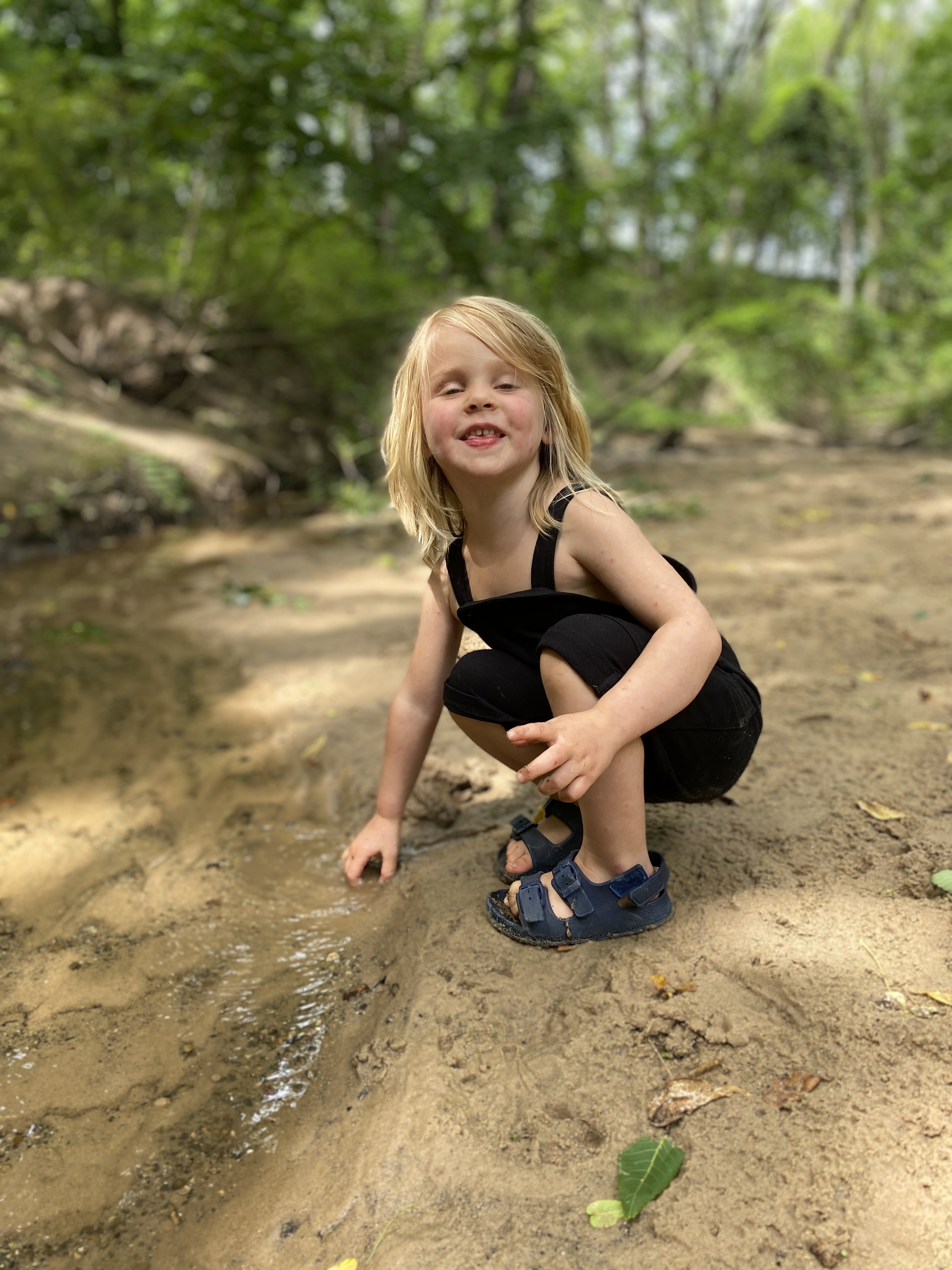
[a local hike here in Grand Rapids with our youngest, Junia]
Renewable energy – solar voltaic, in particular – is the cheapest source of energy in the world. After that, the cheapest is wind energy.
The future is cleaner, quieter, and greener. This gives me joy.
But at the present moment, we don’t know if the progress under President Biden’s Inflation Reduction Act will continue. Through executive action, much of the plans can change course.
Recently, former president Donald Trump asked oil and gas executives to pledge $1 billion to his reelection campaign, promising it would be a “deal” when he reverses regulatory measures under the Biden administration. On behalf of the planet and all humans, let us pray and hope that doesn’t happen. The plan is to exchange short-term gains in the form of cheaper fuels – and more record-breaking profits for oil executives and shareholders – for the long-term gain of cleaner, cheaper energy.
This frolicking with oil elites equates to active decimation of our world, nothing less. Since the 1970s, the oil executives knew the damage they are continuing to cause, yet continue their drilling efforts. Their models for climate change in the 1970s are startlingly accurate, and carbon capture is extremely unlikely to fix it, and will more likely function as a distraction allowing the fossil fuel business model to continue [“drill, baby, drill” oh – and frack too].
Instead of drilling for more oil, what if energy companies pivoted their resources toward the technologies that are proving to be kinder to our planet? After all, solar power is cheaper than any other power source. Electric cars, despite popular belief, are in the long run cheaper to own and maintain, and battery recycling technology only continues to improve. Just like we moved from horse and buggy to Model T, we can move from toxic oil-burning vehicles to fully recyclable EVs.
I dream too of cities that slowly and carefully transition infrastructure to bicycles and pedestrians and clean buses. Who knows what beautiful, clean, quiet opportunities await in the future before us! We can dream and build, but at some point inspiration and imagination need to provide their motivational wind. [That keeps me writing and thinking in the meanwhile].
A redesigned cycling corridor in Amsterdam – credit to the Dutch Bike Embassy
Despite the obstacles, I continue to believe the future contains eventual good, even if it’s difficult journey. Right now, I resolve to embody the care for the world I believe we are all called to practice, even if the projects on my list take time and money. I will also be voting at the local, state, and national levels with climate and environment as high on my list of factors.
When it comes to delighting in the joy of the world God has given us to cultivate, less consumption can lead to more overall joy. It shapes us, too, allowing us to draw closer to others and closer to the heart of God. So, though my/our efforts will likely be imperfect, I’m continue to dream about more ::
Time with dear ones.
Plant-based meals.
Backyard soccer.
Bike trips.
Local hikes.
Local food.
Gardening.
Stargazing.
***
…which will lead to less ::
***
Traffic sitting.
Road rage.
Smelly, carcinogenic fumes.
Out of shape muscles.
Clogged arteries.
Overall burden for the human and beyond-human world.


 ben videtich