Shamed at the Gym

Before moving to San Francisco, I had in mind a particular stereotype. I imagined a demographic of people in their late 20s, maybe 30s. In my mind they are single, high income, childless, working in tech, doing yoga on the daily. None of these things are bad, they’re just somewhat different than my demographic. 

Back then, I was trying to prepare to be around people who are in very different life situations than me, trying to imagine ways to connect, relate, encourage, challenge, unite. I imagined the stereotype in order to foster some kind of empathy-the kind I knew I’d probably need at certain moments. Like today. 

Fast forward to now. That stereotype can sometimes prove itself to be true. Today, as my wife was sick and overwhelmed [she’s 38 weeks pregnant with our second child], Silas [19 months] and I ventured down to the gym in the lowest level of our building. He likes to explore and wave to people working out. 

IMG_4206

He was looking up at a woman doing her elliptical routine when it happened.

My toddler and I were shamed.

With headphones still in, she looked down at Silas [who was smiling and waving at her] then back at me. If looks could kill, Silas and I would both be mortally wounded or dead. She gave us both the look that said, “what the h*!! are you doing in here?” 

The look was rendered complete with comprehensive hand motions.

True, I suppose I could have held his hand for every second of our time downstairs. But to me, there was no harm in letting Silas walk around and wave/smile at the other sweaty denizens of the underground workout room. 

In those moments, I thought of lots of angry things to say to the angry elliptical lady. Part of me was sad, too, that she could respond so harshly toward an innocent toddler and young dad when all we were doing is occupying space and going about an average day.  

I left early, a bit defeated, and decided to trade in my 5 minutes on the stair stepper machine for a 16 floor hike [with Silas] back to our apartment. And now, arriving back in my daily haunt, I’m struck with how God is inviting me to grow into a more spacious and grace-filled kind of life. It’s daunting to even consider publishing how humbling the whole gym experience was, but I’m convinced it’s in those moments that growth happens. 

Only yesterday I listened to Fred Harrell preach at our church on Luke 7:36-50, the story of the woman who anoints Jesus’s feet with perfume and tears, then dries them with her hair. In the story, there is a stark contrast between the judgmental attitude of Simon, the Pharisee, and the deep gratefulness of the woman for the person of Jesus. Convinced Jesus means something to her and to the world, she gives up everything-dignity, financial security, and a good hair day-to honor him. 

Amidst the interactions, Jesus tells a story, a parable about two people who were forgiven very different amounts of money. One was forgiven a debt of 50 coins, the other 500. Jesus then asks, “which person will love the banker more?” Simon, the Pharisee who was struggling with judgmental incredulity, responds: “I think it would be the one who owed him the most money. 

Back to being shamed at the gym.

As I think about the experience, I’m reminded that God has been pretty good to me. I relate more to the one who was forgiven 500 coins than to the one who was forgiven just 50. He forgives me everyday when I have bad thoughts toward others, when I speak harshly, when I fail to recognize and treat others like image-bearers of God. And, on top of that, I have a great family, a solid marriage, family, friends, money in the bank, a place to live. 

Who am I not to extend grace to the angry elliptical lady?

My faith calls me to put down my *rights* and extend grace. But it also equips me to do so. It is only in discovering the depth of God’s grace for me that I can authentically extend it to other people. I am not an endless pool of kindness and generosity. And, quite frankly, I’m still working on how to go about extending grace to the angry elliptical lady. I’m still trying to imagine what is difficult in her life, what is challenging to endure, what prompts her frustration. I’m convinced she has a story to tell that contains loss and difficulty. Throughout the meditations within me, one thing is for sure: I know the source of grace is Jesus. 

God caught the world by surprise with his Son, Jesus. He caught Simon the Pharisee by surprise when he forgives the sinful woman who washed his feet with her tears and dried them with her hair. He caught the people of Jerusalem by surprise when he came back from the dead. 

And now, God is catching me by surprise by forgiving my feelings of ill-will toward the angry elliptical lady. 
Safe and Sacred Space

Sometimes I feel like I can look at someone’s face and read a story. That’s probably a personality disorder yet to be diagnosed, but really I do.

Walking by some folks on the street where I live in San Francisco, I read a tale of loss, addiction, and loneliness. Under cracked skin, dirty clothes, and tattoos there lives a soul who ran away from his problems only to step on the trap of heroine and methamphetamines.

Other faces bear different stories. Make up and designer clothing can disguise a tired woman who is desperately chasing a dream while presently discovering its shallow shell. Away from family and most friends who have known her well, she spends her time with friends form work and dates online. In slower moments, she thinks about checking in on her aging parents in the South but moves the event in her calendar app to a different week. 

In the lives of students who are part of my church, City Church San Francisco, I don’t have to lean on an impression or imagine a narrative. I get to hear the stories firsthand. As a youth pastor, I have the privilege of tuning in to the lives and experiences of students in junior high and high school. What strikes me most is the overwhelming nature of modern life and the insecurities it imbues within adolescents. 

Just recently I was speaking during a Sunday morning talk on the Christian concept of forgiveness. I was trying to communicate how God’s forgiveness of our bad actions is connected to how we are called to forgive others when they do us wrong. I felt like students were getting it. One student, who was clearly hearing me, piped in: 

“I know we’re supposed to love our enemies and forgive people, but it’s just really hard when they bully me.”

At that point, I knew we were going deeper. We were descending into the real world of a 12 year old entering seventh grade. We were descending into the world of a student who encounters everyday dangers and quiet pain. 

It’s easy to read or even hear about another person’s pain and cry a little, maybe think to our selves yeah, that’s really rough. And it is. Suicide statistics reinforce the often dark reality of teenage life.* It is telling that suicide rates are climbing swiftly among 10-14 year old girls.

There is a long conversation to be had about antidepressants, mental health, body image, and societal expectations. I believe each of these as well as a host of other factors play a part in finding a solution.

Amidst the various support systems, my line of work emphasizes spiritual health as the focal point. Youth pastors are part of a large community that seeks the good of people in adolescence, a critical stage in human development. I’ve referred young people to therapists, I’ve talked to parents, I’ve gotten to know the stories of many, and this is one thing I have learned:

Adolescents need a safe and sacred community.

And I cannot imagine a better community than the community that holds Jesus in high regard. Yes, I believe the church is the place to experience deep community in the journey of faith and friendship with God.

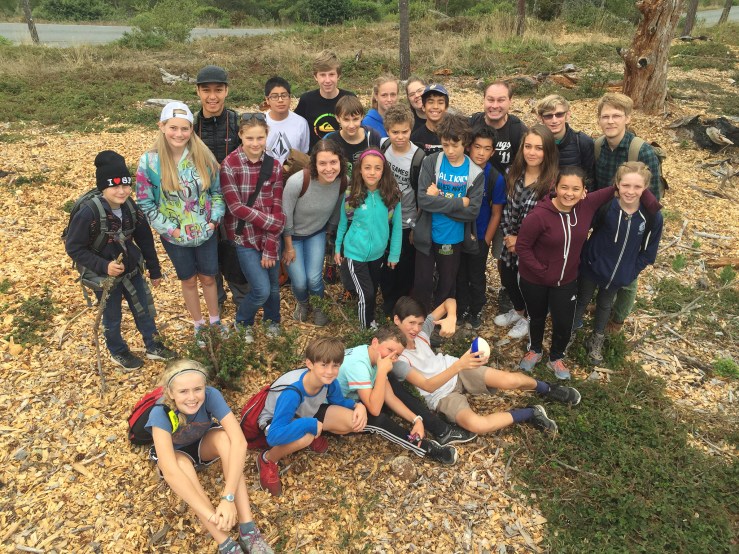
The Back to School Retreat this weekend provided a meaningful way to experience safe and sacred space. Having received feedback from numerous parents, students who came to Point Reyes experienced a safe and sacred community. And this safe, sacred community is a place to experience God, to ask questions, to look deeper into the things God and into the life and ministry of Jesus, God’s Son.

group_photo

Sometimes, for adolescents, this looks like reflective questions and dialogue. I chatted for most of an hour during our 6 mile hike on Saturday with a student who was fleshing out the meaning of following Jesus. That evening, I shared some fairly heavy stuff during our campfire about my faith journey and how, a number of years ago, I experienced the loss of a friend to suicide. One young man sat and stared at the campfire for 20 minutes after that talk. I can only imagine he was contemplating things in his life, wondering and debating with God about matters of the heart.

Yes, young people express faith in any number of ways. Brain development and rapidly increasing cognizance certainly factors in to how students process their spirituality. But being in safe, sacred space is essential in discovering the mystery of God and moving forward in faith. 

Why I Love Zombie Shows

Ok, it feels a little strange to admit this, but here I go. I adore the zombie genre. For years now, I’ve been fascinated with the whole concept of human beings getting stuck in a world where they must fight for their lives against their formerly human brethren, banding together to preserve the human race.

Yes, I’m finally owning up to it. I love zombie shows

Darryl.Motorcycle
Darryl. Copyright The Walking Dead.

Why? Oh I’ll tell you-thanks for asking!

It has taken me a long time to discover this, but I think my passion for zombies stems from how every human being is wired: we want to lead meaningful, fulfilling lives. We want to see goodness triumph over the power of evil. We love stories about how the kid who was bullied about her acne ends up as the CEO of a really cool company. 

Ready for the segue to the journey of faith that I always infuse into my blog posts? Here goes! Hang on! Stick with me-I know zombies might feel like a stretch! 

The final book in the Bible’s New Testament-the Testament featuring the life of Jesus, God’s Son-is a book called Revelation. Not Revelations, just Revelation. It’s called that because it reveals the hope God has stored up for the world since its beginning. Through a course of wild events, the writer, John, has an epic encounter with the living God. The “one seated on the throne” [who I am pretty sure is Jesus, God’s Son] says this: “look! I am making all things new!”

Maybe my zombie thrills are such a draw because zombie movies epitomize the “making all things new” concept. We all desperately want to see things being made new, being made right. We feel every moment with the characters on the show, hoping against all hope that they’ll make it to some safe destination, away from the scary zombies and united as a community, bound together through their experiences. We all seek out the good life-strong friendships that last, enough time/resources for camping and good food, and a legacy that matters after our death. 

Even though it is hard to make sense of this sometimes, we want our lives to matter. We all have a picture of how life is meant to be lived, and we all seek to somehow make sense of things. We all long for something good. In zombie movies, the characters are forced to figure what life is for and whether they want to survive in a difficult and dangerous world.

In The Walking Dead, a rather intense yet well-executed show, Tyreese, a really cool black guy, loses his girlfriend [in part, at least] to a tragic sickness. Though stricken with grief, he finds a way to move forward with his other companions, and he realizes his life still matters, that people still count. He goes far out of his way to keep a tiny baby alive and return her to Rick, her father, and Carl, her brother. He discovers hope. He finds deep meaning in the companionship he discovers in the group of survivors who have banded together during a very dark and dangerous period. 

The screenwriters of The Walking Dead just can’t seem to keep religion out of their show. It just keeps showing up all over the place. So many of the characters struggle with faith and doubt. Some lose their sense of purpose and get angry at God. Some question whether God cares at all. Others, like Tyreese, seem to cling to the hope that God is giving them hope and strength to move forward.

In the show, they think of God in a lot of cliché sorts of ways. God, in The Walking Dead, is pretty much a one-dimensional force that weak people cling to for comfort. At least on the surface, that’s what you might see. But it’s deeper, more complex than that.

In another episode, zombies try to take over the barn in which our beloved characters are sleeping. The zombies push against the barn door. They are thirsty for blood, hungry for flesh, and bent on destruction [I could insert a great connection here to how our lust for money, promiscuous sex, and power can be like internal zombies waging war on our true and better selves, but I’ll refrain].

Turns out, the zombies don’t take over the barn. As the band of survivors push against the door, the gentle rain breaks into a thunderstorm. The scene cuts to the next morning, and two heroines step out to realize all the zombies were crushed by trees that had been struck by lightning. As they stare out at a beautiful sunrise over a field, they express deep sadness about their losses. But they also look at the rising of the sun and the serenity of the moment. They wonder if hope could really be out there.

I don’t know about you, but I have the same kinds of moments. I have my share of doubts about how God is at work. I wonder about how human relationships work, and why the earth is so filled with sadness, why I keep walking past people on the sidewalks here in San Francisco who are so angry with each other.

But I also have a sense of hope, a sense that God is making all things new. That’s my view of why the characters in The Walking Dead keep moving forward. Sometimes they have faith, sometimes it wavers, but they walk on with the mere idea that something better could exist.

And so much of the time, that’s what our faith looks like. So much of the time, those of us who don’t give much though to God in any typical way are actually giving our Creator all kinds of glory simply because they are acting as if there might be something better out there. There might just be a God who has revealed himself to the world, a God who has done things in history and who is working now in not-so-subtle ways to continue revealing himself to humanity. 

You probably wonder if something better exists. You probably even work toward it and invest yourself and your resources in this idea. Parents often believe this when they believe their child might have better opportunities than they did. Friends believe this for their friends when their friends can’t believe it for themselves. 

When you do exercise hope, even with the smallest portion of it, I’ll bet-if you look close enough-you’ll discover God at work in that moment. And that might just tease you into believing he created you, fills your lungs with air, and desires the best for you.

And you might just end up believing that he’s making all things new. 

And that could change everything.

3 Reasons Why I Go to Church

Here’s a few thoughts that have been stirring for quite some time now. But only recently have I come to my keyboard to record them.

I want to write about church and why it’s important.

IMG_3132
The church of the Holy Sepulchre in Jerusalem. The earliest Christians bear witness to this as the place Jesus was buried for 3 days.

Ok, so churches often meet in particular places, but really the church is people.

But indeed, the term church often carries with it a host of memories. Maybe yours is of a Christmas Eve service with candles that ended with Silent Night. Or it’s of that long sermon on a hot day that had you fidgety and ready for ice cream. Maybe your church experiences are categorized via your sensory systems: the incense, the cologne people wore, the sound of a Hammond B3 or a pipe organ, guitar chords, a chorus of singers swaying, hands clapping.

My own experiences of church are fairly diverse, all things considered. I grew up in a church that was part of a really good preaching tradition. Concepts like the judgment of charity, of “stepping out of the boat,” and the prayer of, “God, throw the rock here!” were all concepts that moved me and challenged me. Musically we did ok, though our clapping was occasionally offbeat.

In college I was exposed to new things, like a church where I interned that changed its entire seating and design layout every six weeks and sometimes played songs by Coldplay, U2, and Elvis Costello. After college I began seminary, and as I did I also began my first real job as a youth minister in an Episcopal church from the “high church” Anglican tradition, which means they really like structure. Worship was regal yet somehow it was also warm and inviting. I sang in the same choir that Gerald R. Ford would have heard when the Grace community met on Cherry Street in Grand Rapids, just with different people. Lift High the Cross was one tune in particular that always arrested me spiritually-check it out sometimes and let it get stuck in your head for the rest of your life.

Later, I transitioned to lead worship in a small Reformed church in Wyoming, Michigan. It was casual, relaxed, with an established mission for living out Christian practices by loving one’s neighbor. Church was relationships, connections, common purpose, common life.

Since April I’ve been worshiping with a new community as a pastor for youth and families. It’s also part of the Reformed tradition. We sing some amazing and moving songs and listen to some gripping sermons. There’s also a deep yet inviting liturgy that guides the whole thing along, and the words motivate us to go out and invest in the community we inhabit. Thankfully, the church itself provides numerous opportunities for this.

So here are my three things [skip to the last one if you’re in a hurry]:

1. I’m easily distracted from imitating Jesus.

There’s this ancient song in the Old Testament. Found in Isaiah, it’s one of the “Servant Songs.” Chapter 53:6a says this: “We all, like sheep, have gone astray, each of us has turned to our own way…” 

Jesus [the famous guy who turns out to be the servant that Isaiah was talking about] invites us to take up our crosses and follow him, to imitate him. This is quite a challenge. And that’s why I get distracted. I need a weekly pattern to keep me oriented to God and caring about others, a consistent habit that keeps me imagining a more integrated way of living that extends generosity and grace to others and hope for people caught in destructive patterns of living. I’ve heard plenty of people talk about how they love Jesus but not the church, and I get how church can be frustrating [there are people involved!], but after the dust settles I’m confident Jesus as well as the earliest leaders of the church intended for us to consistently meet together [Hebrews 10:25].

2. Church sheds meaningful light on everyday things.

For all the normal stuff of life, grocery trips and soccer games, road trips and office trips and embarrassing trips like when I flew head-over-heels down the stairway at my high school during the winter of my junior year, yes! for all these experiences, church is a place to find meaning.

By default, the average American watches Netflix programs, cooks a meal, gets a teensy bit annoyed in traffic, and sort of tries to be a good person. Church offers perspective for why movies are meaningful, reasons to enjoy the food God provides, how to see other drivers as created by God, and a path toward actually becoming the better version of yourself that Jesus sees.

3. Church is a community that turns faith into a verb.

In the words of my old friend Steve Argue who now works at Fuller Youth Institute, the church is a “faith-ing community.” Even as a pastor and genuinely committed Christian, I wonder about things, I doubt, I wrestle with God. But I’m doing that in the context of a community that is doing faith actively.

It doesn’t always work out perfectly, but we actually want to love our enemies as Jesus instructed. We actually believe there is purpose to life beyond getting oneself ahead. There is a God to be adored and understood most clearly in this enigmatic person, Jesus, who did miracles and changed the world. There are issues to confront ranging from confronting white privilege to preventing genocide.

There’s this song that really moves me. It’s all about eating and drinking in the fresh and revived world that Christians believe God is ultimately bringing about. It’s about experiencing full connection with God and rich community with others. And, like church, tasty treats are involved.

Whether or not you believe that God created us, whether or not you think Jesus was for real, and whether or not you think we are made for eternal connection with God and one another [and this involves tasty treats, of course], I’ll bet you want to believe it. And I believe you were made that way, with the hope of good things that last engraved on your soul.

And to think, your deepest longings might just be true.

That, friend, is reason enough to go to church.


Cynicism: The Downhill Slide to Apathy

Some things come so easy in life. It’s easy to breathe, easy to eat, easy to enjoy a great movie. It’s also so incredibly easy to become cynical.

How often do we exude a cynical, scornful, maybe sardonic attitude toward others, even people we love? The political climate and the current election cycle in particular brings this out of us in a special sort of way. We are so quick to dismiss, quick to disown, quick to slide into a lackadaisical sense of self-asserting cynicism. Well my friends, this only leads to crippling apathy. 

IMG_3510
I tried to find a picture that captured apathy. This is the best I could do.

This downward slide toward apathy can begin quite early in life. Remember being a kid? Remember how you watched other kids put down each other, making themselves feel better about themselves? The bullies in school thought they were getting ahead by making other kids feel awful, but in reality they were simply hurting others and creating memories that sometimes never fade away.

For me, I still remember when other kids in my fifth grade class made the connection between the minty muscle rub, Bengay, and its implication for persecuting me. By the cubby boxes where we kept our personal items, Kory-the coolest kid in our class-dubbed me with the title that I would fail to shake for the many long months of that 1997-1998 school year. Ben-gay. There you go. Bullying and taunting leaves marks, scars that last for decades. I am not bothered so much anymore about having been called Bengay in fifth grade any more than you are bothered by the insults you received during your formative years-or even now, but the fact that I remember it reveals how painful it was.

But we continue the same crudeness that marked elementary school playgrounds and junior high locker rooms. We just change the format, moving toward a disdaining, self righteous, and dismissive kind of humor that decimates, crushes the distant “other.”

The educated are especially capable of this kind of easy scorn. Right now, progressives are quickly branded as amoral communists who cannot define right living while conservatives become xenophobic ostriches who can’t foster a bit of sympathy for someone different than them. It’s not too terribly different than 5th grade, is it? I live in San Francisco, so I tend to hear a bit more bashing of conservatives than I did back in the Midwest. There, I had only a slightly more balanced diet of who bashed who. Slightly, mind you.   

Known as one of Jesus’s brothers, James had some serious words about our words. In chapter three of his New Testament letter which many scholars perceive as a written sermon, he says this:   

“All kinds of animals, birds, reptiles and sea creatures are being tamed and have been tamed by mankind, but no human being can tame the tongue. It is a restless evil, full of deadly poison.”

Deadly poison? Surely, he overstates. Or maybe not. Have you been on Twitter or Facebook recently? Have you listened in to the world of politics? Our God-given desire to promote meaningful change and respectful community so quickly devolves into cynical denunciation of others around us. Before we are aware, we become numb, apathetic.

Just verses later, James suggests an alternative:

Who is wise and understanding among you? Let them show it by their good life, by deeds done in the humility that comes from wisdom.

I literally just breathed a sigh of relief. A good life speaks vital words to communities that desperately needs purpose. A life well-lived imbues a sense of hope by modeling a sense of God-given humility stemming from wisdom. Humble folks have a harder time being cynical: their wisdom, earned by honestly observing their own foibles, reminds them that they have received a lot of grace. And a lot of forgiveness. And this leads to a sense of indebtedness toward others instead of a cutting and self-asserting I-know-better-than-you kind of mentality. 

But where does it all come from? Again [surprise surprise], James helps us as we follow his logic: 

…the wisdom that comes from heaven is first of all pure; then peace-loving, considerate, submissive, full of mercy and good fruit, impartial and sincere.

James was a Jewish Christian, and in the minds of 1st century Jews, heaven was the place where God is [fully. see your local pastor or rabbi for further details]. Wisdom that comes from heaven is wisdom straight from God. And look at how James describes wisdom. It is pure, merciful, submissive, impartial, sincere. It is not apathetic or cynical. And it certainly is not easy. It’s easy to dismiss, to roll our eyes and look down our noses at others who understand things differently than we do. It’s easy to roll downhill toward apathy land where nothing really matters-not even people [even people who we thought we cared about]. 

Christian sisters and brothers, we are called not to what is easy, but to what is hard. Resist cynicism, scorn, and the easy words that come to us that cut others down. Don’t roll down the easy path of subtle hate that leads to apathy. Instead, practice love, forgiveness, peace, submission, mercy, sincerity. 

It may not be easy, but I believe it’s what we are called to. And, if I’m honest, I’ve got my work cut out for me. 

Rights, Responsibilities, Refugees.

Currently I am in recovery from an exhausting weekend. On Friday morning, I left San Francisco for Holland, Michigan, where I was to interview with a board of representatives from the Reformed Church in America as part of the ordination process for ministers of word and sacrament. Hopefully my ordination will be in the Fall.

The trip to Holland was great. I flew into Grand Rapids, stayed with some very dear friends, then picked up Silas, our toddler son ,from my in-laws who live just down the street from our friends. After a few moments of relaxing and catching up with my in-laws, I made my way to Holland to spend some precious time with my own family at my brother and sister-in-law’s beautiful new home.

Soon, it came time for my interview. It was an interesting setup. A group of about nine or ten pastors, elders, and theologians asked various questions about my sense of call, how my family has responded to the strains of pastoral ministry, and what compels me to participate vocationally in the work of the church. The questions reinforced how much growth has already taken place in my life, but also propelled me to continue my journey of development. I came away from the meeting encouraged and ready to continue in my role with the backing of more trusted leaders from my church network.

All too soon, it came time to leave, and I quickly gathered my things. My mother-in-law, Stacy, was kind enough to take me to the airport. With a sense of uncertainty about my own skills as a dad, I boarded the plane to Dallas for my connecting flight to San Francisco. It went really well. Silas ate snacks until he fell asleep in my arms, and I took time to reflect over the weekend’s events.

IMG_4011

Arriving on time in Dallas, I made my way to the gate where I’d continue proving my dad skills all the way back to our little apartment on the fifteenth floor where mom was waiting for us. But this was not to be the case; there was more in store than I could have imagined. With cinematic timing, the airline worker grabbed her microphone and said these words:

“For those of you waiting for flight #499, service to San Francisco International Airport, I have some very bad news. From the bottom of my heart, I am so sorry, but your flight has been cancelled. Please proceed to gate 27 for rebooking.”

Immediately, our group began complaining to each other. I noticed two young women start saying to each other, “seriously, like, what the f***? Are you f****** kidding me?”

Our rights seemed compromised. We all sort of hope that by booking a flight we’re guaranteed that all steps in the process will work out. Nope. Forget about rights, I guess, because it just doesn’t work that way. I had no power, no options, and an 800 number that wouldn’t prove to be useful.

There was a long wait in line at gate 27 that consisted of making *lots* of new friends because of the outgoing nature of my toddler. Ironically enough, the two young women [they were probably about 13] ended up spending some quality time with Silas, sharing their stuff with him and playing. It was pretty cool to see that turnaround. Eventually, I received meal vouchers and a possible discount at a hotel that apparently did not have a shuttle. After stepping out of line, I realized it was a half hour away. And I would also need to pay $130 for about 4 hours of hotel use. Oh yeah-and an Uber ride both ways.

As I contemplated my frustrating options, a man swung by in one of those airport golf carts that differently-abled folks use to navigate the terminals. First, he asked me if I had any other kids and when my flight left from DTW. Soon, it dawned on me that he was presenting me with an option for help. Hallelujah, right? My relief faded as he took us across the terminal and down a hall to a room that, if I could describe it as accurately as I could, functioned as a disorganized hostel with no showers. There was a flouresent-lit makeshift office where I checked in [meaning, they took my boarding pass and put it in a drawer], then I followed them through a glass door behind the office where they were dragging two cots piled with a couple airline blankets each.

It was just before midnight, and I was exhausted, wondering how to care for my son. He had never slept on a cot. I did not dare tell Kaile, since that would only add stress to her thought life as she received occasional update texts from me as I tried to reassure her that we would be ok. Or, as she attempted to remind me that would be ok.

Finally, just after midnight, Silas fell asleep on the stiff cot, a tiny bundle of exhausted joy, probably unaware of exactly how we had ended up at a makeshift hostel across the room from a gaggle of teenagers.

Now, it was my turn. I would get the sleep I desperately needed and wake up the next day refreshed. Not so. Our proximity to the glass door [which was connected to a glass wall] allowed not only fluorescent light into our entire sleeping area, but also the noise of other bedraggled travelers from every part of the world. One man with a thick accent loudly protested his circumstances without as much as a reminder that he was not the only one who was stuck in the terminal in a makeshift hostel. I couldn’t blame him that much, though, since I was inwardly annoyed in the same kinds of ways.

I tossed and turned. By six the next morning, the lights were on and were we not-so-subtly encouraged to get ourselves going. That’s when it dawned on me, and I heard a tiny voice within me say this:

Ben, you wouldn’t make a very good refugee.

All the protesting in the world could not change the situation that I was in: the fact that I was struggling to sleep in a loud makeshift hostel with fluorescent lights, the presence of total strangers with their own stories to be shared, the needs of my tiny son. None of these things bode well for my sanity.

However.

These rather extenuating circumstances did help me build empathy with peoples throughout the world who are totally uprooted from their home communities because of genocide or war. It helped foster within me a sense of solidarity with communities that experience displacement, whether short or long term. When I pause and get honest with myself, I know full well that my airport difficulties were first world problems. Folks like me have the resources for 2400 mile flights, so should we really be that shocked when our system backfires? Should I be mad that one flight crew, for whatever the reason, did not make it to flight #499 to San Francisco?

Maybe.

But I guess I’d rather do my best to let God teach me something. No, I don’t think God ordered a couple pilots and stewards to stay home so one young dad can learn about solidarity with refugees across the world. But I do believe this, my paraphrase of Romans, a letter in the Bible’s New Testament, the part of the story that happens after Jesus shows up: “God works all things together for the good of those who love Him and who are called according to his purpose.”

God is pointing out to me how much I can learn and grow on account of the strange and unexpected events of Saturday and Sunday. Maybe the good that God is doing through this exhausting weekend will do good for other people as I share the story in the future or as you read this post.

But there are still other things about my airport experience that I’ll never forget. On Sunday, after my tiring night in the makeshift hostel, I put Silas down for a nap under a phone carrell in a seemingly abandoned portion of terminal B. I rocked him to sleep then placed him in my blazer, which in classic dad-fashion I had placed on the ground as a pad. There are few times when I have felt as close to my son as I did during our season of airport displacement. When he woke up from that nap, he crawled over me, giggling and smiling, and that was what woke me up [come on, it’s precious!].

For the learning and for the love that grew between my son and me, I’m thankful. And I guess I could also look at this like a set of nice moral lessons. But no, I really do think God is inviting me to receive the experience, with all its craziness, with an eye to how God is genuinely making good come from bad.

For the time of learning, and for the chance to love my son in a deeper way, thanks be to God.

Spiritual Formation Begins [at Home]

Painted.Ladies

I just sent out a version of this post to families at my church. Check it out there if you’re interested. Otherwise, read on!

***

Summer continues, and with it a seemingly indomitable sense of freedom for so many of us, an unstoppable wanderlust. Many of us will find ourselves away from our home communities and in various parts of the nation and world over the summer months. I remember the trips we took as a family with great fondness, the weightless way I felt packing a small bag of goods while my parents worried about whether or not I had enough socks, the feel of cruising far from home in our teal 1996 Astro van.

One trip to the American West comes to mind. I was about 14, I think, when we visited Glacier National Park in Montana. The year was 2001, and we had only recently discovered that Y2K had not ravaged the internet. Not entirely anyway. As we traversed the byways of the Great Plains and made our way to the National Parks, my mom made note of how intricately God created the world. She had a way of letting us know how she was spiritually processing the experience, and that revealed to me how her confidence in God made a difference, even on vacation. She would often read a Psalm in the morning and we would begin our vacation days with a few simple prayers of gratitude, asking God to be present with us.

The way vacations happened in my family made a big spiritual difference for me. Looking back, I realize we were not taking a break from the spiritual journeying that happened at church. Instead, we were continuing the spiritual journey in other more ways. The ways we experienced God were radically influential precisely because I saw the integration of my life with God at church merge with my family life.

This year my family and I will be doing a short staycation here in San Francisco and taking time to see a few different places in the area. We are also doing another little adventure in August and going to Stratford, Ontario, for a week of theatre with Kaile’s parents and brother. As our son grows and vacations commence, we are excited to discover new ways to introduce him to Jesus and to the journey of faith that orients us to the God who created us. Seems vacation time is the perfect time to journey forward with our Maker.

It’s something about the sights, the newness, the readiness that comes during vacation. It’s something about leaving your home in the early morning to catch a train or place.    It’s something about being somewhere completely new and breathtakingly gorgeous.

In all these places, God is there. So.. will I acknowledge Him?

Rescued at 1:36am.

Let me be honest. Having gone to sleep early, I woke up at 1:36am last night after a very full day at my new job. I’m a youth pastor now [with some other things also on my plate] at an urban church in San Francisco, California. Between the various stresses that have marked the recent season of transition, my mind was filled with anxiety stemming from an upcoming event at our church that I am planning.

I could not go back to bed.


elah.jpeggy
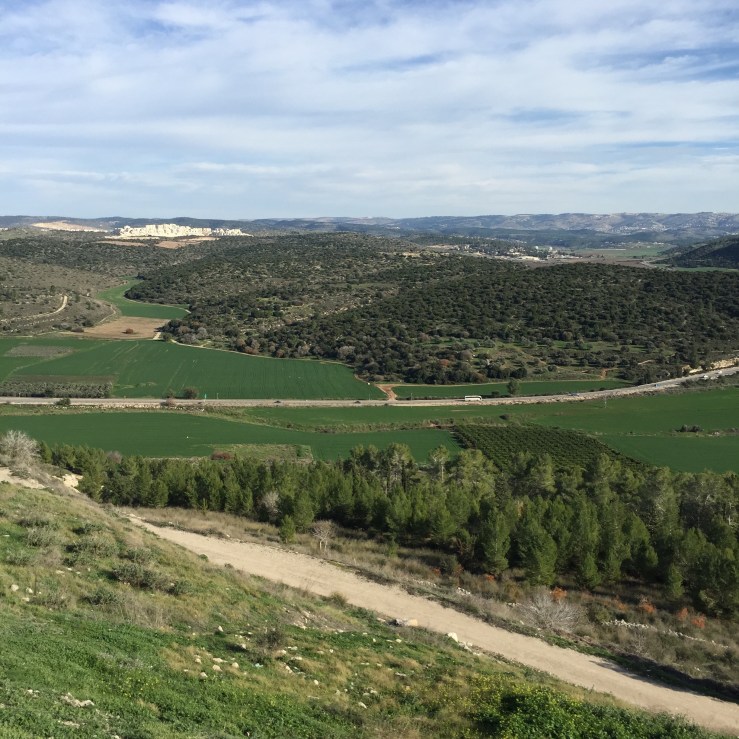
the valley of Elah, where the biblical David found Goliath [just for fun]
What choice had I? It was clear: I had to seek refuge. I turned to our family Bible. It’s a wide-margin leather Bible we received as a gift prior to our wedding. Like a hungry teen searching the fridge after an exhausting day, I asked God to provide me with nourishment. Soon, I felt directed to the Psalms. The 103rd Psalm captured me within seconds.

We had left this family Bible out at our wedding back in 2013 with instructions for our guests to annotate its text and note chapters and verses that had been meaningful to them over their years. People I love dearly and folks on my wife’s side that I barely knew filled the margins with reflections and affirmations. When we transitioned from the RiverTree, the church in Grand Rapids I served for three years, we repeated this annotation practice and received the gift of our congregation’s thoughts and responses to Scripture. And now, reading this Bible is like reading Scripture with a host of spiritual friends.

Psalm 103 happened to have a little note from my parents next to it as well as a message from my cousin Chad and his wife Jessica. Here’s what I sensed God showing me last night, during a moment of anxiety. 

Verse 1-5

“Praise the Lord… who redeems your life from the pit and crowns you with love and compassion, who satisfies your desires with good things so that your youth is renewed like the eagle’s.” 

You really should read this Psalm. It’s that good. So, honestly, I’m not sure how youthful eagles are, but God has deeply satisfied my desires for as long as I can remember. I grew up in a great family and maintain good relationships with all of them. Though I had my share of struggles and issues and still have tons of problems, God has met me with grace at each turn in life. I went to an amazing undergraduate college and I’m in close touch with numerous friends from this all-too-brief chapter in life. Seminary was filled with learning and spiritual growth. During this time, I met my lovely wife, Kaile. Sooner than we both expected, we were given the gift of a beautiful son, Silas. Sooner than we expected, we were invited into a faith community in a distant yet beautiful city for a job that is difficult but already rewarding. Sooner than we expected, people have reached out to Kaile and me in friendship. God has been redeeming me for a long time, and I guess I shouldn’t sit here anxious that he will stop now. 

Verse 8

“The Lord is compassionate and gracious, slow to anger, abounding in love…”

Sparing you the details, this phrase appears much earlier in the Bible, and it is repeated in various parts of the first [“Old”] testament, Genesis through Malachi. There are moments when I need to be reminded of God’s justice, moments that I need to know that God can take care of people responsible for genocides and rapes and recruiting child soldiers. He can even take care of that lady who was really mean to my dad when he was helping us get moved into our new apartment here in San Francisco [ok, it wasn’t that big of a deal!].

This phrase strikes me, and all of us I think, with a rich sense of God’s justice, but even more so of his love. The second [“New”] testament features Jesus, God’s Son [crazy, I know!] who embodies love. In one little New Testament book, I John, the author tells us in chapter four that God himself is love. It’s as plain as that. At his core, the God who created all things is love itself. He defines it! Amidst the anxieties that struck last night, I am reminded that if God, abounding in love, who is identified as love, loves me and my little family. It’s not just a general, abstract, conceptual love, no. It’s a personal love.

I could keep going with that theme for a long time, but there is more Psalm left, and I should close this up before I lose you entirely.

Verses 15-16

“As for man [and woman too, of course!], his/her days are like grass… the wind blows over it and it is gone…”

In case you hadn’t checked on this lately, you’re going to die. That reality puts all of life in perspective, doesn’t it? And no matter how cool my turntable and bicycle and furniture are, just like my life, they won’t last forever. God is reminding us of the brevity of our lives, and with good reason! He wants us to enjoy life! I used to think God was pulling some kind of doom-and-gloom tactics so we’d notice him, but no. Not so much. Read on. That little section on people fading away like plants is buttressed with a sweeping finále.

Verses 17-18

“But from everlasting to everlasting the Lord’s love is with those who fear him, and his righteousness with their children’s children…

Do I need to wax on about God’s love? Right after we’re reminded that our lives are limited, the focus shifts to how much we are loved. Oh yeah, and then, after that, there’s that bright Christian hope of being raised to eternal life when Jesus returns to finish the work he started on earth [see the New Testament book of I Corinthians, chapter 15]. Just like Jesus was raised from the dead, we will also be raised. 

Verses 19-22

“…Praise the Lord, you his angels, you mighty ones who do his bidding, who obey his word. Praise the Lord, all his heavenly hosts, you his servants who do his will. Praise the Lord, all his works everywhere in his dominion. Praise the Lord, O my soul.” 

Ancient Jewish followers of God pictured the world totally differently than we as post/modern people imagine it. We have this tendency to strip away everything except empirical data. They saw things differently, poetically writing about the various layers and facets of the spiritual world. God had created all things, and there had to be more, good and bad, than what meets the eye.

I have, over my life, experienced a great many moments that seal, in my soul, what I believe in my brain. I do believe God created; I see a world filled with beauty. Though obstructed with so many evils that we as humans perpetuate, God has still blessed us with so many good things. One good thing is music. Just last night, I walked home with Kaile and Silas alongside a huge group of people that had just filed out of the San Francisco Symphony. I don’t know which composers they drew from that evening, but I have no doubt it was beautiful.

Over my lifetime, God has spoken over and over again in my life through music. Most recently, it was at my new church. Karl, the worship leader [or whoever] picked a song that I had sung and led for a number of years. I had sung it with students at a little Episcopal church, Grace, and sung it with [mostly] middle-aged folks at RiverTree. And now, I was singing it with a lot of Asian people in the middle of San Francisco. It was hard to sing, because it felt so deeply true last Sunday. Though I was filled with emotions that day, I sang some of it:

You alone can rescue, you alone can save; you alone can lift us from the grave

You came down to find us, led us out of death, to you alone belongs the highest praise

Written by an English guy named Matt Redman, the song is called You Alone Can Rescue. If your heart doesn’t believe the words, doesn’t it want to believe them? Would you entertain the idea of letting yourself wonder if they could be true? That Psalm 103 is really speaking true things about God?

I pray that each of us finds God at work in the cracks and fissures of our lives. I pray we see God at work in the counseling session, in the workday, in the park, at the ball game, in our marriages, in our friendships, in our failures and in our moments of triumph.

And I thought I’d take a moment to share my experience of God’s care for me during a 1:36am moment of nighttime anxiety.


An Open Letter to RiverTree Community Church

I still remember the very first contact I had with my RiverTree church family. It was a weekday afternoon, and I was privileged to sit down with our very own Christian Shearer at a Biggby coffee place in Byron Center. At the time, I was engaged to my wife and entirely anxious about the future. Gently, Christian shepherded me through the details of my potential role leading worship and guiding a ministry team. He talked about the potential for continuing to discern my vocation and learning how a small, missional church operates, how relationships matter so deeply and community involvement drives vision. He has consistently supported me at every point of life, as long as I have known him.

Before I knew it, I was hired and we were swept up in our new community. We received so much grace as we transitioned; we must have missed five or six Sundays that first summer alone. Granted, we were engaged, then married; but regardless, we are so thankful for the flexibility we experienced.

abstract_tree_art_by_naitsirhc_nitsuj-d4tjj0r
photo credit: Naitsirh Nitsu

We cannot say enough about the generosity and grace that mark the community we call RiverTree. Loving God and loving one’s neighbor are not catchphrases; they are the deepest sense of mission and identity, the truest marks of every aspect of the purposes directing this faith community. These spacious concepts, breathed through Scripture, are the signposts for evaluating everything RiverTree pursues.

Our Grove grasped this reality. The Birds and the Sischos walked with Kaile and me over the bulk of our time at RiverTree, encouraging us and respecting us in our journey. Our Grove met us where we were, but gently prodded us forward in love and faith, carefully helping us to humbly yet boldly practice our faith. When we were at our financial low point, our Grove cared for us in a very practical way: they purchased a high efficiency washing machine for cleaning our cloth diapers. Tangible and spiritual needs alike were, at all times, our Grove’s priority.

The whole of the church did, in its own unique way, what our Grove did in its particular way. We have received friendship, encouragement, and grace. Russ Roseman plumbed the majority of our house for a pittance. Mark Kershner and Alan DeBoer have made my job a thousand times easier with their consistent work ethic and careful feedback. Heather Shearer has gladdened my heart with her humor every last time we have interacted. Jesse Byker has been ever-present with humor and willingness to serve. Mark and Janna Hasselbring have extended kindness and grace to both Kaile and me as long as we have known them. Gary Bird and Bruce Rhoades have listened to me and encouraged me. Paula Roseman, Sherry Bird, and Maria Kelly have encouraged and spiritually supported Kaile and me with gentle candor. Candace Carey has faithfully [and often humorously!] led our congregation in worship throughout every season of her life journey. Ken DeHart has given me feedback and grace and honest encouragement at every turn. Amy DeBoer has sung beautifully every time we have led together. Dan Pletcher and CJ have laughed with me and given my heart joy. Dan Vanderlaan Jr has been a friend and support while his father has given me new insights in many areas of life. Chris Lock has worshiped God with me and stepped forward in his faith journey, allthewhile befriending me. Jennifer and Bryan Pickett have been incredible friends both to Kaile and to me. Eli Shearer has been a companion to me and to Silas, always willing to throw his football with me, and his sister Shiloh has done the hard work of caring for Silas in the nursery. Fred DeJung has given me incredible insight and helped guide me in the ordination process. Dan Lehman has been a friend to me, and at times even asked for my perspective on things. I could list many more relationships that have encouraged my heart if space allowed. Each and every person in the RiverTree community has been of great value to me.

Ok, here is a tough piece of this letter. Would you permit me to leave each of you with a small piece of parting insight? Please, please, receive this with affection. Alright. Here goes. For the grand journey of humanity, life experience often proves an excellent teacher. As we gain years, we often gain massive insights. Sometimes we believe, however, that this process is somehow automatic. As middle aged people, we can fall into a belief that we have “more” than those who are younger, that we know better because we are older. My friends, age does not necessarily equal wisdom. Have you learned from someone younger than you recently? Have you met an older person who graciously listens to a child? In all sincerity, there have been times when I have felt personally diminished because I am younger than some. For a church to deeply embrace people of all ages, respect and curiosity must be the glue between generations. In a church that consists of many in the 30s-50s range, remember what it meant to be 13, and remember that you do not yet know what it is like to be 94. And remember that each of us experiences life differently! Telling someone, “you just wait!” is not helpful insight. At every life stage, we have no choice but to wait.

Please receive this insight with grace. Let it sit with you for a while, and please, please, search yourself and ask God if there is truth in my words that relates to you. For many of you, it may be general insight that seems helpful but not to you. For others, it may prick your spirit and lead you to a deeper examination of your attitudes and habits.

All of that said, I really sense that RiverTree will continue to flourish. I can just picture God continuing to do, through RiverTree, what he began to do many years ago. My little insight on a growth point for the community is only my little contribution. Surely there are other ways to grow as a community. But I would be remiss not to affirm the great strengths of RiverTree while also commenting on one blind spot.

During our journey as a community, all of you have seen my flaws, some much more than others! Some of you have been kind enough to provide me with insights on how to serve the church more effectively. If you have been around me enough, you will have noticed the difficulty that administrative details present me. Curating the worshipplanning website and the song database did not come as naturally to me as other dimensions of my role. Even as there have been numerous opportunities to see my weaknesses, you have also [I hope!] seen my strengths. You have seen my passion and drive, my sense of purpose and God-given direction. You have seen my concern for bearing witness to the power of God made evident in Jesus, and my interest in following the leading of the Holy Spirit.

As this season of discernment continues, please know that you are each in our prayers and thoughts, even as we adjust to a completely new area. San Francisco has been kind to us thus far, and we are growing greatly as a family. Our faith is enlarged and our compassion for the lost and the least is also expanding. From our hearts, thank you for everything. We miss all of you and ask God to be close to you in and out of season. In Jesus Christ, grace and peace to each of you.

Tel Dan: Ancient Insights May Lead to New Hope


After seeing pillboxes from the 1967 Israeli conquest that expanded southern Israel into the Sinai peninsula and northern Israel into the Golan Heights, I felt impelled to research the Six Day War, the conflict between Israel and her neighbors: Egypt, Lebanon, Jordan, and Syria that has political ramifications that certainly last even in our present day.

As I continued to read my little screen on those winding mountain roads, we soon found ourselves filing off the tour bus at Tel Dan, a hilltop fortress in the heart of the mountainous far north of Israel. Genuinely, what we discovered was even more compelling than I had hoped. First, we visited the temple complex. Here, our beloved professor Dr. Jonathan Greer guided us through these ancient places of cultic worship.

One may ask why they were worshiping here, for surely there was a magnificent temple available in Jerusalem. Indeed there was, and there was a time during which faithful Jewish worshippers who were able to make the long journey on foot would have made their pilgrimage to their city, Zion, the still-influential city “on a hill” (literally, it is on a hill!) in the south. 

Unfortunately, Tel Dan exists in part because the fabric that had held Israel together as a united nation soon ripped apart near the end of the 10th century BCE. I Kings 11 outlines the foibles of King Solomon, ruler of Israel, and his descent into impure worship. He sets up places of worship for his various wives and essentially appends other deities to the list that should have begun and ended with Yahweh alone. The next chapter of I Kings reveals how Jeroboam, inspired by Ahijah the priest, leads the ten northern tribes of Israel in direct rebellion against what became known as Judah, the southern kingdom. Rehoboam, the angry king of Judah, wanted to preserve his kingdom, and prepared to fight, teaming up with a contingency of Benjamites. But a prophet, Shemiah, spoke into the situation and assuaged concerns, helping the kingdom to divide peacefully. 

Soon after, around the end of the 10th century, the people in the northern kingdom, Israel, were worshiping at Bethel in the south of Israel and at Dan in the far north. They sought new ways to practice faith and to sacrifice to God in their newly formed kingdom, and in so doing they needed new priests. These they found, and this is where the archaeological findings at Tel Dan intersect with the literary contours of Scripture. 

Walking into what remains of the temple complex at Tel Dan, I found myself taken aback with the sheer size: the structure’s footprint is massive. Its design seems to have been almost entirely influenced by Pentateuchal instructions; the archaeology teams have unearthed a temple base that almost perfectly matches the Solomonic Jerusalem temple that Rehoboam inherited in the parallel yet rival kingdom of Judah. As we walked through the structure, we discovered one fascinating place for cultic practices after another. In front of the broad stairs that lead to the holy place, there was a massive altar where non-Levite priests prepared sacrifices to God. There were places for ritual washing, for placing animal skins, a garbage area for animal bones, and a well-organized design flow for all of it. Dr. Greer carefully detailed how some of the findings, including a full set of altar utensils, reveals rather orthodox Jewish worship. He even expected mixed worship before the dig, but the findings showed that these Israelites seemed to be following the ancient rites for Yahweh worship. One hope for the discoveries at Tel Dan is to help make sense of the cultic worship at Jerusalem. Not only is the larger Jerusalem temple obscured by several rebuilds and ensuing hypothetical archaeological confusion, it is presently buried under an enormous mosque. Political tensions will almost certainly prevent research efforts for generations to come. The Tel Dan explorations will shed light on how worship was simultaneously proceeding in Jerusalem. 

The temple was not on its own on the hilltop. The hilltop’s natural entry points were well reinforced with thick (10ft+) surrounding walls and watchtowers, all of which are in unbelievably great shape, especially when one considers their age-easily 2800 years. There is a massive gate that allowed in the residents and screened the wrong visitors, and the walls and gate worked in tandem with the natural defense the city’s hills provide. 

As we left the site, which many researchers believe was destroyed in 732BCE under the Assyrian king Tiglath Pileser III, my thoughts returned to my reading on the Six Day War of 1967. I was reminded that wars have cyclically consumed the people of this land for millennia. Kingdoms rise and fall. Throughout, the strategic places remain the same, for certain valleys and ridges offer superior regional defense. The instruments of war have changed, to be sure, but the patterns of human motive have not. And in the West in the 21st century, we are certainly not immune to these capricious impulses. America has its own skeletons in the closet: slavery, genocide, unjust wars and civilian casualties over several centuries. How does this ancient temple connect to our desire for peace and justice-the challenge of Israel’s prophets?

The temple at Tel Dan was a place originally meant to honor the true God, Yahweh, the God who revealed himself in the Patriarch and who reveals himself in creation and who sustains all things. Though flawed in many ways, God’s grace toward his covenant people, Israel, paved the way for his personal and incarnate entrance into the world through Jesus. At the right time, God sent his Son, Jesus, into our world, into the mess in which we have preserved it. Indeed, there are messy patterns I my own life that do not promote life and peace and hope and the greatest virtue, love. Even so, while we were sinners (a great biblical word for those who do things that harm others and our connection to God), yes, even as we continued in rebellion, God reached out: Christ died for us. For this reason, we are liberated to put our minds to work and do our best, God helping us, in making sense of the details and nuances that give shape to the narrative of our faith. Will the work being done at Tel Dan pave the way for deeper faith in the lives of Christians? This far in the dig, it clearly has that possibility. 

***

If you find yourself interested in the dig, whether from the funding standpoint or whether you discover an interest in personally helping with the dig, see more at http://www.teldanexcavations.com.