Storytime: Maelin Hosea, Our Second Son

Yesterday began just as the four weeks that have preceded it: Kaile felt heavy, tired, worn and I felt a bit tired but also overly ready to welcome a new life into our family.

I brought Kaile a bowl of cereal after Silas woke up [we haven’t set an alarm clock in over a year]. After she finished, she headed to the bathroom. Soon, I heard a sound I have heard so often over the past month: low groans.

The moaning soon blossomed into early labor. Quite similar to our first birth experience with Silas, over several weeks Kaile’s cervix had slowly dilated and effaced to four, five, then six centimeters. But with Maelin, the process took longer, and Maelin didn’t appear to want to leave the womb. A week prior, we had been at the birth center one evening for a full four hours, only to return home tired and disappointed.

Earlier this week on Tuesday, we had said our goodbyes to my parents who had been in town since September 17th. It hurt to see them leave, especially since we had such a long window of time with them-ten days during which we would have loved to celebrate the birth with their support. We had hoped their trip would be rewarded with the experience of meeting their third grandchild. But their time came to leave, and Silas came back home with us; we both wondered again if the baby would ever come. We now had the responsibility of caring once again for our toddler as the infant inside continued to wait, which didn’t exactly make daily life easier.

Back to the morning groans.

As Kaile continued labor, it became apparent that this was no false labor; this was as real as the moment twenty months prior when Silas was ready to enter the world. I called Mattea, our doula, then Julie, the on-call midwife at San Francisco Birth Center.

Earlier in the morning our friend Taryn had texted Kaile from down the street asking if we needed anything from the market.

Kaile texted to tell her were all set.

Not less than 30 minutes later, I called back asking if she could take Silas-we were having the baby!

The timing was no less than perfect. As it turned out, the window of time Kaile went into labor was in the middle of one of the few breaks Taryn has from her three children every week.

With Mattea, our doula, on the way, I raced downstairs to meet Taryn and explain a few details regarding care for Silas. She gracefully took him with her, and I fiendishly made my way back up to our fifteenth floor abode. Kaile was now retching in pain: contractions were coming too consistently to track. Kaile told me she was feeling the urge to push. I told her to breathe and, well, we breathed [heavily!].

I glanced around the apartment, picturing what it might be like to try to catch a baby there. Would the midwives come to us if the baby couldn’t wait? I called Mattea again to see if she could come *a little sooner*.

Mattea made some minor adjustments to her SUV’s velocity and arrived several minutes later.

Once again, the race was on, but at least now we were together.

The 20 minute ride down Mission Street, over to Franklin, then west on Geary felt more like 20 hours. We circumnavigated some a couple great hills in the city, and this challenged Kaile’s ability to remain centered, but we made it-and just in time. We made our way painstakingly out of the car and up to the third floor.

We had been hoping for a water birth, but since we were unsure of the timing for the baby, we hedged our bets and kept low expectations.

Nevertheless, Julie, the midwife, seemed to read our thoughts. She filled the large bathtub with warm water. Thankfully it had a high volume nozzle. Soon, I was in my bathing suit and Kaile was moving from transition-the final step in labor-into the first stages of delivery. In other words, our stressful moments in the car and our hilly trip to the birth center had contained much more of the labor process than we had imagined. And yet, she was doing perfectly, and her body was tracking right along.

I gave some pressure on her hips during the approximately 12 contractions she experienced at the birth center, and scratched her back in-between.

Before either of us expected it, Julie was preparing us for the inevitable. I subtly asked Mattea if there was a mirror. Since I was behind Kaile, it was impossible to see Maelin from my angle. Later I discovered Kaile wasn’t thrilled about the idea-but she was quick to forgive.

Moments later, I watched as a tiny head appeared. Even through two feet of water I could clearly tell our child had a full head of hair. Julie calmly told Kaile, “Okay, now a couple more big pushes; push your baby out!” That was the first time Julie had said anything about pushing-Kaile’s uterus had been working overtime for over two hours [or, more accurately, 10 months!], and Kaile had trusted her body to carry the process toward completion.

So that’s what she did-she did her first strong push. Joining her cognitive and physical strength with her body’s natural effort, progress became quite apparent. Julie’s coaching and Mattea’s words of encouragement were a soothing balm as Kaile continued her work.

She had been leaning forward on the tub, but Julie suggest she lean back on me for the final moments. She shifted, and as she leaned back, I held her legs out and toward me, allowing space and openness for baby to proceed.

Soon, I could see the whole head-and of course that was the hardest part. Seconds later the shoulders and abdomen followed, and before I realized what had happened, our infant, stubborn as he had been, rushed out into the warm water. Julie carefully lifted Maelin up and placed him on Kaile’s chest. A soft cry followed: he had exited the womb and officially entered our family.   
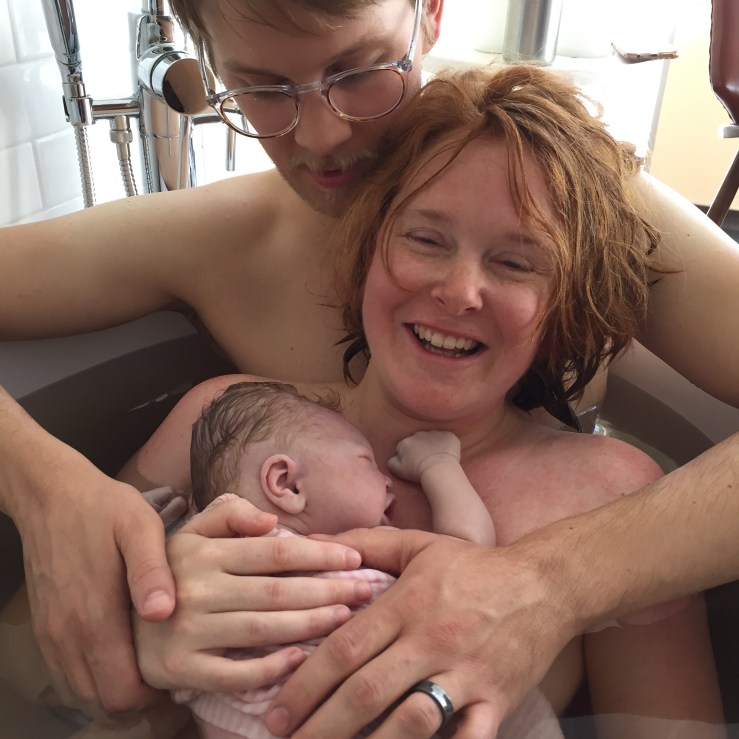
img_4373

A slightly awkward moment followed.

Up to this point, Kaile and I still didn’t know if our Maelin was a boy or girl. The only moving piece was the middle name. Had we become parents of a girl, the middle name would have been Junia. As much as I enjoyed taking in the moment, my curiosity was piqued: I had to know!

Carefully, I lifted up our still-purple child, and without as much as a trace of a doubt, I beheld a boy child. Silas now had a younger brother, separated by only 20 months [to the day!].

Kaile and I are both still processing all of the past few weeks [and year as well!], but here is a deep spiritual reality that I’ve gleaned from the experience. In John 16, Jesus explains to his followers that he would be leaving. They’re confused, as they often are, and Jesus unpacks what he means, likening his coming departure from earth to the experience of a woman in labor: 

A woman giving birth to a child has pain because her time has come; but when her baby is born she forgets the anguish because of her joy that a child is born into the world.

It’s curious how Jesus uses the gritty events of life to speak to spiritual truths. And yet, though Jesus departed, he unleashed the Holy Spirit to be even closer than he would have ever been. It’s curious too how the Son of God entered human existence not through a magical appearance, but through Mary’s womb. Why the risk on God’s part? I don’t have answer for that, but welcoming Maelin Hosea into our lives reminds me how vulnerable it is to be an infant. It’s certainly curious that God chose to get involved with humankind in the same intimate fashion.

Our hearts had been longing for Maelin to join our family, and indeed he has finally come to us. And as we celebrate his presence in our lives, we are reminded that he is a gift from God, a blessing and a sign of the love God has for all people: big and small, old and young.




My Life Was Threatened.

It’s true.

Just a week ago Kaile, Silas, and I sat down with my parents, Ann and Greg. We were in the Richmond near Geary and 19th at a little Indian place. Moments after we had settled in with our naan, chai tea, and tikka masala, I heard the man behind me speaking.

His voice grew louder.

And louder.

I’ll kill each one of you. But I will spare the mother because of the baby inside. I’ll f*cking kill all of you with my bare hands. You’ll bleed out instantly. You don’t deserve to live another day.

I looked across the table at my father, whose now-graven face and hazel eyes were locked on the non-gentle man issuing threats. I mouthed the words, “is he talking to us?” Since my back was to the crazed man, it seemed that turning or standing to confront him would do more harm than good. “I don’t trust that guy in the least,” came my dad’s whispered reply, still making eye contact with the man who had now stood to his feet, continuing the threats.

As my palms began to sweat, I thought through a list of possible outcomes: would he attack? Would I literally risk my life for my wife, toddler son, and 60-something parents? Am I really the pacifist I profess to be? Does self-defense count?

As the threats continued, my dad slipped out of his seat and quickly went to speak with the owner of the restaurant. In an instant he was there to gently ask the man to go about his day. My dad’s experience working in an urban pharmacy helped reinforce the wisdom of seeking a local expert, the restaurant owner.

Still breathing threats of violence, he walked out of the restaurant and down the street.

Phew.

Unsurprisingly, the fellow who threatened the four earthly people who know me the most was one of San Francisco’s numerous mentally unstable denizens: likely homeless, probably addicted, surely lacking in needs that most of us take for granted.

Yes, it was startling, but no, this incident is not typical in my life. I can count with one finger the number of times this kind of thing has happened [yes, once is all].

The experience made me think of certain Psalms that I’ve never quite been able to comprehend. Take for example Psalm 140. In the NRSV verses 10-11 read like this:

Let burning coals fall on them! Let them be flung into pits, no more to rise! Do not let the slanderer be established in the land; let evil speedily hunt down the violent! 

Whoa whoa whoa.

That’s a little much, isn’t it David*?

These verses and others like them are picked over by skeptics: the Bible incites violence! How is this good advice for anyone-much less the word of God? Yeah, I get the reaction. Much ink has been spilled as an attempt to discredit Jewish and Christian faith on account of the anger found in the Psalms [and elsewhere, but that is another story].

Is it really too much? Should we toss out these angry imprecatory** Psalms and keep the nice ones that talk about quiet streams and shepherds and mountains?

I’d say no. In fact, I wonder how much violence has ceased because of these Psalms. Here’s the twist. The anger in these Psalms could just as easily be directed to the writer’s enemy. But look! It’s not directed at the Psalmist’s enemy; the anger is directed straight to God.

Indeed, many of the Bible’s Psalms came during dark times of loss. Some have come from very specific situations in individual lives. The angry emotion contained in these poetic phrases comes from lived experience, not from abstract or existential feelings.

As I write, I can almost hear a response: “good grief, Ben, most people don’t have that kind of anger, and if they do it’s just a mental instability and they probably need therapy.”

I don’t buy that for one second.

What if the anger came from a terrible loss? From genocide? From having lost a child to abduction or murder? From having seen family members shot or tortured? When human beings go through upheaval of this nature, anger is an inescapable response. You bet therapy is in order, but any therapist understands and counsels the wisdom of effectively coming to grips with one’s emotion and finding the best way to move through it.

These Psalms encourage those experiencing rage to find its proper channel: prayer.

Only in connecting to God can we become open to the true darkness within our own souls. Only in connecting to our Savior, Jesus, can we find someone who truly identifies with human loss-yet who also communes with the Father and the Spirit.

Ignoring our anger leads us nowhere, and acting on it will surely lead to further destruction. Consider the Truth and Reconciliation Commission. Desmond Tutu and other leaders helped the citizens of South Africa move forward after countless acts of murder, racism, inexcusable and unspeakable hatred carried out under the banner of apartheid. Little doubt some seriously angry pray-ers sought solace in a God who is concerned for justice yet allows humankind to be his agents.

Going back to my opening story, I’ve thought more about the situation. No, I’m not praying imprecatory Psalms and asking God to avenge me. The man at the Indian restaurant probably needs some antipsychotic medications, a meaningful community, and a sense of self-worth; he needs hope; he needs Jesus.

homeless
Photo Credit: Susan Ragan of Reuters

But the experience is also teaching me to empathize, in small ways, with folks, rather unlike my middle class self, who do in fact have reason to pray their anger to God. Take for example the family and friends of Alejandro Nieto, shot numerous times by San Francisco police in 2014 at Bernal Heights Park. He was armed only with his licensed tazer that he was legally carrying for work [he was a full-time security guard]. An example from a different perspective comes from the grieving family and friends of police officers Liu and Ramos of the NYPD who were killed the same year, 2014, in their police vehicle. Neither had any connection to acts of police brutality.

There are a great many situations that lead our hearts to a pure and unadulterated anger. Resonating with the heart of God, we desire justice and for the law to do its strong work.

And yet, Scripture insists we pray our anger to God. As we do, we remain honest to the depth of our emotions yet also to the hope we have in his justice. After all, Jesus was unjustly accused and killed on account of it. And yes, in his desperate hour, he prayed that God would allow for another way, but eventually his prayer went unanswered as it turned into, “not my will but yours be done.”

God hears, yet even Jesus, the Son, did not always receive the answer he desired. But, with Jesus as our advocate, whether we are ecstatic, underwhelmed, or incensed, we still pray.

And why not start with the Psalms?


Footnotes

*Biblical scholarship has opened up our modern view toward the authorship of the Psalms. Some are certainly traced to David, but certainly not all. King David most likely wrote some, but assuredly not all of these artfully-crafted poems.

**Imprecatory or its noun format, imprecation, are words used in biblical studies to describe Psalms or other passages that espouse anger and violence toward the writer’s enemy.


Religion Controls People [Quick Read]

The title of this post is a complaint I’ve heard from atheist friends. To be sure, there are many instances in human history when powerful people have taken the teachings of Scripture and used them to abuse others and gain power for themselves.

I lament that my own Christian faith has been abused for purposes of control.

I lament that atheism [Mao, Stalin, Pol Pot] is abused for purposes of control.

I lament that Islam [ISIS, Al-Quaeda] is abused for purposes of control.

The common denominator here is not faith. Nor is it the systematized rejection of faith we know as atheism. The common denominator is people. Scripture teaches that though we are created in God’s image [Genesis 1:26-28] we also rebel [Genesis 3] from God. This ancient narrative finds contemporary support in the everyday: why are some people so angry? Why are some people so gracious? Why do some people seek power and wreak havoc on the earth? Why, when I look in my own life, am I such a mixture of good feelings and frustration? How can a crime boss plan and manage a complex system of drug distribution and murder then come home to his family with smiles and hugs, remaining faithful to his spouse?

Pablo Escobar. William Wilberforce. Hitler. Mother Teresa. Kim Jong II. Isaac Newton. Idi Amin. Martin Luther King Jr.; these were all humans with capacity for good, bad or mediocre lives-yet some did so much good while others worked or work for such destruction. What controlled these people? What controls me? 

img_4149
Student by Wayne Thiebaud, 1968

My wife and I enjoy the San Francisco Museum of Modern Art, and we find ourselves returing to Wayne Thiebaud’s fascinating work. Student is one of my favorites, and much better in person. I continue to wonder how this representation of a student is absorbing the world around her. She reminds me of my mother at that age, though of course I’ve only seen pictures. How is she processing the teaching for that day? Is she just waiting to be released from class? Does she hope to someday be a teacher herself? Do her textbooks do justice to American history or are they grossly one-sided? Does she feel controlled by others?

The South of Market neighborhood of San Francisco consists of lots of control. The economy in our city is controlled by marketers and purveyors of technology. Apple, Maserati, Coach, North Face, and H&M do a great job controlling where our money goes. People are controlled by the small smoldering tubes of tobacco or marijuana they inhale hourly. I walk by desperate souls every day lying next to a pile of needles, eyes rolled back, controlled by the powerful chemicals surging through their frail, undernourished bodies.

It’s my conclusion that we are all controlled by something, by someone, by factors we hesitate to name or by forces we comprehend all too well. Thing is, we need to discern how we are being controlled and who we want to control us. When we take a close look at our lives we see patterns of health and patterns of destruction, large or small; and these are informed by the factors that control us.

Looking to my faith/religion, it does indeed control me. My faith confronts and challenges me. It flies in the face of logic to love my enemy, something Jesus was adamant about, or to pray for those who want to harm me. Jesus redefines adultery by telling me that even secretly desiring a woman besides Kaile is the same as literal cheating. These are Jesus’s commands-is it control? He says some strong stuff! Give away my money, my possessions? My time? Ouch, Jesus; can’t I just keep it all?

I’m not great at doing all these things-just ask someone who knows me for an honest account of my foibles and failures. But I’ll bet people who have known me for a long time will be able to note how much I’ve changed over my years. I regress too, but do think there’s some overall forward motion. Maybe you relate to the pattern of ups and down that a critical look at our lives can reveal.


Attempting to see things as Jesus sees them, I try to imagine a world where people all literally tried to love God but also love their enemy, to give away their time and possessions, to pray for those who sought to harm them. I’d like to live in that kind of world. 

What’s ironic is how the Christians I know are also the freest people I know. Free to feel, free to give, free to encourage, free to laugh at themselves, free to lament, free to admit failure, free to love.

So there-religion controls people, myself included.


The Moment That Changed My Life


Around 4am on October 15th of 2015 I lay, as one might expect, soundly asleep. Silas, who at the time wasn’t yet sleeping through the night, was gracefully asleep, as was Kaile. Without any prompt, I was awakened-and it wasn’t a midnight snack or bathroom visit that I needed. It wasn’t Silas crying out or Kaile bumping me that woke me. I’m a frustratingly deep sleeper, as anyone who knows me well will attest.

So there I was, awake.

And, I believe, it was all God’s fault.

To provide a brief background to the Fall of 2015, I had recently finished seminary and was working part time at a church doing music primarily, and part time at a Christian mental health hospital caring for adolescents from broken homes. During that season Kaile was staying home with Silas. But she had recently expressed that she was going to apply to several graduate programs for drama therapy, a program only three school in the United States offer. One was in Manhattan, one in Boston, and one way out West in San Francisco.

After Kaile told me she was applying, my heart was immediately not at ease. The weight of possible transition and change was heavy upon my soul. We had recently purchased a home and invested time furnishing it; we had amazing friends in the area; our families were both nearby.

Change? Now? And what about my vocational journey? We knew not a soul in any of the places Kaile was applying to for graduate studies. And there was so much gravity keeping us in the greater Grand Rapids/West Michigan area.

For much of the first half of October, I was not at all centered. I prayed fitfully, wondering about how to participate as a co-leader in my family. I spoke with a couple people about things. I peppered Kaile with questions she could not answer [how will grad school work financially? what about Silas? we have a house now, remember!?]. This went on for some time, not at all helping our marriage or relationships. I was stressed. And, quite honestly, I do not have an anxiety-prone mind. To a fault, I can be too easy-going.

But the stress remained.

Until October 15th at 4am.

Snap back to the beginning of this little tale, and there I was, asleep when *wham* I am awakened. No amount of careful verbiage will convince you that this experience dripped with the power and presence of God, so I’ll save my words. Plenty of folks, even Christians reading this may doubt me-and I understand why. What I’m saying is bold! But, I’ll remind you, this kind of stuff doesn’t often happen in my life.

Never before had I sensed God intervening in the course of my existence in this particular fashion.

Anyway, after getting up, I felt a push to go to my room and write in my journal. The theme was centered in my deep sense of peace. The tumult in my spirit was rapidly dissipating, and I felt a supportive sense of God’s presence.

Goodness, it probably sounds like I’m writing fiction right now. Hang with me!

After journaling for about twenty or thirty minutes under my desk light, I finished my task. Then I read a Psalm. I think it might have been Psalm 40-I waited patiently for the Lord; he inclined and heard my cry… I will sing, sing a new song…”

Then, I couldn’t sleep, so I read a book I had been assigned during ordination that tracked a missionary couple from the early 20th century [it’s ok-you can laugh!]. Within minutes, I was crawling back in bed.

The next morning, I woke up and told Kaile that I sensed God had given me peace. She told me, “well it’s about time!” and moved about her day. My worries had genuinely dissipated, and I stopped concerning myself about possible change on the horizon. I kept moving with my studies and my work.

I had peace, now, but no particular direction.

It wasn’t until mid-November that we had realized two things: 1. the best school for Kaile was in San Francisco and 2. I learned that I also had a tiny connection there.

At the end of November, I interviewed for a pastoral position at City Church, where I now work. I spoke with Fred, the senior and founding pastor. It was a pretty terrible interview, especially looking back on it. But at the end of Fred’s West Coast day, he had sent an email with an invitation to fly out for an in-depth interview on December 12th. The next morning, I received it early in the morning, having gotten up before Kaile for work.

I wrote her a good old-fashioned note letting her know we were going to be heading to San Francisco for a possible job opportunity. She texted me back that day and let me know that her [possible] graduate school had invited her to an open house-on December 12th. Probably a coincidence, we thought. Couldn’t be an answer to prayer, could it?

After the dust settled from the interview, our time in San Francisco proved deeply meaningful. But the job hung in the balance. The school hadn’t let Kaile know whether she was accepted. And, at the end of December, Kaile conceived our second child.

Then, things began to come together. Mid-January, I got the job. Later in the Spring, Kaile was accepted into the drama therapy program. In March, our house went on the market the day we left town to find an apartment in San Francisco. When we touched down, I got a call from Dave, our realtor, letting us know we had a solid offer on our house. I then disagreed with him [the only time I’ve done this] and told him maybe we should wait until the next day before moving forward. And the next day, sure enough, two more offers came in; a small bidding war ensued, and we ended up getting significantly more money from our bungalow home than we had asked-and well beyond what any of us expected, Dave included.

So there’s those details-maybe it’s coincidence? You be the judge.

[I always include a picture in my blog posts, so here’s your image-it’s from a day trip we made this summer. We traveled south on highway 1 in a friend’s Subaru to the beach towns Pacifica and Pescadero].

img_4119

With our second child two three days overdue, Kaile and I are left with some time to process our lives and how everything has come together. Just today we spoke over lunch at a favorite local spot, Sweet Maple [strange name, I know] about the strange increase of answers to deep prayers we have witnessed in our lives. We have bothered God for a long time with our relatively minor and middle-class concerns, and we are both confident to insist he has responded.

It isn’t at all typical in Kaile’s life or in mine to experience a season of such lavish gifts from God [or, for the skeptic, strategic coincidences that resemble acts of God?], but honestly, really, sincerely: it’s a season of profound answers to much prayer. It’s almost impossible to list the answers to prayer we have received since moving out West. And apparently it’s not stopping. 

In a few weeks, our family of [hopefully!] four will be moving to a two bedroom apartment in a much quieter and family-friendly corner of the city, thanks to another family moving out and leaving us with a good landlord and a great deal on rent.

In ancient times, people who experienced God set up altars [like Abram in Genesis 12:7].

In the 21st century, when an altar built outside our high rise might irrupt the neighborly vibes and compromise city ordnances, it might be more appropriate to let life events of this grandeur be engraved deeply on our souls, to blog about them, to talk and process with others about them.

I’ll return, in the future, to pounding on the *doors of heaven* as it were. I’ll return to bothering God with small issues. I’ll return to waiting and wondering. No doubt I’ll experience more of the spiritual dryness that has sometimes marked my journey. No doubt I’ll lose friends, let people down, miss opportunities, get sick, experience tragedy, have an accident. No doubt I’ll be frustrated with God, disappointed, crying out Psalms of lament as I long for answers. Can’t be sure, today, whether tomorrow will even come for me-

But for now, I’ll say thanks-and remember.

Pushed off My Bike: A True Story

There I was, on my cream colored 7-speed bike, pedaling my typical route. Turning a corner, I was cut off-a black Kia came within inches of me. The driver was on his way to the stoplight in some kind of hurry, so that’s where I saw him next.

Once the light turned green, he flew past me yet again, again with far more speed than was necessary, again cutting into my lane without a concern for my safety. Naturally, another red light waited for him ahead.

Finally, there he sat, caught by yet another red light at 9th and Mission. After all his racing and lane changes, I quietly rolled up next to him on my bicycle. And I mustered my courage and knocked on his window. As I did, I noticed the Uber sticker on the windshield. This guy probably lives far away from here and he’s in town to make a hot dollar getting San Franciscans to their lunch appointments, I thought to myself.

Mind you, I have done this before. It wasn’t my first time politely [seriously-I really try to be straightforward with people!] asking someone to slow down, quietly pleading on behalf of families and pedestrians and cyclists for drivers to lay off the gas pedal. The last time I asked was right in front of the building where we live. It was a young guy in a white Ford Mustang. He mumbled something to me, then when the light turned green he was off to the races again.

This time was different.

When I knocked on his window, my ring incidentally made contact. Without meaning it to, my knock likely sounded like a metallic cling from inside the car.

And then it happened.

As I sat on my bike, I could see the man inside angrily put his late model Kia into park. He stormed over to me, cursing. At this point, I was immediately reminded of my work at Pine Rest caring for adolescents from shattered homes. I have been assaulted a number of times before, just never in a situation quite like this.

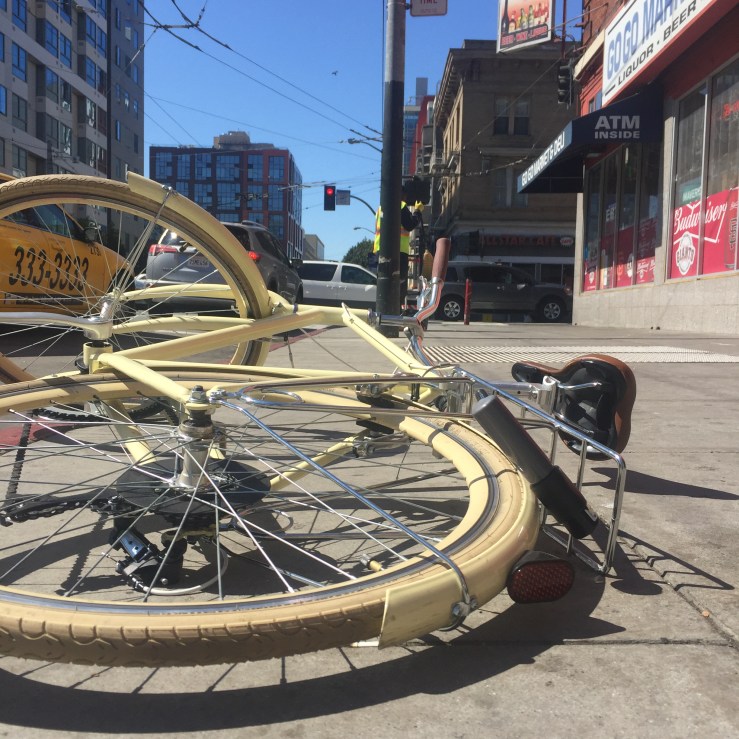
Whad’ you do to my f*ckin’ car man? I oughta f*ckin’ kick your @ss,” he bellowed, raging his way toward me. Caught in an awkward physical position yet unsure how to respond I simply stood over my bike. Before I knew it, he was in my face-and he was a lot bigger than me. His punch thankfully turned into a shove and he bowled me over backwards, and I collapsed on my bike. I didn’t expect to need my helmet while standing on my 7-speed, but hey-I’m not complaining.

img_4317

Gathering myself up from the heap on the ground that I had momentarily become, I formed a response. I was angry, but I did my best to follow through with what I genuinely felt compelled to say. “Listen, I’m sorry man, I think my ring tapped your window. I didn’t mean for that to happen. But you almost hit me three different times. Please, slow down. That’s all I’m asking you. Families live here-kids too. You can go to jail for hitting someone, and I seriously don’t want that for you.”

As I said this, I realized a small group had formed on the sidewalk behind me. No doubt we were a spectacle on an already tense corner, Mission and 9th. A tough looking black guy came over and suggested to the driver, “hey man, you don’t wanna do this, why don’t you just breathe for a second.” A woman in traffic said, “man, you get back in that car and get goin’!”

I couldn’t believe myself. I couldn’t believe the situation. Somehow I was verbally deescalating a potentially disastrous situation. At the same time, I had fostered support from folks who had watched the incident play itself out.

After my impassioned request for him to slow down, he got back in his car. I stayed, letting the gravity of the moment sink in. Moments later, he rolled down his window. “You ok man?” he asked humbly. “You just about hit me three different times, then you knocked me off my bike!” came my response, almost as unexpectedly as my initial, gentler words. “Yeah, and I thought about it and I’m the one in the wrong,” he answered, shockingly apologetic. “Please, man, slow down ok? I’ve got a little toddler son and my wife is pregnant with our second. Just slow down-seriously.” “Alright man, I hear ya.” We shook hands through the open window, looking each other straight in the eyes. And he drove off.

And, walking my bike, I proceeded to announce to the curbside spectators that the show was over.

Go ahead and make your judgment about whether I should tap on car windows-that’s fine. It’s a small thing that I occasionally do to seek after peace and safety in my neighborhood, and it’s not the point of the story.

As a Christian, husband, father, and pastor, I’m now reflecting on my own actions and the bigger picture. Clearly this guy overreacted after I made the mistake of letting my ring tap his window. And I stand behind what I said to him yesterday.

I don’t often use stories from my own life as examples of doing the right thing. Usually I’m the butt of the joke and the one learning the lesson. Read any of my blog posts or listen to any of my sermons and you’ll notice this to be the case. But this time, I really felt like I did the right thing. No, not the ring-against-the-window part. That was my bad-and I faced the consequences.

What I did right was answering gently. The ancient words of Proverbs 15:1 are right: a gentle answer does indeed turn away wrath. Had I spoken harsh words, I would have surely stirred up more anger within a harried motorist.

But the more I reflect on the experience, the more I realize my response didn’t really come from me. Not the me who has got into fights and bullied other kids in junior high. Not the me who was suspended from school numerous times before coming to a saving faith in Jesus when I was 13. Not the me who is still repenting of his judgmental attitude toward certain drivers.

No. I’m not some vigilant, neighbor-conscious hero cyclist. But my unexpected response is reminding me that Jesus really has changed my life. In 2 Corinthians 13:5 Paul asks a question: “…do you not realize that Christ Jesus is in you…?”

Yeah, he is, and making a massive difference. He’s taking me on a journey toward my true self, toward the person I could be.

And he’s helping me to see that-and give him credit for it too.


Two Powerful Questions [and Mike’s Profound Answers]

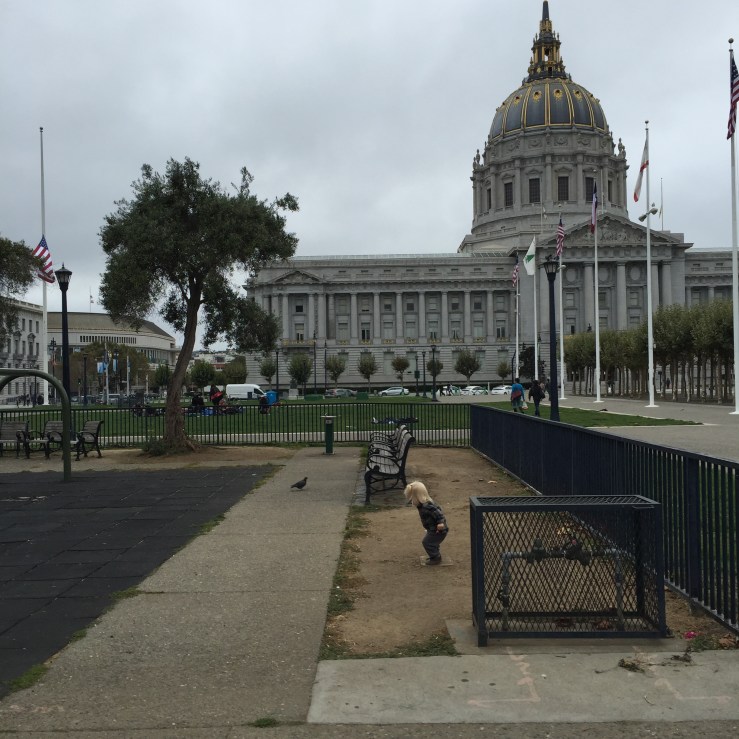
Recently I shared on Instagram about a guy I met at Civic Center Park here in San Francisco.

Mike.

Maybe you’ve met someone before who tugs at your heart strings. Earlier in life, I found it almost impossible to describe the feeling I get, and it’s still hard; but I’ll try. Mike was the kind of guy who, if he was being ridiculed or mistreated, I would want with all my heart to stand up for and defend. He’s the kind of guy who has clearly been through so much; no doubt he doesn’t have a place to hang his hat. Mike’s wrinkled skin, bad teeth, and dirty clothes masked a beautiful soul.

I was inspired to listen in to local wisdom and happenings in the wake of a “listening project” our church is doing. Find it on Twitter and Instagram with this hashtag: #wearelisteningsf. I’m not very good with chance or one-off encounters, to be quite clear, but my occasional personal awkwardness sometimes makes other people feel more comfortable. Our toddler son also helps, needless to say.

Whenever I’m out with Silas [19months] on a walk, I feel about 924.3 times bigger than I am. I’m not just another white 20something face-I’m tied to toddler, connected to a child with a bright and beautiful personality.

img_4296

Anyway, it required an intense mental dialogue, but I finally got myself to introduce myself to someone new, and I interacted with Mike quite a while, starting with a couple powerful questions. They’re not at all original to me. To be honest, I have no clue as to their provenance.

I ask my students [I’m a youth pastor] these kinds of questions all the time, and they work for just about any conversation:

What was the best thing about today? And what was the worst thing? 

Mike’s answers perplexed and astounded me. First, he told me the best thing about his day was how he was able to get up in the morning and see the beautiful world around him. Ok, wow. He’s already exploding everything one might imagine about the underprivileged.

His response to the next question was equally powerful. I had to repeat the question because he didn’t seem to have an answer. And, sure enough, he didn’t.

Ben: “Mike, what was the worst part about your day today?”

Mike: “Well you know, there isn’t really anything to say. It’s been a good day. I don’t have much, but I’m doing alright.”

As I listened, I realized how much I have to be thankful for, how I can creatively practice an attitude of contentment and thankfulness in my daily life. Mike’s words were a massive gift to me. His words put contemporary meaning to a piece of biblical wisdom found in I Timothy 6:6. It reads, “But godliness with contentment is great gain.”

Here, the author is writing to an audience who seems to be under the impression that religious practice leads to financial security [read I Timothy 6 for details!].

Mike gets it. He understands contentment. And he gets, at a deep level, the God-given wisdom of seeing everything as a gift.

And he’s helping me to get this concept too, as I listen to his experiences.

…Even though I’m not there yet.


Why I Love Zombie Shows

Ok, it feels a little strange to admit this, but here I go. I adore the zombie genre. For years now, I’ve been fascinated with the whole concept of human beings getting stuck in a world where they must fight for their lives against their formerly human brethren, banding together to preserve the human race.

Yes, I’m finally owning up to it. I love zombie shows

Darryl.Motorcycle
Darryl. Copyright The Walking Dead.

Why? Oh I’ll tell you-thanks for asking!

It has taken me a long time to discover this, but I think my passion for zombies stems from how every human being is wired: we want to lead meaningful, fulfilling lives. We want to see goodness triumph over the power of evil. We love stories about how the kid who was bullied about her acne ends up as the CEO of a really cool company. 

Ready for the segue to the journey of faith that I always infuse into my blog posts? Here goes! Hang on! Stick with me-I know zombies might feel like a stretch! 

The final book in the Bible’s New Testament-the Testament featuring the life of Jesus, God’s Son-is a book called Revelation. Not Revelations, just Revelation. It’s called that because it reveals the hope God has stored up for the world since its beginning. Through a course of wild events, the writer, John, has an epic encounter with the living God. The “one seated on the throne” [who I am pretty sure is Jesus, God’s Son] says this: “look! I am making all things new!”

Maybe my zombie thrills are such a draw because zombie movies epitomize the “making all things new” concept. We all desperately want to see things being made new, being made right. We feel every moment with the characters on the show, hoping against all hope that they’ll make it to some safe destination, away from the scary zombies and united as a community, bound together through their experiences. We all seek out the good life-strong friendships that last, enough time/resources for camping and good food, and a legacy that matters after our death. 

Even though it is hard to make sense of this sometimes, we want our lives to matter. We all have a picture of how life is meant to be lived, and we all seek to somehow make sense of things. We all long for something good. In zombie movies, the characters are forced to figure what life is for and whether they want to survive in a difficult and dangerous world.

In The Walking Dead, a rather intense yet well-executed show, Tyreese, a really cool black guy, loses his girlfriend [in part, at least] to a tragic sickness. Though stricken with grief, he finds a way to move forward with his other companions, and he realizes his life still matters, that people still count. He goes far out of his way to keep a tiny baby alive and return her to Rick, her father, and Carl, her brother. He discovers hope. He finds deep meaning in the companionship he discovers in the group of survivors who have banded together during a very dark and dangerous period. 

The screenwriters of The Walking Dead just can’t seem to keep religion out of their show. It just keeps showing up all over the place. So many of the characters struggle with faith and doubt. Some lose their sense of purpose and get angry at God. Some question whether God cares at all. Others, like Tyreese, seem to cling to the hope that God is giving them hope and strength to move forward.

In the show, they think of God in a lot of cliché sorts of ways. God, in The Walking Dead, is pretty much a one-dimensional force that weak people cling to for comfort. At least on the surface, that’s what you might see. But it’s deeper, more complex than that.

In another episode, zombies try to take over the barn in which our beloved characters are sleeping. The zombies push against the barn door. They are thirsty for blood, hungry for flesh, and bent on destruction [I could insert a great connection here to how our lust for money, promiscuous sex, and power can be like internal zombies waging war on our true and better selves, but I’ll refrain].

Turns out, the zombies don’t take over the barn. As the band of survivors push against the door, the gentle rain breaks into a thunderstorm. The scene cuts to the next morning, and two heroines step out to realize all the zombies were crushed by trees that had been struck by lightning. As they stare out at a beautiful sunrise over a field, they express deep sadness about their losses. But they also look at the rising of the sun and the serenity of the moment. They wonder if hope could really be out there.

I don’t know about you, but I have the same kinds of moments. I have my share of doubts about how God is at work. I wonder about how human relationships work, and why the earth is so filled with sadness, why I keep walking past people on the sidewalks here in San Francisco who are so angry with each other.

But I also have a sense of hope, a sense that God is making all things new. That’s my view of why the characters in The Walking Dead keep moving forward. Sometimes they have faith, sometimes it wavers, but they walk on with the mere idea that something better could exist.

And so much of the time, that’s what our faith looks like. So much of the time, those of us who don’t give much though to God in any typical way are actually giving our Creator all kinds of glory simply because they are acting as if there might be something better out there. There might just be a God who has revealed himself to the world, a God who has done things in history and who is working now in not-so-subtle ways to continue revealing himself to humanity. 

You probably wonder if something better exists. You probably even work toward it and invest yourself and your resources in this idea. Parents often believe this when they believe their child might have better opportunities than they did. Friends believe this for their friends when their friends can’t believe it for themselves. 

When you do exercise hope, even with the smallest portion of it, I’ll bet-if you look close enough-you’ll discover God at work in that moment. And that might just tease you into believing he created you, fills your lungs with air, and desires the best for you.

And you might just end up believing that he’s making all things new. 

And that could change everything.

3 Reasons Why I Go to Church

Here’s a few thoughts that have been stirring for quite some time now. But only recently have I come to my keyboard to record them.

I want to write about church and why it’s important.

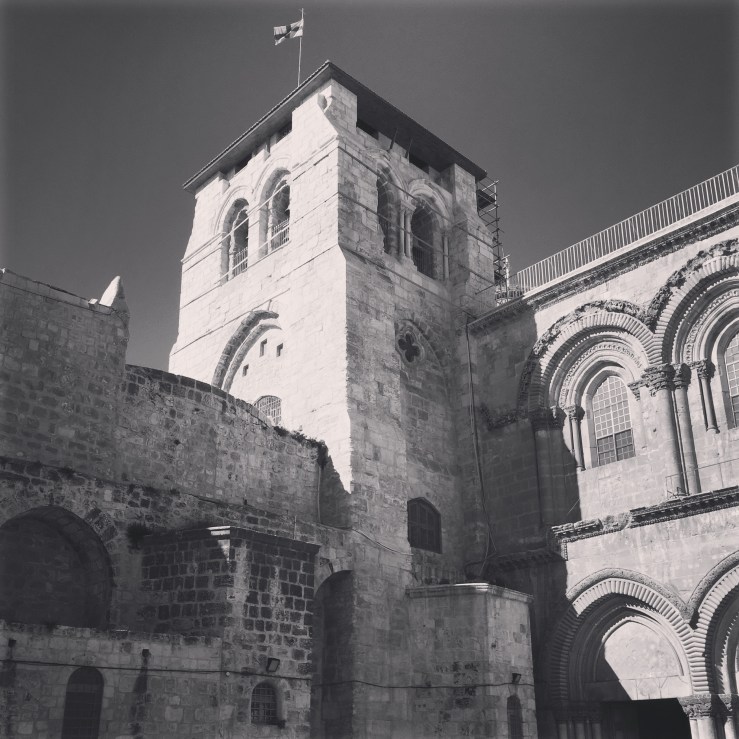
IMG_3132
The church of the Holy Sepulchre in Jerusalem. The earliest Christians bear witness to this as the place Jesus was buried for 3 days.

Ok, so churches often meet in particular places, but really the church is people.

But indeed, the term church often carries with it a host of memories. Maybe yours is of a Christmas Eve service with candles that ended with Silent Night. Or it’s of that long sermon on a hot day that had you fidgety and ready for ice cream. Maybe your church experiences are categorized via your sensory systems: the incense, the cologne people wore, the sound of a Hammond B3 or a pipe organ, guitar chords, a chorus of singers swaying, hands clapping.

My own experiences of church are fairly diverse, all things considered. I grew up in a church that was part of a really good preaching tradition. Concepts like the judgment of charity, of “stepping out of the boat,” and the prayer of, “God, throw the rock here!” were all concepts that moved me and challenged me. Musically we did ok, though our clapping was occasionally offbeat.

In college I was exposed to new things, like a church where I interned that changed its entire seating and design layout every six weeks and sometimes played songs by Coldplay, U2, and Elvis Costello. After college I began seminary, and as I did I also began my first real job as a youth minister in an Episcopal church from the “high church” Anglican tradition, which means they really like structure. Worship was regal yet somehow it was also warm and inviting. I sang in the same choir that Gerald R. Ford would have heard when the Grace community met on Cherry Street in Grand Rapids, just with different people. Lift High the Cross was one tune in particular that always arrested me spiritually-check it out sometimes and let it get stuck in your head for the rest of your life.

Later, I transitioned to lead worship in a small Reformed church in Wyoming, Michigan. It was casual, relaxed, with an established mission for living out Christian practices by loving one’s neighbor. Church was relationships, connections, common purpose, common life.

Since April I’ve been worshiping with a new community as a pastor for youth and families. It’s also part of the Reformed tradition. We sing some amazing and moving songs and listen to some gripping sermons. There’s also a deep yet inviting liturgy that guides the whole thing along, and the words motivate us to go out and invest in the community we inhabit. Thankfully, the church itself provides numerous opportunities for this.

So here are my three things [skip to the last one if you’re in a hurry]:

1. I’m easily distracted from imitating Jesus.

There’s this ancient song in the Old Testament. Found in Isaiah, it’s one of the “Servant Songs.” Chapter 53:6a says this: “We all, like sheep, have gone astray, each of us has turned to our own way…” 

Jesus [the famous guy who turns out to be the servant that Isaiah was talking about] invites us to take up our crosses and follow him, to imitate him. This is quite a challenge. And that’s why I get distracted. I need a weekly pattern to keep me oriented to God and caring about others, a consistent habit that keeps me imagining a more integrated way of living that extends generosity and grace to others and hope for people caught in destructive patterns of living. I’ve heard plenty of people talk about how they love Jesus but not the church, and I get how church can be frustrating [there are people involved!], but after the dust settles I’m confident Jesus as well as the earliest leaders of the church intended for us to consistently meet together [Hebrews 10:25].

2. Church sheds meaningful light on everyday things.

For all the normal stuff of life, grocery trips and soccer games, road trips and office trips and embarrassing trips like when I flew head-over-heels down the stairway at my high school during the winter of my junior year, yes! for all these experiences, church is a place to find meaning.

By default, the average American watches Netflix programs, cooks a meal, gets a teensy bit annoyed in traffic, and sort of tries to be a good person. Church offers perspective for why movies are meaningful, reasons to enjoy the food God provides, how to see other drivers as created by God, and a path toward actually becoming the better version of yourself that Jesus sees.

3. Church is a community that turns faith into a verb.

In the words of my old friend Steve Argue who now works at Fuller Youth Institute, the church is a “faith-ing community.” Even as a pastor and genuinely committed Christian, I wonder about things, I doubt, I wrestle with God. But I’m doing that in the context of a community that is doing faith actively.

It doesn’t always work out perfectly, but we actually want to love our enemies as Jesus instructed. We actually believe there is purpose to life beyond getting oneself ahead. There is a God to be adored and understood most clearly in this enigmatic person, Jesus, who did miracles and changed the world. There are issues to confront ranging from confronting white privilege to preventing genocide.

There’s this song that really moves me. It’s all about eating and drinking in the fresh and revived world that Christians believe God is ultimately bringing about. It’s about experiencing full connection with God and rich community with others. And, like church, tasty treats are involved.

Whether or not you believe that God created us, whether or not you think Jesus was for real, and whether or not you think we are made for eternal connection with God and one another [and this involves tasty treats, of course], I’ll bet you want to believe it. And I believe you were made that way, with the hope of good things that last engraved on your soul.

And to think, your deepest longings might just be true.

That, friend, is reason enough to go to church.


Cynicism: The Downhill Slide to Apathy

Some things come so easy in life. It’s easy to breathe, easy to eat, easy to enjoy a great movie. It’s also so incredibly easy to become cynical.

How often do we exude a cynical, scornful, maybe sardonic attitude toward others, even people we love? The political climate and the current election cycle in particular brings this out of us in a special sort of way. We are so quick to dismiss, quick to disown, quick to slide into a lackadaisical sense of self-asserting cynicism. Well my friends, this only leads to crippling apathy. 

IMG_3510
I tried to find a picture that captured apathy. This is the best I could do.

This downward slide toward apathy can begin quite early in life. Remember being a kid? Remember how you watched other kids put down each other, making themselves feel better about themselves? The bullies in school thought they were getting ahead by making other kids feel awful, but in reality they were simply hurting others and creating memories that sometimes never fade away.

For me, I still remember when other kids in my fifth grade class made the connection between the minty muscle rub, Bengay, and its implication for persecuting me. By the cubby boxes where we kept our personal items, Kory-the coolest kid in our class-dubbed me with the title that I would fail to shake for the many long months of that 1997-1998 school year. Ben-gay. There you go. Bullying and taunting leaves marks, scars that last for decades. I am not bothered so much anymore about having been called Bengay in fifth grade any more than you are bothered by the insults you received during your formative years-or even now, but the fact that I remember it reveals how painful it was.

But we continue the same crudeness that marked elementary school playgrounds and junior high locker rooms. We just change the format, moving toward a disdaining, self righteous, and dismissive kind of humor that decimates, crushes the distant “other.”

The educated are especially capable of this kind of easy scorn. Right now, progressives are quickly branded as amoral communists who cannot define right living while conservatives become xenophobic ostriches who can’t foster a bit of sympathy for someone different than them. It’s not too terribly different than 5th grade, is it? I live in San Francisco, so I tend to hear a bit more bashing of conservatives than I did back in the Midwest. There, I had only a slightly more balanced diet of who bashed who. Slightly, mind you.   

Known as one of Jesus’s brothers, James had some serious words about our words. In chapter three of his New Testament letter which many scholars perceive as a written sermon, he says this:   

“All kinds of animals, birds, reptiles and sea creatures are being tamed and have been tamed by mankind, but no human being can tame the tongue. It is a restless evil, full of deadly poison.”

Deadly poison? Surely, he overstates. Or maybe not. Have you been on Twitter or Facebook recently? Have you listened in to the world of politics? Our God-given desire to promote meaningful change and respectful community so quickly devolves into cynical denunciation of others around us. Before we are aware, we become numb, apathetic.

Just verses later, James suggests an alternative:

Who is wise and understanding among you? Let them show it by their good life, by deeds done in the humility that comes from wisdom.

I literally just breathed a sigh of relief. A good life speaks vital words to communities that desperately needs purpose. A life well-lived imbues a sense of hope by modeling a sense of God-given humility stemming from wisdom. Humble folks have a harder time being cynical: their wisdom, earned by honestly observing their own foibles, reminds them that they have received a lot of grace. And a lot of forgiveness. And this leads to a sense of indebtedness toward others instead of a cutting and self-asserting I-know-better-than-you kind of mentality. 

But where does it all come from? Again [surprise surprise], James helps us as we follow his logic: 

…the wisdom that comes from heaven is first of all pure; then peace-loving, considerate, submissive, full of mercy and good fruit, impartial and sincere.

James was a Jewish Christian, and in the minds of 1st century Jews, heaven was the place where God is [fully. see your local pastor or rabbi for further details]. Wisdom that comes from heaven is wisdom straight from God. And look at how James describes wisdom. It is pure, merciful, submissive, impartial, sincere. It is not apathetic or cynical. And it certainly is not easy. It’s easy to dismiss, to roll our eyes and look down our noses at others who understand things differently than we do. It’s easy to roll downhill toward apathy land where nothing really matters-not even people [even people who we thought we cared about]. 

Christian sisters and brothers, we are called not to what is easy, but to what is hard. Resist cynicism, scorn, and the easy words that come to us that cut others down. Don’t roll down the easy path of subtle hate that leads to apathy. Instead, practice love, forgiveness, peace, submission, mercy, sincerity. 

It may not be easy, but I believe it’s what we are called to. And, if I’m honest, I’ve got my work cut out for me. 

Rights, Responsibilities, Refugees.

Currently I am in recovery from an exhausting weekend. On Friday morning, I left San Francisco for Holland, Michigan, where I was to interview with a board of representatives from the Reformed Church in America as part of the ordination process for ministers of word and sacrament. Hopefully my ordination will be in the Fall.

The trip to Holland was great. I flew into Grand Rapids, stayed with some very dear friends, then picked up Silas, our toddler son ,from my in-laws who live just down the street from our friends. After a few moments of relaxing and catching up with my in-laws, I made my way to Holland to spend some precious time with my own family at my brother and sister-in-law’s beautiful new home.

Soon, it came time for my interview. It was an interesting setup. A group of about nine or ten pastors, elders, and theologians asked various questions about my sense of call, how my family has responded to the strains of pastoral ministry, and what compels me to participate vocationally in the work of the church. The questions reinforced how much growth has already taken place in my life, but also propelled me to continue my journey of development. I came away from the meeting encouraged and ready to continue in my role with the backing of more trusted leaders from my church network.

All too soon, it came time to leave, and I quickly gathered my things. My mother-in-law, Stacy, was kind enough to take me to the airport. With a sense of uncertainty about my own skills as a dad, I boarded the plane to Dallas for my connecting flight to San Francisco. It went really well. Silas ate snacks until he fell asleep in my arms, and I took time to reflect over the weekend’s events.

IMG_4011

Arriving on time in Dallas, I made my way to the gate where I’d continue proving my dad skills all the way back to our little apartment on the fifteenth floor where mom was waiting for us. But this was not to be the case; there was more in store than I could have imagined. With cinematic timing, the airline worker grabbed her microphone and said these words:

“For those of you waiting for flight #499, service to San Francisco International Airport, I have some very bad news. From the bottom of my heart, I am so sorry, but your flight has been cancelled. Please proceed to gate 27 for rebooking.”

Immediately, our group began complaining to each other. I noticed two young women start saying to each other, “seriously, like, what the f***? Are you f****** kidding me?”

Our rights seemed compromised. We all sort of hope that by booking a flight we’re guaranteed that all steps in the process will work out. Nope. Forget about rights, I guess, because it just doesn’t work that way. I had no power, no options, and an 800 number that wouldn’t prove to be useful.

There was a long wait in line at gate 27 that consisted of making *lots* of new friends because of the outgoing nature of my toddler. Ironically enough, the two young women [they were probably about 13] ended up spending some quality time with Silas, sharing their stuff with him and playing. It was pretty cool to see that turnaround. Eventually, I received meal vouchers and a possible discount at a hotel that apparently did not have a shuttle. After stepping out of line, I realized it was a half hour away. And I would also need to pay $130 for about 4 hours of hotel use. Oh yeah-and an Uber ride both ways.

As I contemplated my frustrating options, a man swung by in one of those airport golf carts that differently-abled folks use to navigate the terminals. First, he asked me if I had any other kids and when my flight left from DTW. Soon, it dawned on me that he was presenting me with an option for help. Hallelujah, right? My relief faded as he took us across the terminal and down a hall to a room that, if I could describe it as accurately as I could, functioned as a disorganized hostel with no showers. There was a flouresent-lit makeshift office where I checked in [meaning, they took my boarding pass and put it in a drawer], then I followed them through a glass door behind the office where they were dragging two cots piled with a couple airline blankets each.

It was just before midnight, and I was exhausted, wondering how to care for my son. He had never slept on a cot. I did not dare tell Kaile, since that would only add stress to her thought life as she received occasional update texts from me as I tried to reassure her that we would be ok. Or, as she attempted to remind me that would be ok.

Finally, just after midnight, Silas fell asleep on the stiff cot, a tiny bundle of exhausted joy, probably unaware of exactly how we had ended up at a makeshift hostel across the room from a gaggle of teenagers.

Now, it was my turn. I would get the sleep I desperately needed and wake up the next day refreshed. Not so. Our proximity to the glass door [which was connected to a glass wall] allowed not only fluorescent light into our entire sleeping area, but also the noise of other bedraggled travelers from every part of the world. One man with a thick accent loudly protested his circumstances without as much as a reminder that he was not the only one who was stuck in the terminal in a makeshift hostel. I couldn’t blame him that much, though, since I was inwardly annoyed in the same kinds of ways.

I tossed and turned. By six the next morning, the lights were on and were we not-so-subtly encouraged to get ourselves going. That’s when it dawned on me, and I heard a tiny voice within me say this:

Ben, you wouldn’t make a very good refugee.

All the protesting in the world could not change the situation that I was in: the fact that I was struggling to sleep in a loud makeshift hostel with fluorescent lights, the presence of total strangers with their own stories to be shared, the needs of my tiny son. None of these things bode well for my sanity.

However.

These rather extenuating circumstances did help me build empathy with peoples throughout the world who are totally uprooted from their home communities because of genocide or war. It helped foster within me a sense of solidarity with communities that experience displacement, whether short or long term. When I pause and get honest with myself, I know full well that my airport difficulties were first world problems. Folks like me have the resources for 2400 mile flights, so should we really be that shocked when our system backfires? Should I be mad that one flight crew, for whatever the reason, did not make it to flight #499 to San Francisco?

Maybe.

But I guess I’d rather do my best to let God teach me something. No, I don’t think God ordered a couple pilots and stewards to stay home so one young dad can learn about solidarity with refugees across the world. But I do believe this, my paraphrase of Romans, a letter in the Bible’s New Testament, the part of the story that happens after Jesus shows up: “God works all things together for the good of those who love Him and who are called according to his purpose.”

God is pointing out to me how much I can learn and grow on account of the strange and unexpected events of Saturday and Sunday. Maybe the good that God is doing through this exhausting weekend will do good for other people as I share the story in the future or as you read this post.

But there are still other things about my airport experience that I’ll never forget. On Sunday, after my tiring night in the makeshift hostel, I put Silas down for a nap under a phone carrell in a seemingly abandoned portion of terminal B. I rocked him to sleep then placed him in my blazer, which in classic dad-fashion I had placed on the ground as a pad. There are few times when I have felt as close to my son as I did during our season of airport displacement. When he woke up from that nap, he crawled over me, giggling and smiling, and that was what woke me up [come on, it’s precious!].

For the learning and for the love that grew between my son and me, I’m thankful. And I guess I could also look at this like a set of nice moral lessons. But no, I really do think God is inviting me to receive the experience, with all its craziness, with an eye to how God is genuinely making good come from bad.

For the time of learning, and for the chance to love my son in a deeper way, thanks be to God.