Jesus. Showed. Up.

The message of Jesus spread to most of the world in an incredibly short period of time in the first three centuries, and without the use of violence. The message of Jesus has certainly been distorted over the centuries in many corners of the church, but his birth, life, ministry, death, and resurrection still stand at the center of Christian identity.

Historically, the event of Magi visiting Jesus from the far East happened significantly later than the visits of the shepherds and angels. Why would these scientist-philosophers show up with gifts? A lot of scholars have done their best to make sense of it all, and there is some fascinating literature on the subject. Clearly they were convinced that the baby was important, that Jesus would change world history. And he has, revealing the true nature of God-self.

The writer of the Gospel of Matthew really wanted his readers to know to what lengths the Magi went to find Jesus, and we are left with the question of what to make of it. Amidst all the things that can be written on the subject, I would posit one big idea: in Matthew, we discover, once again, God’s great concern not only for the people of Israel, but for the people of the whole world. 

Somehow, through a matrix of God’s active Holy Spirit, heartfelt evangelism, church planting, catechism, calculated missionary work, and lots of prayer, the message of Jesus got to many of us here in our 21st century world, right into the daily mix of our lives. We know Jesus through the testimony of all these generations of people who have been responding to him. And the Holy Spirit gives us strength to respond with our lives to this testimony seen not only in Scripture but in world history.

camille-flammarion
A cool 19th century wood engraving by Camille Flammarion: “L/Atmosphere”


Over the centuries, every generation of Christians have had their opportunity to respond well to the message of Jesus. His message to love our neighbors and our enemies; his message that when we treat a poor or needy stranger well, we treat Jesus himself well; his message that God loves the world a whole lot.

At Epiphany, the exciting reality is that we have received the good news of God made present in the Son, Jesus. We have learned the clearest picture of God, which is the Son, Jesus. We have been presented with who God tells us we are: sisters and brothers with Jesus, children of God.

This Epiphany [Friday, Jan. 6th] let’s behold the mystery of God made flesh [Jesus!] and live accordingly.

*


So.. I’m Ordained[!]

If you already know about it, maybe you’ll note something new here. If you don’t already know about it, well hey-here’s an opportunity to learn a little tidbit! There’s some content here that even may prove helpful in the normal course of life. For Christians, it could be good to know how ordination works. For folks outside the church, it could be of interest to see how the church commends each leader to their post.

To start, ordination is simply a faith community’s process to commission leaders for pastoral ministry.

I’m getting ordained in the Reformed Church in America, a Christian church network in the United States and Canada that has been continuously worshiping Jesus *stateside* for longer than any other denomination. Fun fact. It’s not a huge claim, but the church’s heritage is quite interesting. Dutch immigrant folks were meeting up for worship in New Amsterdam before the British came through, took over, and named it.. you know.. New York [City]. It’s a weathered yet stubbornly pioneering tradition that lives on in mission today, and throughout the world.

Notable members of the Reformed Church include:

Evel Knievel, Kyle Korver, Theodore Roosevelt, Martin Van Buren, and..

Geronimo.

[yes, *that* Geronimo!].

Enough about that. Back to ordination.

The best analogies that help us understand ordination are baptism and marriage. In baptism we are united with Christ-our old self is buried with him in the grave, and we are raised with him in his resurrection. Check out the first part of the New Testament book of Romans, chapter six, for more details on that. Or you can check out Colossians 2:11-15. Both books were written by the same guy, Paul, who as a Jew came to know the risen Jesus and gave his life [literally] to let others know about Him.

Important note: in both baptism and marriage we, the church, see God’s work and respond to it. The same goes with ordination; when someone is ordained, it’s people cooperation with something God has already been at work to accomplish.

Ordination is like marriage in that the pastor is committing her/himself to the church. Fortunately, the church commits herself to the pastor as well! My vows were quite serious, sort of like wedding vows. For example, one vow goes like this:

“I promise to walk in the Spirit of Christ, in love and fellowship within the church, seeking the things that make for unity, purity, and peace.”

That’s a tall order. And if I shared more of the vows, you’d notice that this was on par with a lot of other pretty serious vows. I’ll let you take my word for it.

Ok, so ordination shares some commonalities with marriage. But it’s also similar to baptism, and ordination vows grow out of a person’s baptismal covenant [promises] whether the person was an infant, younger person, or adult.

I was baptized as a believer back in the year 2000. I was 13. God worked through a community of believers to bring me to a saving faith, and baptism was God’s action of uniting me with his Son, Jesus, and connecting me to the church. I was lost, then found. I was adopted. I was washed. I was accepted. Now, sixteen years later, I’m also commissioned.

20161218_113038

If you’re getting ordained, you’re already baptized. You’ve already sensed a call toward vocational ministry, in my case, or maybe lay ministry for others. People who know you have also sensed the call within you, and encouraged you along the way. In ordination, the church affirms God’s already-existing call then commissions a pastor or lay leader to practice this ministry. Like baptism, there is submission to the authority of God as evident in Jesus through the Holy Spirit. But in ordination, the commission is more specific; instead of becoming part of the church, you take on a particular role within the church. 

My own process began in 2014, when I came under care of a Reformed Church classis back in Grand Rapids, Michigan [a classis is a group of connected congregations]. Some amazing people helped me understand how the network of Reformed churches work together to live out the mission of God. I took classes, went to meetings, talked to lots of people, and read plenty of books. Then, I moved across the country to San Francisco and transferred classes [not school classes, but I switched to a different classis/group of churches]. Finally, leaders at City Church San Francisco will affirm God’s call in my life and commission me to continue leading a specialized ministry for young people within this community. In my case, the pastors and elders at City Church are also adding some new responsibilities for me once I’m ordained.

Oh-and I’ll wear a collar.

About that. So.. Janitors wear coveralls. Presidents wear suits. Baseball players wear hats and cleats. Pastors wear collars-at least some do, anyway. It’s a way for folks to know who the pastors are, and it’s especially helpful if someone is new to Christian faith or to the church. Most people get that clergy often wear collars. In the fairly unchurched city of San Francisco, it’s extremely helpful for newcomers [and even folks who have been around sporadically] to know who the pastors are, so we wear a little white band around the neck.

Pastors who have been in ministry for a long time tell stories about just how helpful the collar can be. For example, I recently read a short blog post by a pastor whose denomination required him to wear his collar on flights and to any ecclesial/church-related meetings. He initially resisted the notion, but after he wore it on flights, at city meetings, and in normal life, he discovered the collar to be extremely helpful. There was an awareness of his role. If he visited someone at the hospital, they understood he was there as a spiritual support. If he was at a city council meeting, they grasped that he represented a congregation who cared about the city. He even told a story about offering last prayers with someone on a plane as they came close to death. All this because the guy was identified via collar; he was wearing a culturally identifiable uniform.

There’s a potential downside to wearing a collar, too, in that a pastor can be perceived as somehow inhabiting a different category of human being. I don’t think that needs to be a huge problem, especially with a brief apologetic for the purpose of a collar. And that can easily be provided!

All told, I’m excited about my ordination. I also had no idea it would happen this quickly in my life journey! There are a lot of meaningful life events that I didn’t know would happen at the time they did, as it turns out, but I continue to see God at work behind all of it; I celebrate his work in the cosmos, in the world, in the church, in Jesus.

And even within little old me.


Advent = Active Anticipation

The human story consists of lots of waiting:

Pregnancies.

Job opportunities.

Finding your soulmate.

Standing in line to get brunch.

For each of these, we can make use of our time in any number of different ways. We can either effectively use the time at hand or become impatient and even downright frustrated with all the time on our hands. Take it from me-I love my soulmate, my kids, and my job, but as I waited for all of these I cannot honestly say I always waited with active anticipation. Sometimes I did, sometimes not.

And what do I mean by active anticipation?

With our children, active anticipation meant lots of prayer, stroller research and procurement, parenting books, and talking to friends with kids. And, well, lots of other kinds of anticipation. At worst, I was just nervous about a baby in our family. But at our best, Kaile and I actively anticipated the birth of our two boys.

With my job, active anticipation meant prayer, listening, networking, possibly too much education, and genuine effort at all the jobs preceding my current ministry work. At worst, I was preoccupied and missed out on opportunities that were right in front of me. At best, I actively did these things in anticipation of God providing the right *next* job opportunity.

With my soulmate/wife, active anticipation meant prayer, *crafty* romance, discernment, and listening to the wisdom of friends, family, mentors, but most of all to God’s Spirit. I really do see God at work in the foundational months of our relationship. At worst, I compromised friendships because of my new relationship with Kaile [and did late-night walks with her when I should have been sleeping or studying!]. At best, our years dating helped each of us understand the other as we actively anticipated the challenges of married life and the rigor of the family life we hoped to have.

Now, the turn to Advent.

advent-downtown

Again, the human story in God’s world consists of waiting and anticipation:

The world waited for God to show up before He made promises to Abraham.

Israel, Abraham’s progeny, anticipated release from Egyptian captivity.

The people of Israel anticipated a Messiah [Jesus] to prove God faithful.

Israel’s expansion, the church, anticipate Messiah’s return.

For each of these, the people groups represented either made or currently make use of their time in various ways. In Exodus, we learn that the cries of the enslaved Israelites ascended to God, sort of like the smell of smoke rising up from a fire. They actively anticipated freedom, yet strangely wanted to return once set free. When the Jewish people settled along the eastern edge of the Mediterranean Sea, they actively anticipated a messiah-especially as they were feeling crushed under the heel of the oppressive Roman empire.

We hear this anticipation in the prophetic writings of the Old Testament, and most poignantly in the Songs of Isaiah.

And now, we Christians actively anticipate the return of Christ. He appeared on earth, ministered, died, rose again, ascended to heaven, then promised to return-and we take this very seriously! We actively anticipate/await his return by practicing our faith. God is made known in the natural world, in the cosmos, in Scripture, and in the church. That last bit-the church-is important!

I write this as a Christian, and with the purpose of offering the church [all folks who follow Jesus!] a thought on how to participate in Advent as we continue toward Christmas.

Here are a few very specific ways we can actively anticipate the return of Jesus during the waiting season known as Advent.

1. Be still and know that God is God. 

How often do we genuinely slow down and notice God? As well-known as this invitation from Psalm 46:10 is, it may well be equally ignored. We are sometimes so caught up in ourselves that we miss out on an awesome, meaningful conversation, a beautiful vista, or a small opportunity to help a stranger. The hand of God is at work within all of life, and he speaks; however, we need to listen [and yes, I’m speaking straight to myself here]!

2. Forgive someone. 

Send a message or write a letter to a friend or family member with whom you’re at odds. Have a real conversation with someone at your workplace. Open up that old memory of frustration toward someone far away who hurt you, and see if God used time to help heal-then make the human connection and let them know there is forgiveness.

Practicing forgiveness is hard work! But it’s necessary work. Providing motivation for us to forgive, we learn in Scripture that God’s goals for human interaction are so perfect

3. Love others by giving away your time/talent/treasures. 

Funny that we’re heading toward the end of the calendar year, a time when people often give to charity or to churches to save tax dollars! But giving money away is only one way to bless others like we have been blessed by God. There are a host of ways to give away our time: plug in to your church and serve in youth or childrens’ ministry. Mentor someone. Get involved in a local charity. Serve food at a shelter in your city. Prepare hygiene kits at a domestic abuse center. You know there’s something you can do to the least of these, as Jesus calls them in Matthew 25. And as you do good unto them, Jesus tells us it’s as if we’re doing it for him.

4. Honor the People Closest to You

For some reason, it’s easy to be extra mean to family members. Since we are comfortable with those closest to us, we are often also the meanest. As we long for all things to be right and good and made new through the work of Jesus, we can actively anticipate his arrival by doing the difficult daily work of nurturing relationships with our spouse, kids, sisters, brothers, and parents.

5. Get Creative

I can sit here making lists of ideas for you, but chances are you have some ideas of your own that might just work better for your situation. Don’t let me stand in the way of an incredible opportunity or world-shaking idea.  

Thanks, But No Thanks.

Maybe you remember O Brother Where Art Thou, a Cohen brothers film from 2000. Set during the depression in the American south, the plot follows a small group of inmates as they attempt to get their lives together.

Everett, played by George Clooney, is especially interesting to me. Unlike his two simple companions, he sees no need for religion, no need for God, no need to pray to a nameless and non-attentive character in the sky.

That is, however, until he suddenly needs divine help.

clooney-mustache

Our inmates, during the final scene, have been caught by a ruthless county sheriff and are about to be hanged for their crimes.

Suddenly, Everett’s atheism evaporates as he falls to his knees, searching the heavens and praying for rescue. It is a poignant moment in a film that can too easily be seen as a fun ride lacking any depth.

Soon a floor rushes through, sweeping away the gallows.

And, needless to say, sweeping away Everett’s concerns about God.

He quickly dismisses the flood scientifically, insisting it came because of a state hydroelectric project. And whether that’s the case or not matters little, because Everett believes it to be the case. He puts his faith in science and in himself, ignoring the possible link between God and the life-saving flood.

No need for me to draw connections between Everett’s tendency to draw near to God during distress and the human tendency to do the same. It’s a universal trait. If we are honest with ourselves, we will see parallels between our own actions and his.

Now, a brief story from Scripture.

You can read it in the Bible’s Old Testament book, Daniel, chapter 6.

So there’s this guy, Daniel, a Jewish man who has been taken into exile from his former home by a group of marauding Babylonians led by the well-documented leader Nebuchadnezzar [who long name has surely confounded Sunday school teachers ever since ever!].

Maybe you already know the story of Daniel and the lions’ den, but if not, I’ll summarize for you. The new king, Darius, has appointed advisors who have become jealous on account of Daniel; he is a foreigner, but he is wise and is appointed to a special leadership position within the kingdom.

And the other advisors can’t accept that.

Without much forward thought, they get Darius to sign a law that prohibits prayer to any god but him, Darius, the king. And they cleverly get him to sign.

Soon, Daniel is busted for praying to the God of Israel.

Following his typical daily routine of authentic prayer, he isn’t trying to be politically divisive or antagonize anyone, but he does feel convicted to pray to the God in whom he believes, and not to a human king.

Though Darius is sad and fairly upset about the situation, he has to follow through: after all, it was his law. He stays up all night, sleepless and wondering whether Daniel will make it in a den of lions.

And… Spoiler alert… Daniel makes it. He is found alive and unharmed.

Daniel and Everett from O Brother Where Art Thou strike an interesting contrast, do they not? Everett prays during the one time he is in genuine trouble. And after his rescue, he immediately discredits any possibility of God’s involvement.

The account of Daniel is altogether different. Here, we don’t even hear mention of him praying while he was in the lions’ den, only before. And after his night in the den of lions, he credits God for having rescued him from the vicious animals.

Friends, I want to be like Daniel.

I want my prayer life and spiritual practices to go on whether things are awesome or awful, to honor God with my time and talent [and treasures too!] whether or not everything is going well.

I want practice gratefulness, and not just at Thanksgiving.

As a side note, prayer and spiritual practices are widely regarded as healthy and life-giving. The Harvard Medical School acknowledges the research on the benefit of being thankful, and even of acknowledging God’s care. Check out the research they point to here if you’re curious.

In a sense, we shouldn’t be surprised that grateful people are happier and healthier. And of course, as a rule of thumb, it will generally be more difficult to be thankful when we are doing really well-for then we are distracted from God. It can also be difficult to pray after a painful loss or searing rejection.

And yet, practicing faith through these daily rhythms is what Christians are called to. These prayer habits of gratefulness and petition just happen to harmonize with our physical health. The theme of physical and spiritual health running a common course comes up more than I realize!

We must continue to pray, continue to believe, and continue to be open to God’s leading in every moment. And when we do these things, more and more we notice how God has been at work all along. Then, when difficult times come, we will have an established pattern of being attentive to God; we won’t have to awkwardly stumble back to God and re-learn who God is.

But if we do drift away, we have every reason to know that God still listens and receives us back. God demonstrates grace throughout Scripture, grace for people who forget about Him and grace for people that misunderstood Him.

And though we make every effort at being constant in our prayer and in our faith, our passions are still divided, mixed with some lingering pride or un-forgiveness or quiet hate. And yet, stubbornly, we pray, waiting with expectation for the day Christ makes all things new.


Top 10 Turntables [for Fun *and* Information]

I do not often write about gear. In fact, this is the first time. It’s simply not a significant part of the vision behind my blog. However, I have found a way to justify it. Within the world of theology and Christian practice there is this subcategory that I love called aesthetic theology.

While the phrase may sound complicated, it may not be so difficult to comprehend. Think back to a moment when your senses were overwhelmed with a surreal gratefulness and you just had to write or pray about it. Or maybe consider a time when you were at church worshiping and something about the hymn resonated with a deep part of your being and you simply felt at peace in God’s presence. If you’re someone like me who loves the outdoor world, think back to a time you saw a cascading waterfall or sweeping mountain vista, then think about the goosebumps. Love it or hate it, that powerful connection we feel to God through our senses and our imagination is called aesthetic theology.

For me, music is indeed a vital aspect of how I connect to God. I wouldn’t want to project this feeling on others, but I would certainly think plenty of folks would resonate with how I feel. Music, by its very existence, is a tiny clue, a step in the journey of understanding and trusting in the presence of our great God.

To justify writing about musical equipment, a guy needs reasons! Yes, vinyl happens to be one of my several hobbies, but I also need to keep my blog on point! Ok, on to the turntables.

The factors that go into my list are several, but in descending order they include quality, value, aesthetic appeal, and reasonable cost. Toward the end of the list, I compromised on the reasonable cost factor.

If you’re willing to put together a few hundred bucks, you can make one of these tables work long-term for your home audio situation.

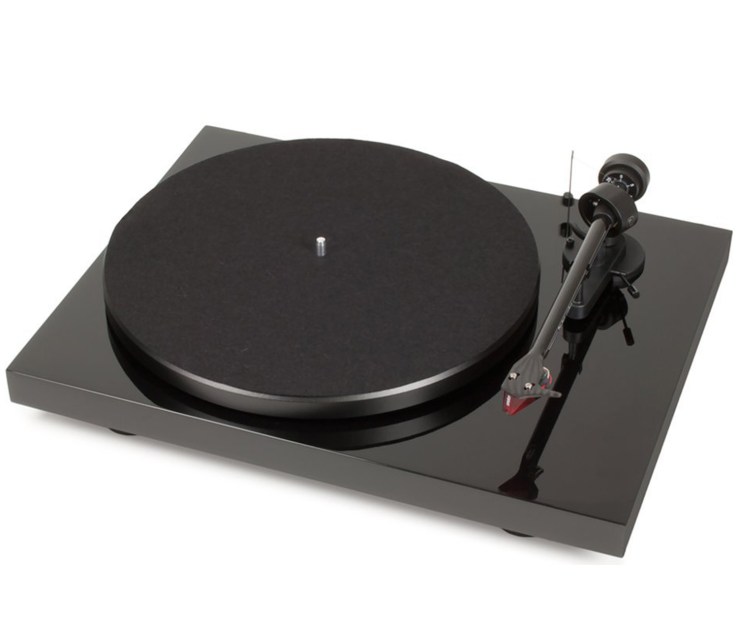
1. Pro-Ject Debut
pro-ject-debut

Without a doubt, you’ll come across Pro-Ject when you take seriously the search for a quality turntable. The Debut series has been an enduring product line that has diverse options for any number of needs. Starting at $299 for the Debut III and ranging up from there, these Austrian-built ‘tables will suit the needs of most listeners and integrate well with any home audio system.

I personally own a Pro-Ject RM5 SE, another stellar performer in the sub-$1000 range, so you may consider my choice biased. However, thewirecutter.com, a respected  also loves the Pro-Ject as one of their best-rated options. A host of other reviewers agree, including Stereophile and UK-based HiFiChoice. It outperforms the other tables they review, and though thewirecutter.com selected another table as their “number 1” it was because of price, not sound quality.

Another fantastic choice if you like the Pro-Ject Debut is the Music Hall MMF 2.2. It’s made in the same factory but has some great features, even though it’s a bit more expensive. For the record [pun intended], years ago, when I first got into viniyl, Music Hall was my first love-but they led me to my soulmate, Pro-Ject.

I wanted to give a solid nod to Music Hall since I didn’t officially list one of their tables.

2. Rega RP1

rp1-titanium

The British are fanatics about vinyl. Made in southeast England, about 120 RP1 units are hand built daily to meet the demand of listeners around the world. This particular table is rather similar in design to Pro-Ject’s Debut, with a single plinth [the big square part of the turntable that everything is mounted on] and hidden motor. It’s $299, which is ragingly cheap for a solid product from a reputable company.

The Planar 1 is another great choice from Rega.

3. U-Turn Orbit

orbit-blue

I would be remiss not to mention U-Turn’s Orbit table.  Made in the greater Boston area, and again, with a single plinth, they utilize an exposed belt. This adds visual appeal while maintaining the isolation of the motor. Oh-if you aren’t sure what isolation means, no worries, I’m not some elitist. Motors makes a small amount of noise that can carry through to the needle, and since the needle vibrates to produce sound, you don’t want your motor interfering.

Starting at $179, this is probably the market’s cheapest ‘table that is a serious contender in terms of quality. The tonearm is the low point, in my opinion, but the overall design is solid and needle upgrades are always an option if you are looking for more nuanced sound.

4. Edwards Audio TT1

tt1

Reinforcing every stereotype [pun intended] about our British friends, this table is strikingly similar to the Rega RPM1’s no-frills design. That’s because the companies are related somehow. Unfortunately, I cannot tell exactly how. Go figure it out, I didn’t take the time.

Regardless, the TT1 is a great table. It comes with an acrylic platter, which is good both sonically and visually. The big issue with this ‘table is with its solid feet, it does not provide much sound isolation. Meaning, you’ll need to keep this thing on a heavy, solid table and away from any vibration.

5. Audio Technica AT-LP120-USB

 

audio-technica

To my eye and with all my biases, this ‘table is hideous. Really, it’s a table meant for DJs both in features and appearance. However, I wanted to include it on my list because of two reasons: it’s a direct-drive ‘table [the motor attaches straight to where the record sits] and it does USB recording. I’m not personally interested in either of these two options, but some folks want to spin/scratch and do DJ work. Others want to record and import their vinyl collection to their computer so they can stick the songs on their portable music player.

Indeed, there seem to exist two kinds of vinyl listeners: 1. those who enjoy the tactile aspect of having a hard copy of their favorite artists and 2. those who used to listen to vinyl back in the day who now want to combine the portability of an iPod with the nostalgia of their favorite tunes. I fit into the first of those two categories. It goes back to that aesthetic theology factor; when I take the time to dig out records and fire up my tube amp, I just love every little detail that composes the experience.

So, against my will, I’m including this hideous monstrosity on my list. At $249, it’s fairly cheap, and it gets the job done. For all you no-nonsense folks out there who aren’t concerned about appearance, this ‘table does come through. I can’t tell where it’s made, maybe Japan or somewhere in China. Not sure, the corporation is enormous. If you’re looking for something more attractive from Audio Technica, check out the AT-LP5. It’s a bit more expensive but a lot less hideous.

6. Gramovox Floating Turntable
fr_walnut_three_quarter

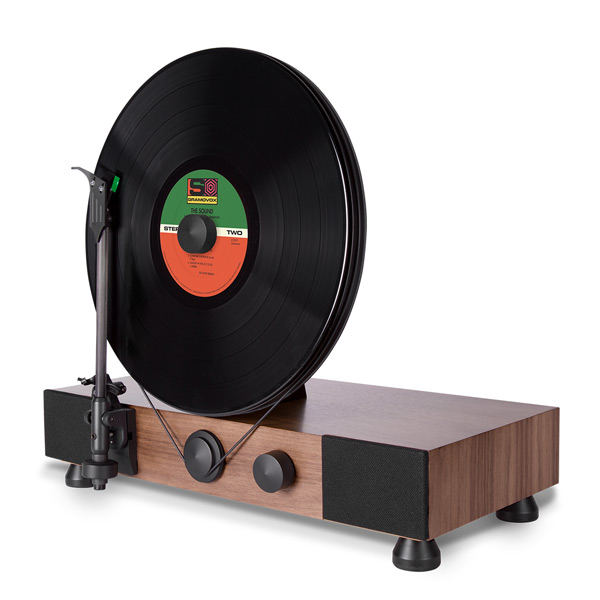
Made in Chicago, Gramovox prioritizes aesthetic appeal and simplicity. Yes, the ‘table sits upright, but that’s it’s one unnecessary-yet visually arresting-aspect. It’s purely minimalist design, very tactile, quite lovely with a walnut case. The other big thing about the Floating Turntable is that it is an integrated system, which means the speakers and pre-amp are all rolled into one. For $499, you get it all. 

For some, this is great. Others, however, want to upgrade these components. If you want to upgrade, you are in luck-the integrated system can be bypassed. But why would folks want to do such a thing?

Well.

The pre-amp in particular is an important part of a system because it boosts the tiny signal from the needle and makes it loud enough for the amplifier to boost to the speakers. In other words, it’s a bottle neck within the signal path [the signal path is the route from the needle, through cables, through a pre-amp, though an amp, through more cables, through speakers, and eventually to your ear].

People spend money on amps, speakers, cables, needles, and pre-amps because all of these matter for overall sound.

Fortunately, with its bypass feature, the Floating Turntable doesn’t force you to use its integrated speakers, pre-amp, and amp. This is one beautiful yet functional American designed and built ‘table.

7. Trntbl by Vnyl

trntbl

Ok, elites will hate me for listing this one, but hey-don’t hate, just read. This ‘table streams music. And it only streams music. Meaning, there are no cable outputs. To me personally, this is a big turnoff. But to others who prefer using Bluetooth speakers, it’s great.

The social features are where the Trntbl really shines. The unit identifies music it is playing-straight from the record-and allows the user to share this with friends or followers. Or, you can connect with others via Spotify and your friends can listen in to your music.

The Trntbl is available only for pre-order at $351, so it is yet to be tested extensively, but it appears to have decent components. Again, the quality will almost assuredly not compare with Pro-Ject or Rega, or even Audio Technica, but it has some interesting features that will surely stand out to certain listeners.

8. Pro-Ject RPM 10 Carbon

project-rpm10carbon

Twice I’m listing a ‘table from Pro-Ject. Why? It’s an incredible product. Yes, it’s $2999, and I get it, you have sticker shock. But this is one powerful and eye-catching means for spinning records. Look at that carbon fiber grain, the massive thick plinth, the belt, the sheer size. Plus it has an outboard motor which, just like an outboard boat motor, means the motor sits completely separate from the ‘table itself. The platter, where the record sits, is gorgeous and heavy. Gorgeous, because… well… people [like me, anyway!] love beauty. Heavy because it allows the records to play evenly without fluctuations in speed.

The RPM 10 comes with a heavy base to further isolate it from any sound or vibration in the room or neighborhood. Yes, jackhammers and construction equipment can indeed affect a needle. Plus, the base looks sick.

Oh-and did I mention? It’s tonearm is the carbon fiber Pro-Ject 10 cc. It’s essentially an upgraded version of the one that my RM 5.1 came with [props to me?].

9. VPI Classic

classic-002

A new old-stock Classic table is currently around $2800. Yes, paying close to three grand may seem like a lot, but I include this bad boy in my list because it’s a beautiful example of an enduring company that really cares about the details. Like the Pro-Ject RPM 10, it’s a true audiophile table. I mean, for goodness sake, it’s 65 pounds!  

Made in Cliffwood, New Jersey, VPI is a robustly American company using an old-school paradigm that prefers all-American components. They stick to their principles, and yes, they have expensive ‘tables. But the Classic is an enduring legend within the audiophile world.  My father in law, John, has sold [and loves] audio equipment professionally and recommends this ‘table for the price point. Yes, it costs as much as a used ’01 Toyota Corolla. But can that CD deck compare with this hoss?

I think not.

10. Origin Live Sovereign MKIII Turntable
origin-live-sovereign-mkiii-turntable-zoom

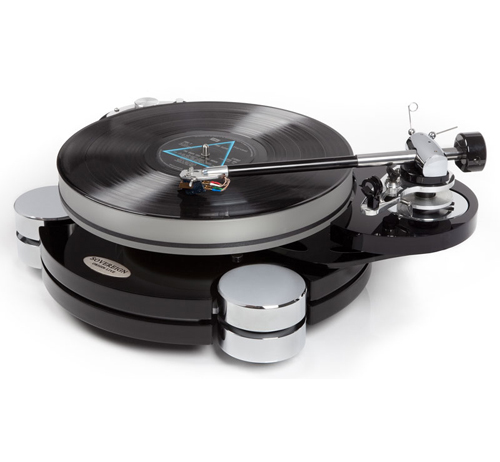
Don’t go buy one of these unless you’ve got way to much money-and no kids. It’s $7300, and that doesn’t even include a tonearm! But it’s one gorgeous, powerful machine. I won’t say a whole lot about it, but if you’re curious you can go learn more about it on your own. Once you’re into this $5,000+ category, there are a surprising abundance of options, and all of them probably have some great characteristics. Most of them look like something from the set of Alien or the new Halo movie. You half expect the tonearm on this one to morph into a laser or photon cannon. But, after reading the specs carefully, I’m afraid it does not.

Like fine wine, if you connect this ‘table to the same pre-amp, amp, and speakers, most of us couldn’t much of a difference between this and any of the budget models in my list. But then again, folks who buy this table are going to buy all of their gear commensurate with the turntable’s quality.

And they, unlike me, probably don’t have toddlers around. 

This is only one of many elite ‘tables out there that are visually and sonically arresting.

Summary 

Personally, I’ve hit my sweet spot. With a beyond-entry-level Pro-Ject RM 5.1, Jolida tube amp, and great inherited speakers and sub, my system is rocking. I doubt if I’ll change much, if anything. Maybe I’ll get a better pre-amp at some point or get fresh speakers, maybe a new set of tubes, but that’s way down the road.

img_4311

My system looks good, yeah? I’ll fish for a complement. I’m not above that. Not a good picture, but a great system. I hid the pre-amp and all wires underneath, naturally.

Now if I were someone out there with a few hundred bucks looking to get a solid system going, there are numerous choices in my list. I listed the Debut first because I really do think it’s the all-around best choice for the money, well ahead of the U-Turn on quality [see thewirecutter.com where the Debut strides far ahead of both U-Turn and Audio Technica]. I felt like I had to list models from Rega and Audio Technica because they’re perennial picks for good sound and enduring quality. The Floating Record player from Gramovox was a playful decision, as was the Trntbl, though they are both great for particular situations.

There may be a few folks out there with $5000-10,000 [or more] to sink in to a system, so I threw in a couple highlights from the very-high-end options that exist. There are so many out there, and it’s not really my area, so I only listed a couple.

A great many more ‘tables are out there that I didn’t list, spinning or maybe even scratching away. Can’t list ’em all, I suppose.

Anyway.

Enjoy music, folks, especially vinyl. May it, almost like a sacrament, remind you of the God who created the folks who creatively designed these machines, who created the folks who make the music that they faithfully reproduce. 

*

My Post-Election Thoughts

Well, as it turns out, I’m a bit naïve. And apparently so is the media-no one warned me about this election’s possible results.

Wow.

Trump won.

Clinton, Trump pick up big wins

Photo credit: Nigel Perry

For as long as it appeared Mrs. Clinton and Mr. Trump would eventually square off, I’ve been calling it a win for Clinton. Yeah, naïve, probably. Yet I am not the only one; many of us are caught off-guard. Not all headlines, but many, seem to say similar things: “it’s a shocking victory” or “surprise win for Trump.”

I’m thankful for Mrs. Clinton’s graceful concession speech, and I’m doing my best to be optimistic about the potential upside of Mr. Trump’s transition to the White House. It’s just really difficult for me right now as a Christian, as a citizen, and as a dad to see much potential after listening to the debates and hearing about the rallies.

Over the past several months I’ve dedicated my fair share of time tracking polls, blogs, the Twitter feed, and chatting with others about the eventual outcome. Since the results are in, I am searching for us all to thoughtfully move forward. I’m absolutely rankled by Trump’s hateful speech, his recorded bus conversation degrading women, minorities, Muslims, and the host of other woes toward about every demographic I can think of.

As a white middle-class guy, I’m sad and disappointed, and I can only imagine the response of women, minorities, LGBTQ folks, anyone less privileged than myself. With a net worth of 3.7 billion, we now have the richest president-elect ever waiting to take office on January 20th, and he arrives in office with promises of helping the everyman. Maybe he will indeed make America great [again], though I am personally unsure of the era to which he refers and for whom he intends to make the nation great.

To be fair, I do think Hillary has some egregious issues and untruths that polluted her reputation. And her inability to apologize sincerely did not help her leading up to the election. But I, like quite a few Americans, saw her problems as less significant than Trump’s. It’s a good thing we are allowed to disagree here in America.

All of that said, and now that you’re either bored or incensed, I want to offer some thoughts that will hopefully unite and focus us as we move into a new political era.

Here are my thoughts for moving forward:

1. Listen well

My friend Chris said this yesterday on his Facebook feed:

As I see the results coming in, it’s clear to me that I do not understand the experiences, values, needs and ideals of the majority of my country(wo)men. I have failed to listen deeply enough to stories whose hopeful ending appears on the horizon. Time to open my ears and take better care of those with whom I disagree. 

Wow, Chris. You nailed it. He and I have similar reflections of the events, and wherever we fall on the political spectrum, we all have at least 60 million people who see things quite differently than we do, since that’s about how many people voted per side. In reality, the numbers are much higher and the political gap much greater than that seemingly large number. With each side feeling quite strongly about their own position, it’s that much more important to listen.

Progressives, listen to how Trump voters substantiate their vote. Conservatives, consider why a great many people are concerned about the president elect.

Listening doesn’t mean agreeing, but it does build empathy. Here’s a brief quote from an anonymous someone with whom I personally disagree:

Feeling pretty conflicted this morning. Extremely happy that Hillary lost, but pretty disappointed at the same time that Trump won. The left has gone so far left, that I could never vote for a Democrat at this point. However, now the right has shifted to a place where they no longer represent me. I woke up this morning with an easier life and a president that caters to me as a late 20s white male, but, did my wife, daughter, minorities, etc wake up with that same feeling? Like I said, I’m feeling very torn on this election… 

I personally take plenty of issues with, well, nearly everything Donald Trump stands for, but the hardest thing is understanding how other people have arrived at a different conclusion. But again, it builds empathy and allows for dialogue.

As a Christian, here is something I’m bound to, from the 1st century writer, James [who many scholars understand to be the brother of Jesus]:

My dear brothers and sisters, take note of this: Everyone should be quick to listen, slow to speak and slow to become angry, because human anger does not produce the righteousness that God desires. James 1:19-20

As a Christian, I need to get better at listening.

2. Pray

First, what I’m not talking about. I’m not talking about God-bless-America kinds of prayers. Clearly God is interested not only in blessing America, but in caring for all the people of the world, and nation-states are our invention. I would have to burst anyone’s bubble, but God is not American. Too often we conflate appreciation and support for our country with a sort of civic religion that subverts uniquely Christian concepts to praise soldiers that are serving the nation state. You’ve heard it before. “Their blood has made a way for us.” “Greater love has no one than this, than that a person would lay down their life for a friend; and these soldiers have done that…”

It is wonderful to be thankful for safety and grateful to soldiers for doing such difficult work, but let’s not conflate serving our country and serving God; those two things are often dramatically different, and they’re one of the factors dividing America internally.

When I say pray, I mean pray for people. Pray for people who are different than you. Pray for courage and strength for people who feel nervous and scared. Pray for renewed vision for people who are smug about election results and uncaring about how others may see the news. Pray for the peace and unity of all people, and certainly not just Americans. Pray for minority groups, whether you’re a significant part of one or not. If you are, pray for other marginalized people who share different concerns. If you’re white and male like me, pray that you can come to understand perspectives from other groups, then seek to live in solidarity with them, to give up power as Jesus gave up his power.

Pray.

3. Move Slowly, and Move Toward Those Who Hurt

I received timely wisdom on writing about the election and all its trauma. A friend encouraged pastors and other folks who want to write about recent events to pause and take some time before firing off a blog post or article.

I’m trying to take that advice. As I do, I look out the window, and thousands of high school students are pouring through the streets of downtown San Francisco in protest of the president-elect. It’s impossible to argue with their passion; they can’t even vote, as one of my colleagues noted, and they’re trying to live in solidarity with people groups who are struggling with what Trump represents. Surely there are other parts of the nation experiencing a far different response to the news, and that is part of the equation as well.

Wherever we find ourselves, my prayer is that we move slowly.

But we also have the opportunity in this season to move toward those who hurt.

I was speaking with one of my neighbors and her friend [they’re both 10 or 11] just before the election, and he was telling me that a young African American boy was crying at school that day. He was worried about the election and what it might mean for his family.

There were no words for that; no one can argue with a feeling.

I remember fumbling with my response, trying to be as optimistic as I could. Looking back, I realize I should have simply listened and sat with my 10 and 11 year old neighbors. I should have moved toward the hurt instead of trying to offer trite optimism. Oh, the things we learn as we look back.

Maybe you read about the young black child who cried about Trump being president and you think, “oh good grief, that’s preposterous.” Well, he was crying, and maybe he has some pretty good reasons to be crying. Maybe his sadness can be a reminder of how someone from a different demographic responds quite differently to the same results.

In the footsteps of Jesus, who moved toward pain in every step of his ministry and who advocates and prays to the Father on behalf of the hurting people of the world, may we too move toward those around us who hurt.

And, despite my many failures and foibles during this election cycle…

…may these changes start within me.

It’s Hard Being 13: Thoughts on Ageism.

When was the last time you heard something positive about junior high?

Or, more broadly, about anyone who is even associated with junior high, like teachers, parents, or youth pastors?

As a youth pastor, I hear this all the time. Most recently, it was from a fellow pastor. At a church network gathering, he asked me how I serve at City Church. After I told him I work in student ministry, he replied with a very typical comment, eyebrows up: “pray for this guy.” He made sure to look over at a colleague for affirmation.

I get it. And I know firsthand that teens and tweens can be annoying or downright difficult. Though our boys are still quite tiny, I’ll eventually also know what it’s like to parent a teen.

awkward-adolescents

But I tell you what, I’ve heard all the derogatory comments enough times that I almost don’t notice it. Like water spots and grime on the windshield, most of us don’t even notice how severely we speak of young people. We just keep on keeping on, oblivious to what we’re saying and what difference it makes.

Two days ago I overheard a woman complain to her friend regarding some kind of incident with young teens, “the more junior high boys there are, the lower the brainpower; it’s a mathematical formula!” I’m sure it’s much different for us adults as we struggle with generosity, honesty, addictions. I’m sure it’s an entirely different for adults throughout history who have cheated their company in cahoots with a team of other sane adults. I’m sure it’s also a different story for the many adults throughout history who have collaborated to lead genocide.

You get the point.

People at any age can do some pretty selfish, damaging, detestable things. And yes, I could list bad things that teens have done throughout history. Or I suppose I could list atrocities older adults have committed.

And yet, we routinely speak so disparagingly to other adults about the irritating nature of tweens or teens.

Now I want you to imagine something. What if instead of talking about tweens we were talking about blacks? Or someone within the LGBTQ community?

Maybe you’re thinking, gosh Ben, you’re way too sensitive. Read on.

I recently attended an event our church sponsored confronting single-ism. Our group of mostly singles listened to a compelling and theologically rich lecture on the systematic neglect and marginalization of singles. For example, single men [and women, if I remember correctly] apparently earn less money than married guys. That’s clearly a justice issue.

Now I don’t hold in my hands the research to support my case than teenagers are systematically marginalized, but I [and most of us, I’d think] have the anecdotal evidence of this reality. And I’m not placing ageism-discrimination based on a person’s age-at the same level as other kinds of injustice, I’m simply saying it needs to be considered more deeply.

We also need to ask tougher questions of our own systems and prejudices, and extend our concerns to the young. Neuroscience has revealed how the teenage brain is uniquely poised for risk. And yes, it can be really bad-or really good. Or, plain annoying.

Allow me to remind you that you-yes, you-were once a teenager yourself. Yep. At one point you were probably difficult to parent, difficult to teach, socially awkward, academically unmotivated. Maybe none of those things apply, though, and you were the perfect adolescent. If so, my apologies.

I know I was a handful during my early teens. To this day I preserve memories of incessant talking during class-the second my teachers turned the other way. I remember refusing to wear a hoody in Chicago during October, a decision that didn’t make my youth pastor all that happy with me. I remember forgetting my uniform on more than one away soccer game. I got in a few fights even, believe it or not [very uncool]. I persecuted other kids in plenty of ways and created my share of havoc.

Chances are that all of us struggled in certain ways during adolescence, some worse than others.

My goal in this brief article is to stimulate deeper thinking on the issue of how we treat adolescents and, ultimately, to prompt small changes in our adult approach to teens and tweens.

If you’re a Christian reading this article, here’s something for you. In one of the New Testament’s smaller epistles [letters], Christians listen in on a note to a young man named Timothy. He’s a younger leader in the church, and his older mentor, Paul the Apostle, is encouraging and directing him in his vocation. He says this:

Don’t let anyone look down on you because you are young, but set an example for the believers in speech, in conduct, in love, in faith and in purity.” 

I could write pages upon pages about young people who have set an example for me in speech, conduct, love, faith, and purity. But I won’t. I’ll leave it to you to try a new practice in noticing young people who, though they are sometimes bothersome, are also examples to the rest of us in the ways they can be.

A final thought that strikes me as I move to a close is this: sometimes the way we treat people informs how they act. Yes, if we treat junior high students like incomplete human beings with no sense of how life is, they will likely act that way. But if we show patience and forbearance, if we listen, and if don’t look down on them, we might just impact someone’s life in a big way.

Or, I suppose we could keep up our old habits and go on making the same tired comments about junior high-ers.


Where was God?

Everyone asks the question at some point:

Where was God when…

…my job was taken from me? …I was bullied in junior high? …when I…

The question is asked all the time. And it’s a perfectly decent question to ask. Even the Bible, the prime written testament to God, is packed with people bothering God about all kinds of things, sometimes getting an answer, sometimes not at all [see Hebrews 11].

I found myself asking this question the other night. After our older son, Silas, came home from a lice-infested nursery, we wanted to make sure he [and we!] wouldn’t unwittingly invite the little creatures into our home.

With my wife’s encouragement, I bathed him and applied the special lice medication I found at the drugstore and put him down to sleep with no issues. Until an hour later, that is, when he woke up crying out in pain. We know our son’s cries-that’s the mysterious ability of the parent. We can tell if our toddler is throwing a fit or throwing a lifeline for help.

The scenario we encountered was the latter: Silas desperately needed us. A tiny amount of the lice medicine had found its way into his eye and was now causing some significant irritation, far too much for a 20 month old to handle. We gave him medicine first. He slept for another hour after some angry tears. After another couple of rounds with cuddling, gentle words, and even a 2am bath, nothing was helping. He was enraged-and now he was struggling to open his left eye.

Kaile made it clear that she wanted me to go to the emergency room with him. I resisted for a moment, wondering if we had an alternative. Looking again, I decided it was the next thing to do. It was 3am. I was already exhausted [yeah, Silas has a new baby brother, so…]. Now I was hopping into an Uber car and making my way to the ER for Silas’s first visit. 

Thankfully, things went as well as they could have gone.

But the night was hellacious. I’ll be feeling the effects for a while, to be sure. After I got home from the ER, Kaile and I prayed for peace and endurance, for sleep and for health.

Now our situation is certainly not so terrible. Lots of parents have gone through worse experiences than this, more consistently difficult issues than we, more overwhelming pain or inconceivable loss. I know our little troubles are minuscule in the bigger scheme of things. In the future, we may face more difficult realities-who knows how life will evolve. And again, this particular situation was my fault anyway.

But however good or bad our situation, we end up asking,

“where was God?”

Let me interject a concept from Scripture. The Old Testament contains a seldom-preached book called Judges that depicts the very earliest years of the Israelite people. If you read carefully, you’ll notice a pattern in Judges, a cycle:

  1. Israel serves God
  2. Israel gets distracted from God and worships other gods
  3. Israel is enslaved
  4. Israel cries out to God
  5. God raises a judge [leader who spiritually and physically helps the people]
  6. God delivers Israel

The cycle, while not occurring at every instance in this precise order, reveals how when good things are happening, people depart from God.

It’s not hard for me to see this on the daily. Who needs God when your 401[K] is off the charts, your business is growing, when you just got a powerful new job, when your car is fast, when everyone oohs and ahhs when they see your Viking range and quartz countertops?

While God can be so close and so needed during our difficulty, God can turn into a trite joke with the rise of a career or the fortunes of a business.

Regina Spektor said it well in her song Laughing With:

No one laughs at God
When the doctor calls after some routine tests
No one’s laughing at God
When it’s gotten real late
And their kid’s not back from the party yet

God can be funny,
When told he’ll give you money if you just pray the right way
And when presented like a genie who does magic like Houdini
Or grants wishes like Jiminy Cricket and Santa Claus
God can be so hilarious

The song concludes with the concept that we’re actually laughing with God. Interesting concept, lots of great thoughts in this piece of art. Go look that song up and have a listen. It’s worth three minutes.

Anyway, you get the point.

We all want God at our beck and call-when we need something, when things aren’t going as well. We want God to fix the issue of the job we lost. Right now I’d like someone to lease our apartment once we move so I don’t have to pay $2600/month for a place I don’t occupy. Makes me think about a good image for understanding God-a concept I’ve written about before.

God is like a parent.

We love our parents at Christmas, when they buy us ice cream, when they give us a set of keys to our own car. But when dad makes us do homework or clean the yard? Forward-thinking kids would call Child Protective Services! Mom wants us to go to church!? What about my freedom of choice? I’m 15 years old, for goodness sake? Clean the dishes, sure, but I’ll need to see an uptick in my allowance for the week.

We treat God the same way. When tough stuff happens, God’s a jerk. Conversely, when things are going well, we plain don’t notice God. I guess God’s a little different than us parents in this-at least we [hopefully!] notice when parents do good things for us. This happened for the ancient people of Israel, and it happens in real life. Silly as it is, there aren’t that many practicing atheists in foxholes. Agnostics? Well, sure, why not.

But pain often reminds us of the loss or displacement of something formerly good. The investment account that tanked during a bad quarter used to pay steady dividends. The painful divorce followed years of marriage that contained some meaningful conversations, maybe a couple delightful children. The cancer metastasized ravenously within a body that had flourished for decades.

People find their way back to church after a divorce, after the loss of a child, after news of cancer, after financial woes rise to undeniable levels. I think part of the reason people come back because God is whispering to our souls how much we’re loved, how much we’re missed, how much is waiting for us. A wise person told me the sunrise comes every morning whether we get up to see it or not. Is this not true with our connection to God? Does not God still exist whether or not we pray, whether or not we fail to believe that he is there?

As I think over the situation with our son the other night, I picture God caring for me in the same way I cared for my son as he suffered. Again, the analogy doesn’t quite work because I’m not God and I’m far from perfect. After all, I could have worked harder on keeping the suds out of his eyes-it really was my bad.

But I hope I continue to prove my love for Silas as I continue to care for him in good times and bad. I hope to model, even if it’s in an imperfect fashion, the constant love of God. Sure, I’ll fail him, but I still hope I can offer the tiniest glimpse of forgiveness so he can turn and thank God for his life and the blessings that surround him.

It was a powerful moment for me when Silas woke up with closed eyes. He needed my hand to get around our little apartment. Without sight, Silas was forced to trust me to give him the things he needs. As his eyes stayed shut, I fed him his whole lunch. What he doesn’t know yet is that his daddy is the same way. I’ve got to hold God’s hand, whether I’m making a life choice or just trying to get better at parenting [and keeping lice out of my house!]. I’ve got to trust God with things that are beyond my control, things that I can’t see.

I would be devastated if Silas lost his vision permanently, and I regret getting soap in his eye. But, amidst the chaos, I treasured the moments when he had to put his faith in me to the extent that I fed him lunch. Thankfully he is recovering, resilient little rascal that he is.

img_4464

Maybe, moving forward, I’ll be shocked at how few bad things happen in my life and in my community and how much goodness exists in our crazy world.

Maybe, during seasons when it’s easiest to forget God and blame him for problems and difficulties, I’ll turn and say a genuine thank you to Jesus, even as he prays for the world and even for me.

Maybe, as I continue this path-my own spiritual journey-I’ll get better at asking the “where was God” question during good times and hard times, and learn that he’s holding my hand the whole time, feeding me body and soul.


My Life Was Threatened.

It’s true.

Just a week ago Kaile, Silas, and I sat down with my parents, Ann and Greg. We were in the Richmond near Geary and 19th at a little Indian place. Moments after we had settled in with our naan, chai tea, and tikka masala, I heard the man behind me speaking.

His voice grew louder.

And louder.

I’ll kill each one of you. But I will spare the mother because of the baby inside. I’ll f*cking kill all of you with my bare hands. You’ll bleed out instantly. You don’t deserve to live another day.

I looked across the table at my father, whose now-graven face and hazel eyes were locked on the non-gentle man issuing threats. I mouthed the words, “is he talking to us?” Since my back was to the crazed man, it seemed that turning or standing to confront him would do more harm than good. “I don’t trust that guy in the least,” came my dad’s whispered reply, still making eye contact with the man who had now stood to his feet, continuing the threats.

As my palms began to sweat, I thought through a list of possible outcomes: would he attack? Would I literally risk my life for my wife, toddler son, and 60-something parents? Am I really the pacifist I profess to be? Does self-defense count?

As the threats continued, my dad slipped out of his seat and quickly went to speak with the owner of the restaurant. In an instant he was there to gently ask the man to go about his day. My dad’s experience working in an urban pharmacy helped reinforce the wisdom of seeking a local expert, the restaurant owner.

Still breathing threats of violence, he walked out of the restaurant and down the street.

Phew.

Unsurprisingly, the fellow who threatened the four earthly people who know me the most was one of San Francisco’s numerous mentally unstable denizens: likely homeless, probably addicted, surely lacking in needs that most of us take for granted.

Yes, it was startling, but no, this incident is not typical in my life. I can count with one finger the number of times this kind of thing has happened [yes, once is all].

The experience made me think of certain Psalms that I’ve never quite been able to comprehend. Take for example Psalm 140. In the NRSV verses 10-11 read like this:

Let burning coals fall on them! Let them be flung into pits, no more to rise! Do not let the slanderer be established in the land; let evil speedily hunt down the violent! 

Whoa whoa whoa.

That’s a little much, isn’t it David*?

These verses and others like them are picked over by skeptics: the Bible incites violence! How is this good advice for anyone-much less the word of God? Yeah, I get the reaction. Much ink has been spilled as an attempt to discredit Jewish and Christian faith on account of the anger found in the Psalms [and elsewhere, but that is another story].

Is it really too much? Should we toss out these angry imprecatory** Psalms and keep the nice ones that talk about quiet streams and shepherds and mountains?

I’d say no. In fact, I wonder how much violence has ceased because of these Psalms. Here’s the twist. The anger in these Psalms could just as easily be directed to the writer’s enemy. But look! It’s not directed at the Psalmist’s enemy; the anger is directed straight to God.

Indeed, many of the Bible’s Psalms came during dark times of loss. Some have come from very specific situations in individual lives. The angry emotion contained in these poetic phrases comes from lived experience, not from abstract or existential feelings.

As I write, I can almost hear a response: “good grief, Ben, most people don’t have that kind of anger, and if they do it’s just a mental instability and they probably need therapy.”

I don’t buy that for one second.

What if the anger came from a terrible loss? From genocide? From having lost a child to abduction or murder? From having seen family members shot or tortured? When human beings go through upheaval of this nature, anger is an inescapable response. You bet therapy is in order, but any therapist understands and counsels the wisdom of effectively coming to grips with one’s emotion and finding the best way to move through it.

These Psalms encourage those experiencing rage to find its proper channel: prayer.

Only in connecting to God can we become open to the true darkness within our own souls. Only in connecting to our Savior, Jesus, can we find someone who truly identifies with human loss-yet who also communes with the Father and the Spirit.

Ignoring our anger leads us nowhere, and acting on it will surely lead to further destruction. Consider the Truth and Reconciliation Commission. Desmond Tutu and other leaders helped the citizens of South Africa move forward after countless acts of murder, racism, inexcusable and unspeakable hatred carried out under the banner of apartheid. Little doubt some seriously angry pray-ers sought solace in a God who is concerned for justice yet allows humankind to be his agents.

Going back to my opening story, I’ve thought more about the situation. No, I’m not praying imprecatory Psalms and asking God to avenge me. The man at the Indian restaurant probably needs some antipsychotic medications, a meaningful community, and a sense of self-worth; he needs hope; he needs Jesus.

homeless
Photo Credit: Susan Ragan of Reuters

But the experience is also teaching me to empathize, in small ways, with folks, rather unlike my middle class self, who do in fact have reason to pray their anger to God. Take for example the family and friends of Alejandro Nieto, shot numerous times by San Francisco police in 2014 at Bernal Heights Park. He was armed only with his licensed tazer that he was legally carrying for work [he was a full-time security guard]. An example from a different perspective comes from the grieving family and friends of police officers Liu and Ramos of the NYPD who were killed the same year, 2014, in their police vehicle. Neither had any connection to acts of police brutality.

There are a great many situations that lead our hearts to a pure and unadulterated anger. Resonating with the heart of God, we desire justice and for the law to do its strong work.

And yet, Scripture insists we pray our anger to God. As we do, we remain honest to the depth of our emotions yet also to the hope we have in his justice. After all, Jesus was unjustly accused and killed on account of it. And yes, in his desperate hour, he prayed that God would allow for another way, but eventually his prayer went unanswered as it turned into, “not my will but yours be done.”

God hears, yet even Jesus, the Son, did not always receive the answer he desired. But, with Jesus as our advocate, whether we are ecstatic, underwhelmed, or incensed, we still pray.

And why not start with the Psalms?


Footnotes

*Biblical scholarship has opened up our modern view toward the authorship of the Psalms. Some are certainly traced to David, but certainly not all. King David most likely wrote some, but assuredly not all of these artfully-crafted poems.

**Imprecatory or its noun format, imprecation, are words used in biblical studies to describe Psalms or other passages that espouse anger and violence toward the writer’s enemy.


Religion Controls People [Quick Read]

The title of this post is a complaint I’ve heard from atheist friends. To be sure, there are many instances in human history when powerful people have taken the teachings of Scripture and used them to abuse others and gain power for themselves.

I lament that my own Christian faith has been abused for purposes of control.

I lament that atheism [Mao, Stalin, Pol Pot] is abused for purposes of control.

I lament that Islam [ISIS, Al-Quaeda] is abused for purposes of control.

The common denominator here is not faith. Nor is it the systematized rejection of faith we know as atheism. The common denominator is people. Scripture teaches that though we are created in God’s image [Genesis 1:26-28] we also rebel [Genesis 3] from God. This ancient narrative finds contemporary support in the everyday: why are some people so angry? Why are some people so gracious? Why do some people seek power and wreak havoc on the earth? Why, when I look in my own life, am I such a mixture of good feelings and frustration? How can a crime boss plan and manage a complex system of drug distribution and murder then come home to his family with smiles and hugs, remaining faithful to his spouse?

Pablo Escobar. William Wilberforce. Hitler. Mother Teresa. Kim Jong II. Isaac Newton. Idi Amin. Martin Luther King Jr.; these were all humans with capacity for good, bad or mediocre lives-yet some did so much good while others worked or work for such destruction. What controlled these people? What controls me? 

img_4149
Student by Wayne Thiebaud, 1968

My wife and I enjoy the San Francisco Museum of Modern Art, and we find ourselves returing to Wayne Thiebaud’s fascinating work. Student is one of my favorites, and much better in person. I continue to wonder how this representation of a student is absorbing the world around her. She reminds me of my mother at that age, though of course I’ve only seen pictures. How is she processing the teaching for that day? Is she just waiting to be released from class? Does she hope to someday be a teacher herself? Do her textbooks do justice to American history or are they grossly one-sided? Does she feel controlled by others?

The South of Market neighborhood of San Francisco consists of lots of control. The economy in our city is controlled by marketers and purveyors of technology. Apple, Maserati, Coach, North Face, and H&M do a great job controlling where our money goes. People are controlled by the small smoldering tubes of tobacco or marijuana they inhale hourly. I walk by desperate souls every day lying next to a pile of needles, eyes rolled back, controlled by the powerful chemicals surging through their frail, undernourished bodies.

It’s my conclusion that we are all controlled by something, by someone, by factors we hesitate to name or by forces we comprehend all too well. Thing is, we need to discern how we are being controlled and who we want to control us. When we take a close look at our lives we see patterns of health and patterns of destruction, large or small; and these are informed by the factors that control us.

Looking to my faith/religion, it does indeed control me. My faith confronts and challenges me. It flies in the face of logic to love my enemy, something Jesus was adamant about, or to pray for those who want to harm me. Jesus redefines adultery by telling me that even secretly desiring a woman besides Kaile is the same as literal cheating. These are Jesus’s commands-is it control? He says some strong stuff! Give away my money, my possessions? My time? Ouch, Jesus; can’t I just keep it all?

I’m not great at doing all these things-just ask someone who knows me for an honest account of my foibles and failures. But I’ll bet people who have known me for a long time will be able to note how much I’ve changed over my years. I regress too, but do think there’s some overall forward motion. Maybe you relate to the pattern of ups and down that a critical look at our lives can reveal.


Attempting to see things as Jesus sees them, I try to imagine a world where people all literally tried to love God but also love their enemy, to give away their time and possessions, to pray for those who sought to harm them. I’d like to live in that kind of world. 

What’s ironic is how the Christians I know are also the freest people I know. Free to feel, free to give, free to encourage, free to laugh at themselves, free to lament, free to admit failure, free to love.

So there-religion controls people, myself included.