
During my college years I attended a lecture. The simple idea that reminded with me was to always celebrate all that is good.
Why do my tiger lilies smell so unfathomably delicious? How is it that a hug from my spouse lifts my spirits – even if nothing [the financial decision, the difficult news, etc] is objectively fixed or solved? Why does a staring contest with my child always make me laugh? How can a simple ride on my bike feel transformational, like a winding journey with God? How can roasted fingerling potatoes from Bar Sótano literally change the course of an evening with Kae in Chicago? Why does it feel like I’m more deeply connected with God when I have a meaningful interaction with a friend or neighbor?
I’m happy not to have answers to these questions. But I’m delighted to live in these moments and slurp up every drop of joy they offer.
In one sense love and everyday beauty are counterpoints to pain, loss, and suffering. Wise older people have told me to count my blessings, and they’re absolutely right. It makes a difference.
And yet, I want to go further and suggest that love [and perhaps the celebration of all that is good] is not only resistance to the normal suffering and difficulty of human life; beyond that, love is participation in the life of God.
1 John 4:7-21 is love’s canonical zenith. No other passage offers as rich an explication of the meaning of intertwining divine and human love, except maybe 1 Corinthians 13. But 1 John 4 links love to God and other human beings like no other text anywhere, in the biblical canon or beyond.
Verses 11-12 read as following in the NRSV:
Beloved, since God loved us so much, also ought to love one another. No one has ever seen God; if we love one another, God lives in us, and his love is perfected in us.
So you’ve never seen God? Me either. But have you seen another person? That person bears the image of God. Express love to them links you to God. Practicing good religion, for Christians, means simply loving all people. Jesus tells us to love even our enemies [but that’s a long story worth another blog post!]. Don’t believe in God at all? Perhaps you’re doing the same thing when you care for a stranger. God loves you, even if religion has been used maliciously against you.
According to John, when we love one another, God lives in us. Imagine that – God alive in you. Not only that, but God’s love is perfected in us.
This is our participation in the very life of God.
Snap back to reality, as somewhere in the void a voice says, “hey there Ben, you don’t know what I’ve been through. I don’t think God would ever let [x] happen to me. Maybe God is love but it sure doesn’t feel like it.”
Just like I can’t answer why love is such a profound experience, like being united with God, I can’t say why such difficulty exists. With many throughout history, I lament* the reality of pain, loss, suffering. Theologians talk about suffering it a lot, with some helpful answers, but from most measures, it’s the most difficult theological problem for Christians. Nihilists conclude that nothing matters anyway, but Christians insist somehow God is good despite the suffering allowed.
Hope triumphs in the long view: God has a beautiful future for all people in the New Creation where all will be restored.
Until then, the best path forward is leaning into love: loving my neighbor; choosing to care; celebrating goodness and beauty.
I lost a mentor a few years ago to cancer. It was far too early. There was suffering. Fred died within a few short years of the diagnosis, despite some excellent medical interventions. I don’t think he reached 70 years old. But the whole time, he insisted God had given him “bonus time” to finish some projects he hoped to complete before his death: full-ride college scholarships for his many grandchildren, an endowment for church planting, care and support for his spouse, lots of final conversations with people he loved.
Fred and all those around him lamented the suffering which led to his death. Even still, he himself found beauty amidst the pain. He chose love.
In death, he continues to offer life to me and to many.
A few days ago my daughter fell and sliced her lip deeply on a bench. She lost a lot of blood before making it to the emergency room, all thanks to my mother-in-law, Stacy, and brother-in-law, Luke. Why did she fall? It was no one’s fault. It just happened, like accidents do. I lament the pain she experienced.
And yet, I rejoice to see healing taking place, and I thank God for the surgical team at Helen DeVos Children’s Hospital. What choice is there anyway?
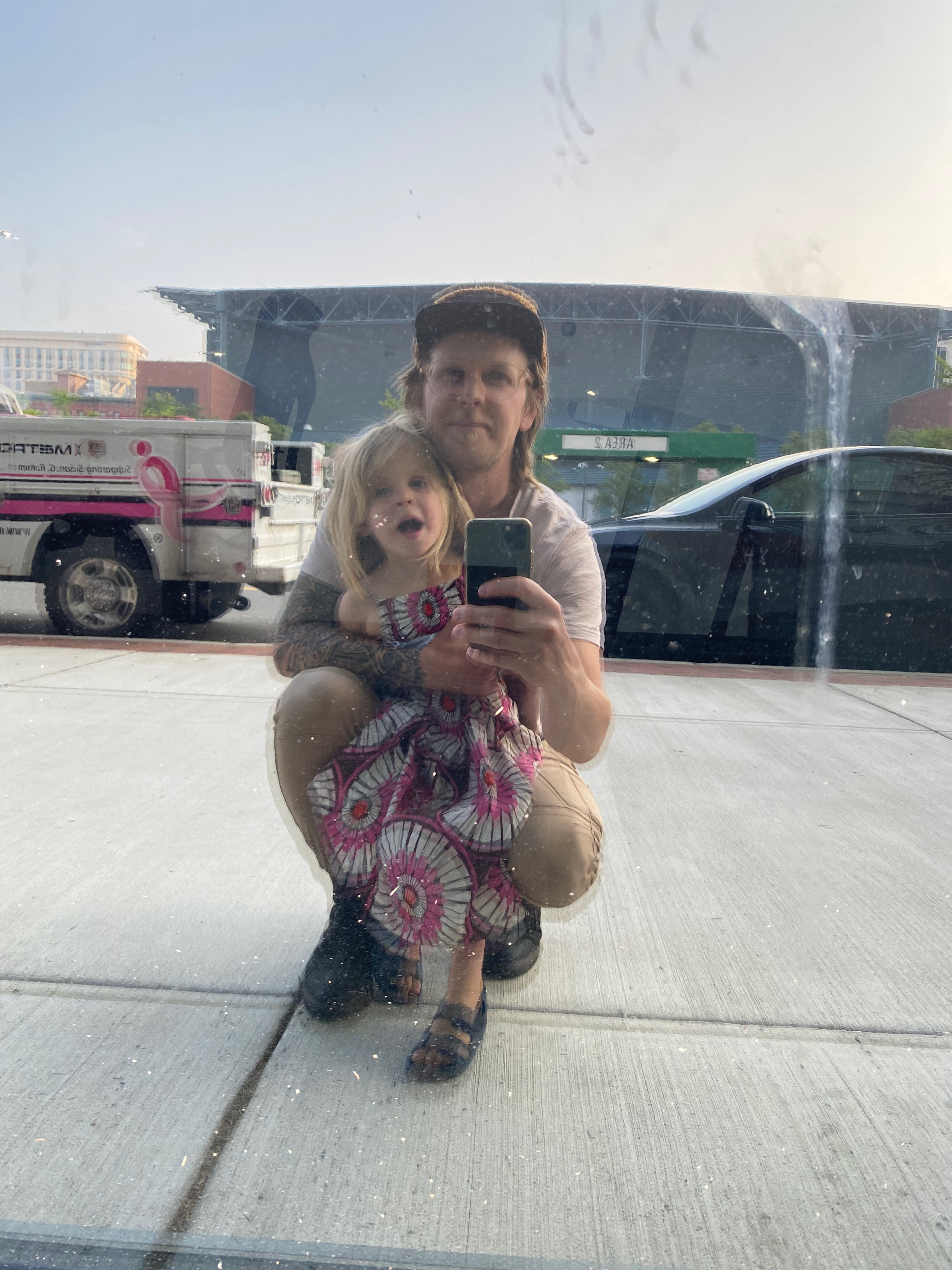
Yesterday, like every Tuesday, I cared for Junia all day [working only 4 days a week has its perks!]. In the morning she wanted to listen to music and dance, so I turned on the Bluetooth speaker and we found some tunes on YouTube. “Pick me up! Twirl me!” she insisted. How does a father say no to a three year old’s request to dance?
I picked her up, and we twirled to the beat. At first I held her arms and she swung wide. But she wanted to be closer, so I held her tight and twirled. She stared up at me with her lovely blue eyes, then curled in tighter as we spun.
She closed her eyes and leaned on my chest, safe and loved.
Tears of joy spilled as I realized the utter sacredness of that moment with Junia. I won’t likely forget that moment; it will always be a part of who I am as a father. I cannot un-live the joy of the experience, the twirling, the weight of Junia’s head on my ribcage.
I, as an imperfect parent, love Junia a whole lot. Bucketsfull. To the moon and back, as I tell her.
After all this I’m now left with more unanswered questions:
How much more does my perfect, infinite creator God love me?
How can I then share that love – the love of God dwelling within?
What can God’s love perfected in us mean?
Perhaps each moment, each conversation, each dance with kids, each card that I write, each offense I forgive, will help me understand.
***
*The Hebrew Scriptures feature a Psalter full of laments. Sometimes they feature individual lament, other times it’s the lament of a whole community. Lament – even rage – is only ever totally safe in God’s ears.
I am writing about love and beauty in this post, but I want to be clear that there are hosts of reasons to feel and express anger toward God. There is no safer place to lament pain and suffering than with God, through Jesus, in the power of the Spirit,



 ben videtich