one afternoon i was picking up my kids from school when i heard seething words from a pink-faced man who – evidently – wasn’t a fan of cyclists.
he angrily scolded me from his truck sitting in traffic: i bent one little rule and he wasn’t havin’ it.
in that moment i paused. whatever my pink-faced future friend believed about me, we are still part of my same human family.
whatever one’s identity, we’re all under the same umbrella, each crowed with God-given dignity. perhaps we live [or vote] differently, pink-faced man and i, but if i try could i find common ground with this guy?
i ask: why?
there’s a big election in a couple of months: it’s kamala harris or donald trump. we hinge our hopes on our favorite one. big data algorithms confirm what we chose two decades ago; there’s no questioning what we [think] we know.
Growing up in Christian circles, I often heard the phrase, “it’s not a religion, it’s a relationship.”
Empty religion was problematic. At our church, we wanted to embody a vibrant, meaningful faith that impacted Monday through Saturday. For us, the spiritual journey involved all of life. It wasn’t merely a Sunday experience.
The emphasis on relationship was perhaps helpful in some ways. As a Christian, I am in relationship to God through Jesus and the Spirit, and thereby also bonded to fellow human beings who are also children of God [even if sometimes we don’t yet know it!].
If someone were to refer to me then as a religious person, something inside me would react. I had an allergy to being an adherent to a religious tradition or a religious person.
These days I claim the title, whatever that comes with, and I don’t mind.
During my college years I attended a lecture. The simple idea that reminded with me was to always celebrate all that is good.
Why do my tiger lilies smell so unfathomably delicious? How is it that a hug from my spouse lifts my spirits – even if nothing [the financial decision, the difficult news, etc] is objectively fixed or solved? Why does a staring contest with my child always make me laugh? How can a simple ride on my bike feel transformational, like a winding journey with God? How can roasted fingerling potatoes from Bar Sótano literally change the course of an evening with Kae in Chicago? Why does it feel like I’m more deeply connected with God when I have a meaningful interaction with a friend or neighbor?
I’m happy not to have answers to these questions. But I’m delighted to live in these moments and slurp up every drop of joy they offer.
In one sense love and everyday beauty are counterpoints to pain, loss, and suffering. Wise older people have told me to count my blessings, and they’re absolutely right. It makes a difference.
And yet, I want to go further and suggest that love [and perhaps the celebration of all that is good] is not only resistance to the normal suffering and difficulty of human life; beyond that, love is participation in the life of God.
1 John 4:7-21 is love’s canonical zenith. No other passage offers as rich an explication of the meaning of intertwining divine and human love, except maybe 1 Corinthians 13. But 1 John 4 links love to God and other human beings like no other text anywhere, in the biblical canon or beyond.
Verses 11-12 read as following in the NRSV:
Beloved, since God loved us so much, also ought to love one another. No one has ever seen God; if we love one another, God lives in us, and his love is perfected in us.
So you’ve never seen God? Me either. But have you seen another person? That person bears the image of God. Express love to them links you to God. Practicing good religion, for Christians, means simply loving all people. Jesus tells us to love even our enemies [but that’s a long story worth another blog post!]. Don’t believe in God at all? Perhaps you’re doing the same thing when you care for a stranger. God loves you, even if religion has been used maliciously against you.
According to John, when we love one another, God lives in us. Imagine that – God alive in you. Not only that, but God’s love is perfected in us.
This is our participation in the very life of God.
Snap back to reality, as somewhere in the void a voice says, “hey there Ben, you don’t know what I’ve been through. I don’t think God would ever let [x] happen to me. Maybe God is love but it sure doesn’t feel like it.”
Just like I can’t answer why love is such a profound experience, like being united with God, I can’t say why such difficulty exists. With many throughout history, I lament* the reality of pain, loss, suffering. Theologians talk about suffering it a lot, with some helpful answers, but from most measures, it’s the most difficult theological problem for Christians. Nihilists conclude that nothing matters anyway, but Christians insist somehow God is good despite the suffering allowed.
Hope triumphs in the long view: God has a beautiful future for all people in the New Creation where all will be restored.
Until then, the best path forward is leaning into love: loving my neighbor; choosing to care; celebrating goodness and beauty.
I lost a mentor a few years ago to cancer. It was far too early. There was suffering. Fred died within a few short years of the diagnosis, despite some excellent medical interventions. I don’t think he reached 70 years old. But the whole time, he insisted God had given him “bonus time” to finish some projects he hoped to complete before his death: full-ride college scholarships for his many grandchildren, an endowment for church planting, care and support for his spouse, lots of final conversations with people he loved.
Fred and all those around him lamented the suffering which led to his death. Even still, he himself found beauty amidst the pain. He chose love.
In death, he continues to offer life to me and to many.
A few days ago my daughter fell and sliced her lip deeply on a bench. She lost a lot of blood before making it to the emergency room, all thanks to my mother-in-law, Stacy, and brother-in-law, Luke. Why did she fall? It was no one’s fault. It just happened, like accidents do. I lament the pain she experienced.
And yet, I rejoice to see healing taking place, and I thank God for the surgical team at Helen DeVos Children’s Hospital. What choice is there anyway?
Yesterday, like every Tuesday, I cared for Junia all day [working only 4 days a week has its perks!]. In the morning she wanted to listen to music and dance, so I turned on the Bluetooth speaker and we found some tunes on YouTube. “Pick me up! Twirl me!” she insisted. How does a father say no to a three year old’s request to dance?
I picked her up, and we twirled to the beat. At first I held her arms and she swung wide. But she wanted to be closer, so I held her tight and twirled. She stared up at me with her lovely blue eyes, then curled in tighter as we spun.
She closed her eyes and leaned on my chest, safe and loved.
Tears of joy spilled as I realized the utter sacredness of that moment with Junia. I won’t likely forget that moment; it will always be a part of who I am as a father. I cannot un-live the joy of the experience, the twirling, the weight of Junia’s head on my ribcage.
I, as an imperfect parent, love Junia a whole lot. Bucketsfull. To the moon and back, as I tell her.
After all this I’m now left with more unanswered questions:
How much more does my perfect, infinite creator God love me?
How can I then share that love – the love of God dwelling within?
What can God’s love perfected in us mean?
Perhaps each moment, each conversation, each dance with kids, each card that I write, each offense I forgive, will help me understand.
***
*The Hebrew Scriptures feature a Psalter full of laments. Sometimes they feature individual lament, other times it’s the lament of a whole community. Lament – even rage – is only ever totally safe in God’s ears.
I am writing about love and beauty in this post, but I want to be clear that there are hosts of reasons to feel and express anger toward God. There is no safer place to lament pain and suffering than with God, through Jesus, in the power of the Spirit,
Having graduated from Grand Rapids Theological Seminary in May, here are a few of the things I’ve gained. I’ll be posting about one per day, out of order, over the next ten days. Some will be awesome. This one, #7 starts us off lightly.
#7
The best stories rule the world; and the best story is the strangely compelling narrative of Jesus.
*
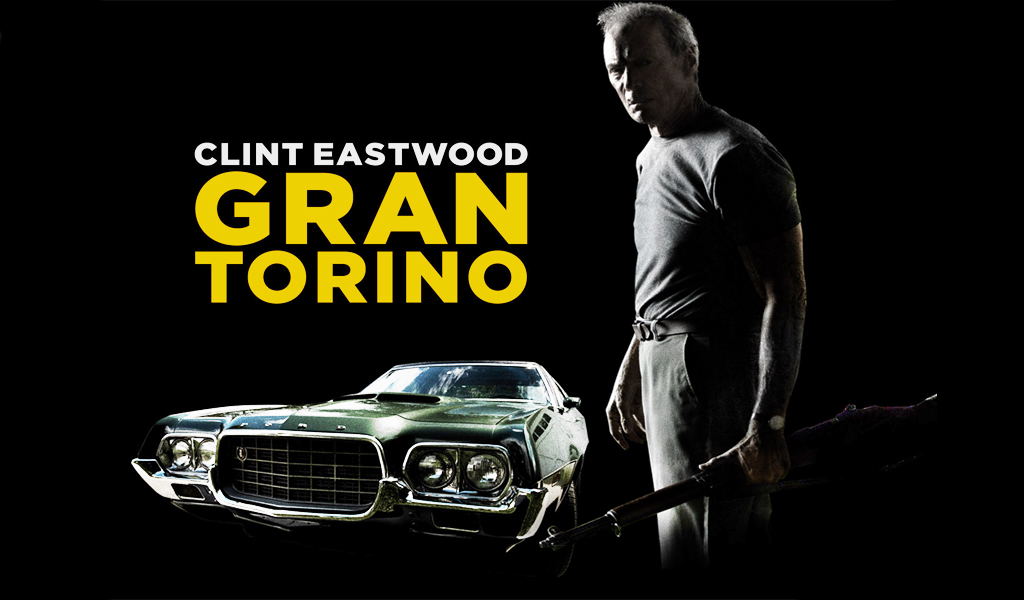
Try as I might to find meaningful stories to communicate the reality of God, the story God has given us is simply the most compelling story the world will ever hear. My favorite movie is Clint Eastwood’s 2008 masterpiece, Gran Torino. SPOILER ALERT: I’m about to give away the plot. If you haven’t seen the movie, go see it, and skip this post.
Anyway, I’ll make it simple. Eastwood plays Walt Kowalski, a crotchety retired Polish-American line-worker from Highland Park which is couched within the city limits of Detroit. He’s angry that all his white neighbors have moved away to the suburbs surrounding Detroit, angry that his kids are distant, angry that his priest [he’s Catholic] is young and inexperienced, angry that his wife passed away, angry that poor Hmong refugees now surround his neighborhood, angry that crime rates are up and that Detroit is struggling.
But something happens within Kowalski. I’d say it’s nothing but the power of God. Some may say it’s an old, angry gentleman who experiences an inner revolution. But I’d say it’s the life-transforming power of God.
He takes in a young neighbor, Thao, who had attempted to steal Kowalski’s prized car, an early ’70s Ford Gran Torino. At first it’s restitution, and Thao does odd jobs to make up for his attempted crime. But soon, Kowalski becomes a real mentor to Thao. Thao needs a father, and Kowalski coaches him on how to gather tools, hob-nob with the good-ol’-boys, fix things, and even gets him a construction job.
Kowalski makes the mistake of roughing up some gang members who had been trying to recruit Thao into their drug-running enterprise. Soon, the gang retaliates and shoots up the Thao’ house and rapes his sister.
Outraged, Kowalski takes things into his own hands. His priest comes over to confront him, but even though he makes a serious confession, he hides his plan from the young minister.
By this point, I’m expecting a shootout between Kowalski and the gangsters. No good outcome is really possible here, right? In the light from streetlamps, he storms in and yells at the gangsters from the sidewalk. Then, provocatively, he reaches his hand into his vest pocket. They light him up, cutting him down with automatics. As he bleeds out, the watcher learns Kowalski was unarmed the whole time; he was reaching for a lighter for his cigarette.
Instead of continuing violence, he absorbs it, laying down his life for his new and foreign neighbor, the neighbor who tried to steal his car.
Kowalski’s actions were powerful. But they were only powerful because they mirror the greatest action of all: Christ’s work on the cross. Jesus suffered and died, absorbing violence instead of continuing it. But where Kowalski did plenty of things to deserve anger–maybe not murder, but certainly anger and distrust–Jesus was a perfect sacrifice.
Kowalski discovered the deepest meaning of love: it’s laying your life down for your friend. And his story is compelling because it mirrors the greatest story-the story of Jesus.
Every year, my undergraduate university, Spring Arbor, does a years-end gathering complete with songs, dances, parodies, and comedy of every kind.
Each year we looked forward to Dr. Patton’s humble submission to the show. As an actor with a deep attachment to the world of theatre, he leveraged his powerful voice and calculated training to broadcast a simple yet profound message.
He would take the stage, stand in front of the microphone, and recite–as if reciting a moving sililoque–the lyrics from a top 40 song. And no matter what song he picked, each was slightly ridiculous. For example, All Gold Everything by Trinidad James, pictured below:
Gold all in my chain,
Gold all in my rings,
Gold all in my watch,
Don’t believe me, just watch.
Don’t believe me, just watch.
Or another song, apparently an interesting swing at the fashion industry by Right Said Fred:
I’m too sexy for my car
Too sexy for my car
Too sexy by far
And I’m too sexy for my hat
Too sexy for my hat
What do you think about that?
Just picture it–a middle aged man, greying hair–and he’s quoting these profound lyrics in front of a thousand late teens matriculating through a Christian college.
Maybe it’s hard to picture.
Maybe not.
Now, another perspective.
Ken Heffner, director of Student Activities at Calvin College, perceives culture differently. His job involves inviting bands of all kinds to perform at Calvin. In November of 2014, he brought in David Bazan, a talented artist well known for his journey away from Christian faith and into agnosticism.
Heffner invites the artists to perform, then entreats his students to discern how God is at work within their artistry. Ken does a talk-back session after every performance, asking insightful questions relating to spirituality and faith, and the artists respond from their own vantage point. He has invited crude rappers and hard-edged rock bands to sing at his mid-sized Christian university, preserving the cadence of performance followed by talk-back.
Paul Patton subtly sheds light on the foolishness of culture, recognizing its strengths while seemingly keeping it in its place. Ken Heffner tacks a slightly different line, attempting to carefully observe how God is at work within culture.
To me, these two individuals represent two seemingly conflicting perspectives on how to live effectively, as Christians, in the world.
How to deal with culture is the difficult question at stake.
One stream of Christian faith has embraced culture and seen participation as the best option, seeking to enter fully into it and reform it. We see this especially clear in traditions such as the Reformed Church in America, a denomination that has received inspiration and influence from Abraham Kuyper and other thinkers. The other stream has distanced culture, recognizing its inherent temptations. We see this in holiness churches, churches influenced by John Wesley, among many others.
Both streams provide Christians with important wisdom.
Christians are surrounded with cultural influences. Just try driving along the expressway in an urban area; my guess is you will have to discern which billboards proclaim important truths. Just try doing a Google search for local restaurants; my guess is you will have to sort through ads and pop-ups in order to make progress.
No matter how hard one may try, apart from becoming a hermit there are limited ways to hide from culture.
I think we need Paul Pattons and Ken Heffners in the Christ-following world. The church needs to recognize the fallacies and deceit of culture. And yet, at the same time, followers of Jesus need to learn to meet others where they are.
Jesus sets a strong example in Mark 1:35 by rising early in the morning to pray. He retreats from the world. But in other instances, such as Mark 2:15-17 we learn that Jesus is spending time eating with tax collectors–duplicitous cheats who have betrayed their own people for personal gain–and he insists, when questioned by religious authorities, that he has come not for the right-doers, but for sinners–the wrongdoers.
Jesus engaged people where they were.
Our problem is that we are not Jesus. This does not mean we cannot carefully discern culture’s effects and engage with music and art and film, attempting to deeply exegete culture for kingdom purposes. But it does mean that we have to preserve a strong sense of what is right and good.
As followers of Jesus Christ, we have each received a wealth of wisdom from his example. But we also learn from the development of the first churches. Paul instructed the churches at Philippi in this way:
“Finally, brothers and sisters, whatever is true, whatever is noble, whatever is right, whatever is pure, whatever is lovely, whatever is admirable – if anything is excellent or praiseworthy – think about such things [Phil. 4:8].”
Because of our formation, we may relate more in our approach to culture to Ken Heffner or to Paul Patton. Because of my own formation, I must admit that I fall in line more quickly with Paul Patton’s skepticism of culture and his sensitive conscience. I know many other people who are more comfortable with Ken Heffner’s open yet carefully discerning approach.
Either way, we should honor or brothers and sisters in faith as we make choices that are reconciled with our conscience. And our best instruction always comes from Scripture. And whatever our spiritual heritage, our allegiance always belongs exclusively to Jesus.
During this Advent season 2012, most of the Midwest is overcast and gray. Michigan is no exception. I was aware of this as I shuffled past Kindergartners on my way out of school at C.A. Frost Environmental Academy here in Grand Rapids. Looking forward to Science Fridays with Ira Flatow, I turned on the radio in my hatchback. Recalling a text message my girlfriend had sent me earlier during my lunch break, the shock was lessened.
The shock remained, pulsing through the minds of everyone I have been in contact with for the past several days. 26 persons, 20 of whom were young children, gone in an armed maelstrom. In presidential fashion, Obama announced, “God has called them all home. For those of us who remain, let us find the strength to carry on and make our country worthy of their memory.”
These words initially strike us as encouraging and thoughtful. I would like to deeper their meaning and do my best to speak to the situation theologically. The key question lies in discovering the response of the church, and subsequently of the faithful Christian, to the tragedy. Obama’s words help prime questioning hearts within people everywhere.
A family pauses at the vigil to remember and grieve.
Entering this quandary begins in framing how the church responds to tragedy. The church, and Israel, has always been defined by the community it consists of; Israel was identified by their communal decisions under God. The church is defined by Israel’s hope, the Messiah or Jesus, and our Christian hope is our identity. The New Testament intricately describes how the community of believers collaborates to embody the message of Jesus’s kingdom come [Acts 2:42-47]. All the while, we, the community of believers, anticipate the fullness of creation made new [Revelation 21].
Back to Obama’s words: “God has called them all home.” This statement implicitly presupposes a God who caused these deaths. A theodicy is not necessary here, but to be clear, God mourns these losses. The young man, Adam, was free to exact his own will on others, sadly, and we grieve the losses. So does God. Jesus, the Son of God, suffered with us [Isaiah 53, Gospels]. God is greatly grieved for loss of life and the wickedness that causes it [Genesis 6:5-6]. He knows the length of our days, but clearly he does not seek to shorten them.
Back to the response of the church. This past Sunday, at Grace Episcopal, the church in which I have served for going on four years, we lit a candle and prayed for the families and individuals in Newtown. We lifted up our concerns and cares before the God who comforts and heals. We did it first as a community of faith, collectively pleading for God to reach into lives. We did it also as families and individuals with varying opinions and emotions. We long for God to make all things new, and do our best to keep praying the prayer Jesus taught us, “on earth as it is in heaven.”
We desire things on earth to be as they are in heaven, but we simply do not understand the evils made explicit in the Newtown tragedy. Nor can we comprehend the systemic evils that beset the planet we share. We do what the church does best: we pray, encourage, grieve, listen, and repeat the cycle. For the children, the parents, the families, the extended families, for Adam and his mother who is also gone. May the grieving families in Newtown know that the church, the common people of faith in God throughout the nation and world, is praying. And may they know that the God of the universe is also grieving, but also making all things new in the end.
The names of the departed are below. May we continue in prayer.
The names and ages of the children are as follow:
Charlotte Bacon, 6
Daniel Barden, 7
Olivia Engel, 6
Josephine Gay, 7
Dylan Hockley, 6
Madeleine F. Hsu, 6
Catherine V. Hubbard, 6
Chase Kowalski, 7
Jesse Lewis, 6
Ana M. Marquez-Greene, 6
James Mattioli, 6
Grace McDonnell, 7
Emilie Parker, 6
Jack Pinto, 6
Noah Pozner, 6
Caroline Previdi, 6
Jessica Rekos, 6
Avielle Richman, 6
Benjamin Wheeler, 6
Allison N. Wyatt, 6
And the names, ages, and job titles of the adults are as follow:
Rachel Davino, 29, Teacher
Dawn Hochsprung, 47, Principal
Anne Marie Murphy, 52, Teacher
Lauren Rousseau, 30, Teacher
Credit for the list of people and the picture goes to International Business Times. Their article, from December 15th 2012, is here.



 ben videtich