A Prayer for Anxiety

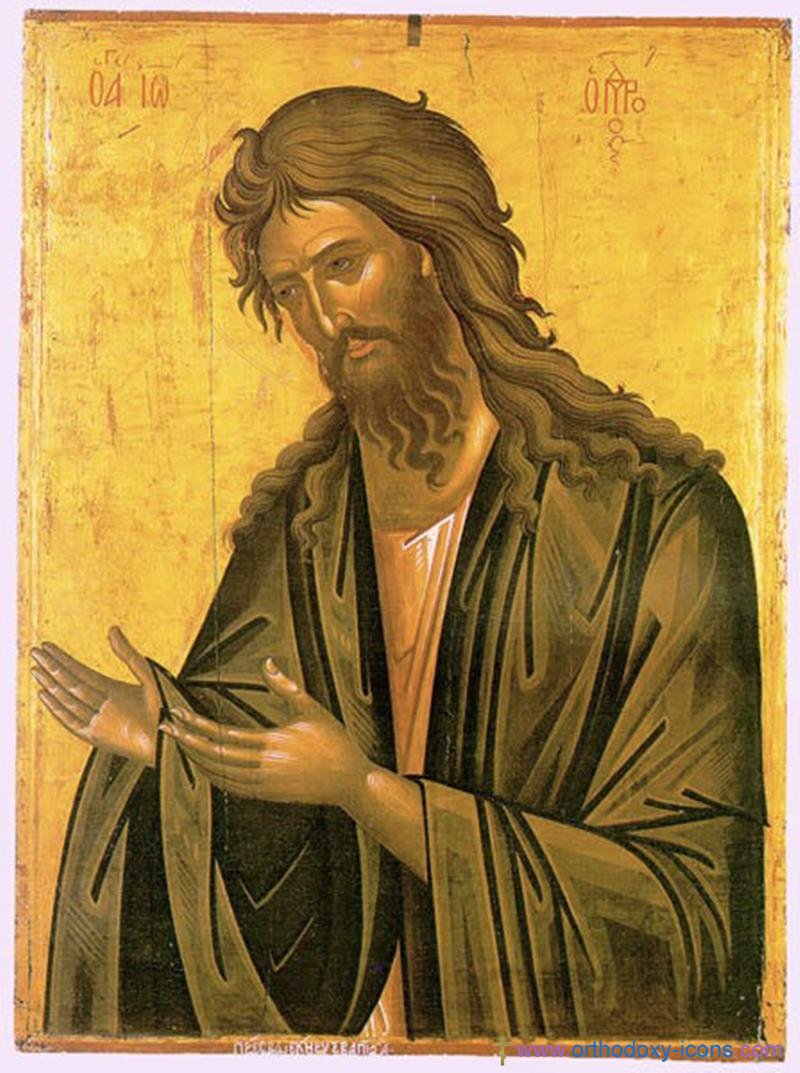
St. John the Baptist

This is a prayer for today, June 2nd 2014.


Or, it is a prayer for any day during which concern gives way to worry.

Or, it is a prayer for a community going through change.

Or, it is a prayer for a family experiencing something new and different together.

Or, it may reflect the response to difficult realities that saints of old faced down before their death or exile.

Or, it may speak to something you are going through currently.

*******


Giver of Life,

Mercifully grant that we, your undeserving inheritors, may steward your gifts well. So imbue us with gratefulness for your love that our anxiety gives way to blissful contentment, our fear to godly anticipation, and our worry to graceful hope; for your sake we ask this through the Son and in the power of the Holy Spirit.

Amen.

A Problem of Our Own Making: Exclusion Through the Centuries

Humanity has always been characterized by a toxic proclivity to exclude. Certainly it is nation versus nation; the ravages of war and genocide blare from the streets and alleys and televisions and radios of the globe. Exclusion in capitalist countries materializes as a war between economic classes. Within families and small communities, exclusion damages or destroys interpersonal relationships.

And we live in light of a host of others who witnessed exclusion before we did. The people of Israel experienced it when they sought refuge in Egypt from the famine that was destroying their land [Gen. 46-47]. In time, Joseph died and the Egyptians turned their Hebrew refugee neighbors into slaves [Exodus 1:8-14]. Later, God would bring them out through his servant Moses, but God taught them a lesson during those difficult years in an oppressive foreign land. In Leviticus 19, Moses outlines laws that tenderly protected impoverished families and sojourners, insisting in verses 9-10 that farmers leave the edges of their fields unharvested so that poor passers-by could gather the excess grain. Next, Moses connects these love-your-neighbor commands explicitly to the experience of, first, xenophobia, then slavery in Egypt: “When a stranger sojourns with you in your land, you shall not do him wrong. You shall treat the stranger who sojourns with you as the native among you, and you shall love him as yourself, for you were strangers in the land of Egypt: I am the Lord your God” [Lev. 19:33-34].

Though they had experienced exclusion, God’s people were not to treat others vengefully. Rather, God taught them to treat foreigners with dignity, and even to give up resources on their behalf. They were to love strangers as themselves. God’s answer to exclusion was not self-preservation; it was hospitality. And though this word may conjure up images of sweet tea on a front porch, hospitality reaches much further. It impacts how we understand our time and resources, beckoning us to understand the stranger in a new way.

Even though we no longer live in an agrarian society, and few of us have literal fields to leave only partially harvested, the practice of hospitality continues. In Matthew 25:31-46, Jesus tells the parable often referred to as the sheep and the goats. The sheep are affirmed for having offered their hospitality- their food, their resources, their time; they sought every opportunity to extend compassion. And yet, they wondered when they had done this for the king in particular. The King, who is Jesus, responds and tells them that every time they extended compassion to “the least of these” they were doing it unto him. What followers of Jesus are shocked to discover is that he himself is the recipient of our hospitality. What we do for the “least of these” is done unto Jesus himself.   

But in the age of the suburb, American culture stratifies people groups via income. In Grand Rapids, Michigan, where I live, certain streets delineate between classes. And institutions, including so many churches, fortify the social stratification process by keeping people from similar demographics packed together. So how exactly can we offer hospitality to the needy and the lost? It may start with something as drastic as an intentional geographic move to a poorer neighborhood. But it may begin with something simpler, such as a dinner invitation to an exchange student, single mom, or busy family. Hospitality can take many forms.

I lived with a group of guys for several years before getting married in 2013. As Christians, we wanted to do our best to practice Christian hospitality. Through God’s grace and his challenge in our lives, we felt led to host a weekly hospitality meal in our home. The six of us would share costs, and one of us would invite a few folks over. They were always invited to stay for prayer after the meal, and many did. We hosted families, couples, people in need, people with much to offer. At each meal, God blessed our conversation. We asked questions and listened, attentive to how God was working through the lives of these dear people. Throughout, we discovered how each meal mirrored, in ever so subtle ways, the hope of God’s people. With every meal, there was sacrifice and sharing; there was honesty and trust; there was hope and imagination. With every meal, we continued an ancient story of people practicing lavish hospitality. God has already provided resources abundant; we simply respond to his quiet call to open our hearts. And just as he opens his heart to us, so do we open our hearts to the hurting and hopeless around us. And we do so knowing that as we serve, we serve our risen Savior, Jesus Christ.        

The Problem with Inviting Jesus into Your Heart

DSC_0120

Ask most Americans what it means to be a Christian, or even what the Gospel of Jesus is, and they will likely respond with a phrase to the effect of, “Jesus died on the cross for your sins so you can go to heaven.” The problem is simple: people are sinful. The solution is simple as well: ask Jesus to forgive you. The effect is said to be remarkable. Jesus decides, after your prayer, not to send you to hell.

Could eternal salvation be so simple? Certainly the details of faith are slightly more complicated than this. However, this prayer can be a starting point. Indeed, many powerful people of God have begun in such a fashion; they prayed a simple I-need-you-Jesus prayer, then followed him.

The difficulty arises when ministry centers entirely on attempting to get people to make decisions to follow Jesus. This may sound counterintuitive, but I have witnessed this very strategy. Most recently, I was present at a winter retreat for junior high students. The retreat was held at a small Christian camp in West Michigan. A couple times per day, we rounded up the tweens for an hour of formation. Essentially, the message was that everyone needs to escape the fires of hell via the I-need-Jesus prayer. The aging yet passionate camp director vividly described the death of Jesus at every gathering. The problem was that this is as far as they got. They touched on the resurrection of Jesus just once. There was nothing about the great cost of discipleship. There was nothing about the kingdom of God [a subject Jesus seemed to emphasize – see the synoptic Gospels]. There was nothing about sanctification, the long Christian word for how God slowly transforms people from the inside out. No, everything was about escaping hell. After all, people could die at any time. And it is scary to imagine what it would be like to die as a rebel from God.

Salvation is absolutely an important message. And it is a lot easier to talk about salvation than discipleship. But maybe the problem lies in the difficulty of letting go of old habits. Everyone, it seems, has heard about the sinner’s prayer. But have they heard about God’s kingdom? Have they heard about the Holy Spirit that was sent at Pentecost to comfort, empower, and guide the church? Have they imagined what the world might be like if the church was truly a forgiving, restoring, loving, generous, honest community?

Sadly, the message of salvation seems to have sanctioned off the work of Jesus to the next world. It is only when we die that we reap the benefits of salvation, the story goes. But this does not appear to be the case for members of the early church. For them, following the risen Christ meant radical life-change. In Acts 2:45 Luke records what following Jesus meant for the earliest believers: “And they were selling their possessions and belongings and distributing the proceeds to all, as any had need.” They also ate together, prayed together, and worshiped God. They had a common life together. I doubt if there was a guy telling everyone to accept Jesus into their heart at these meetings. All they knew was that a change should be made.

To be clear, I do believe our relationship with God is personal. I John 3:1a speaks of this: “See what kind of love the Father has given to us, that we should be called children of God; and so we are.” Saint Paul tells us in Ephesians 1:5 about how God has literally adopted us: “[in love] he predestined us for adoption as sons [it should go without saying that women are part of this in an equal manner] through Jesus Christ, according to the purpose of his will…” And since God is personal, we can follow relationally. The late Robert E. Webber said this: “When someone asks me the question, “Do you have a personal relationship with God?” I always answer, “You’re asking the wrong question. What is important here is not that I in and of myself achieve or create a personal relationship with God, but that God has a personal relationship with me through Jesus Christ, which I affirm and nourish.”[1]

I also believe that belief is important. John’s Gospel brings this into crystal clear perspective. But James tells us the result of life in Jesus: real change. He does not equivocate: “…faith by itself, if it does not have works, is dead [2:17].” Jesus is interested in eternity. But eternity began millennia ago, and time races forward whilst unnamed people are dying without hearing about Jesus. Famines wrack the planet even as human casualties mount from wars and genocide. Christians, I believe, should cease worrying about how God will judge those who have never heard his name, and embody a faith that the world will find peculiar.

Pope Francis is helping to animate this kind of faith. Washing the feet of imprisoned Muslims was certainly an act of humility and love, an act that forces one to ask, “why would he ever do that?” I am not advocating that followers of Jesus cease sharing their faith. I am only suggesting that their sharing should point toward God’s kingdom reality. Individual lives are transformed, as is the church as a corporeal unit.

See, the problem with inviting Jesus into your heart is that he stays there. He stays, instigating change, reminding you of your calling, listening to your cries for hope, helping you to grow deep roots of life changing faith, and spurring you on toward love and good deeds.


[1]Robert E. Webber, The Divine Embrace: Recovering the Passionate Spiritual Life
(Grand Rapids, MI: Baker Books, 2006), 89.

Jesus Receives our Hospitality?

Woodcut by Rick Beerhorst

Living near Easttown in SouthEast Grand Rapids, it is nearly impossible to navigate the sidewalks without occasionally seeing Rick Beerhorst, the bespectacled artist who created the image above. It is an image that immediately evokes a sense of togetherness. Truly, the open table is a place where love abounds; both love to the familiar and love to the stranger can be manifest over food and drink. A dear friend gifted this print to my current home. It hangs on a wall still, and it prompted a reflection.

Recently, my fiance and I won the bid on a home that is for sale as a short sale. This is a simple word for a complicated concept, but suffice it to say it is likely that we will be able to move on the deal after 2-4 months. Then, after we are married and move in, we will have a place to establish a place of hospitality in a new and just-married fashion. As we approach the day, there are countless concerns and worries alongside the abounding joys and triumphs. Last night we talked about financial concerns and vocational questions. We also talked about the support and affirmation we consistently receive. Above the din, a clear concern for offering hospitality rises again and again to the surface in our conversations.

All of that aside, we, as Christians, are reminded once again presently of the most subversive event of history: the Resurrection. Indeed, Lent 2013 is over and we now rejoice in the Easter reality, the triumph of Jesus over sin and death. Interestingly, however, it just so happens that in Matthew’s Gospel, right before the narrative about the plot to kill Jesus in chapter 26, Jesus tells a story about the future. It’s the familiar story in chapter 25:31-46 about the sheep and the goats. At the end of our current age, Jesus will return, making all things right and all things good. Amidst the joy, however, there is also accountability.

Put simply, sheep did the right thing. The goats didn’t. And the consequences are significant to say the least. Here is the twofold element of what is so shocking in this story: the sheep were surprised that they were being commended while the goats were equally surprised that they had missed the mark.

The sheep had so integrated habits of hospitality and compassion that they were shocked to realize their actions were “unto me” [me being Jesus]. The goats had so insufficiently established similar habits that they were equally shocked. I can just imagine a contemporary parallel for the goats’ response: “Jesus, remember the time I cut a check to the church in 2006? I’ve even done that a couple times since!” The sheep, the ones who had been faithful stewards, are commended. They probably didn’t even remember the moments Jesus brought to light – times they faithfully gave of themselves and their resources, their time and their talent, their all. But they were rewarded greatly for this.

Hospitality matters to Jesus. Matthew records this story right before the account of Jesus’s suffering on the road to the cross. It is unfortunate that the word “hospitality” often brings to mind a lazy afternoon in Alabama on a wrap-around front porch complete with straw chairs and sweet tea. This is certainly a fine example. But it does not stop there. Hospitality can take on a very rough edge. It can demand much of us. The “least of these” often do not smell or sound particularly nice. And that’s just the beginning.

What is important to note amidst the triumph of Easter is the radical nature of discipleship in the footsteps of Jesus. We rejoice as we serve others because we are freed from being only concerned with ourselves. Jesus himself – God – was concerned for the needs of the created world. As we follow in his footsteps, we too should live lives centered not on what we gain from others, but in how we give to others – and ultimately, to Jesus himself, who somehow, according to Matthew 25, actually receives hospitality from those he created. In this we rejoice greatly.


God is Making All Things New

“Look! Look! God has moved into the neighborhood, making his home with men an women! They’re his people, he’s their God. Death is gone for good-tears gone, crying gone, pain gone-all the first order of things gone.”

-Revelation 21:5a, MSG.

People of faith in Jesus often think of this verse and it’s ramifications for the future. And how important this is! And yet, God’s work is now just as it is yet to be. Look down at your hands. Go ahead. Do it. How often are your hands used to help? To comfort? To give? You are a living answer to prayer should you respond to God’s work in you.

Certainly our best intentions are nothing apart from God’s redeeming work within us, but we can rest assured that he is using his gathered people – the church – to do his work. May we be found faithful as we seek to make our neighborhoods, our relationships, and our offices new, anticipating the full completion of these things at Christ’s return

20130301-120948.jpg

doves and serpents : the experience of evil

A while back I was hearing about a close friend’s reflections on why we experience bad things. They said, “when I go through difficult experiences, God can then use those experiences by allowing me to relate better to others.” Interestingly, the difficult experiences were of their own making. And they were self destructive habits. They chose to be involved in abuse of substance, to disregard their body as holy. Moreover, they intentionally desired to continue experiencing these things, all the while believing they could learn to guide others more effectively. They believed participating in self-destruction (can we just call it sin?) would offer new insight that they could leverage for the good of others. Specifically, this was in the arena of the use of illicit drugs.

Please note that I am intentionally leaving aside the question of how this person was formed. I illustrate with this particular case to bring to mind a lucid conception of how living in the way of Jesus calls us out of our present darkness.

I wanted to contrast that kind of predisposition with the teachings of the Christian tradition, seen clearly in a couple important texts from Scripture. Here is the first. James 1:26-27 [MSG] :: “Real religion, the kind that passes muster before God the Father, is this: Reach out to the homeless and loveless in their plight, and guard against corruption from the godless world.” I deeply value the first elements of this chapter-concluding sentence, but it’s the final sub-sentence that drives the point home: “… and guard against corruption from the godless world.” This is a broad statement. The NRSV transliterates the passage slightly differently: “keep [your]self unstained by the world.” Clearly, dabbling in evil to discover new ways of helping people is not proscribed in these passages. Damaging body and mind with drugs, treating others as sex objects, and searing others with harmful words would seem to stain a person. And while God forgives our sin through the work of Jesus, the Son, we are not created to continue in sin.

People should not walk in paths of unrighteousness so that they can relate to others.

There is a case to be made, of course, for God turning into good. Consider the inmate who, having been radically God-changed from a life of murder or larceny, finds unique ways to minister to others who have trod similar paths. Indeed, this is Romans 8:28 [MSG] entering common human reality: “we can be so sure that every detail in our lives of love for God is worked into something good.” It seems this is what the dear friend from the opening illustration was desiring all along, but misunderstanding at a subtle yet essential level. Amidst bad decisions, there was a sentiment that they had to experience evil. Only then, went the thought process, could God transform their wrongdoing into sage advice for posterity. This is simply not so.

Here is a biblical paradigm that helps one navigate the tricky path of being “of the world” [John 15:19] yet being chosen by God out of the world. Matthew 10:16 [MSG] :: “Stay alert. This is hazardous work I’m assigning you. You’re going to be like sheep running through a wolf pack, so don’t call attention to yourselves. Be as cunning as a snake, inoffensive as a dove.” Be as wise as a serpent, says Jesus.

“Cunning as a snake” is a jarring phrase to hear from Jesus as he commissions his twelve for changing and transforming their world. Numerous theologians seem to come to the conclusion that Jesus is confirming the hard-edged presence that his disciples were to embody in the world. Jesus himself spent time with rough folks such as tax collectors and prostitutes. But he also demands holiness [Lev. 20:26, 1 Peter 1:16]. Being holy does not mean being ignorant. Yet in the same breath, God redeems the wrongs of the sinner’s past. God does this.

This means we can literally participate in the life of God and become united with him while we infiltrate our culture with the love of God that has transformed us. Below we read part of a prayer Jesus himself prays for the church in John 17 [MSG]. Take the time to read the rest of it from any Bible.

I glorified you on earth
By completing down to the last detail
What you assigned me to do.
And now, Father, glorify me with your very own splendor,
The very splendor I had in your presence
Before there was a world.

I’m not asking that you take them out of the world
But that you guard them from the Evil One.
They are no more defined by the world
Than I am defined by the world.
Make them holy—consecrated—with the truth;
Your word is consecrating truth.
In the same way that you gave me a mission in the world,
I give them a mission in the world.
I’m consecrating myself for their sakes
So they’ll be truth-consecrated in their mission.

When we live as we were meant to live – holy and blameless – we change the world and build the kingdom of heaven. We do not have to experience evil, and most of us have probably already seen enough to know how bad things can be. Rather, we live as wise serpents, aware of evil and its effects. But as doves, we as followers of Jesus live changed lives that exemplify the hope of Jesus to a watching world. This is the place where the Holy Spirit continues to empower the church to establish the reign of God in Christ. Yes, Jesus is alive in the world. In us. In other words, living holy, as God created us, makes everything a whole lot better.

the destruction of human community [and where it comes from]

Two years ago I was privileged to have read, as an assignment in my systematic theology class, Not the Way it’s Supposed to Be by Neil Plantinga. Essentially Plantinga takes a hard yet enlightening look at the way sin infects the world. To a secular person this term “sin” may not resonate, and that is why I will define it. Sin is how you felt at recess when they laughed at you for dropping the ball and falling on your face. Sin is the feeling you had after you lied to your parents about the party you went to back in high school they weren’t so keen on. Sin is the reason your marriage is not better. My sin is why I don’t have the trust that I could.

Hopefully I’m not singling any one group out. I myself am personally complicit in the systematized problem of our exciting yet strange and difficult world: us. Yes, we are each contributors to the big problem. In this essay I want to propound the concept that when we read about God’s concern for the world, his glory includes the success of human community. Let me unpack that. When Christians say, “that does not honor God,” what they mean is that “that act is outlawed by God because it deeply damages people who are created in his image.” God is not, as Jim Carey in Bruce Almighty hilariously declares, the “almighty smiter.” And when John Piper talks about the glory of God, he advocates for people honoring God for his own sake as well as their own.

At this point a brief excursus is needed regarding the problem. The forces at work, the powers that be, the dark realities. These require definition. Christian Scripture, in Ephesians 6, emphasizes the need for metaphorically arming oneself for battle against the “spiritual forces of evil in the heavenly places [v. 12b, ESV].” This requires the “whole armor of God” and Paul is explicit to reference the enemy – the devil – in verse 10 also. He goes on to describe what it takes to withstand the buffeting forces of evil. So, for the Christian, people rebel, but not only because we are bent toward ourselves but because there are powers that be: namely, Satan. Epitomized in films such as The Exorcist, there is a known and felt reality of evil in the world, and Christians have a name for its leader. We rebel. We collaborate with evil.

That said, we are back to a human community, influenced by the powers that be: the spiritual forces of evil, and the self-promoting pride which we wrongly use to support our perceived autonomy and independence. Now we must must discuss the Creator, God. Christians believe there is a God who has been made known in history, most clearly in Jesus Christ the Son of God. In the first book of sacred Christian writings, the Bible, God set apart a people, the Israelites. They were fathered first by a man named Abram who changed his name to Abraham. He set them apart to be different sort of people. One document he used to set them apart was delivered on a mountain. In the second biblical book, Exodus, we read in chapter 20 about what the rules consist of exactly. The first few relate to God and how he sees his created people. The last six-seven translate much more to honoring human relationship.

All that to head back to the thesis: God’s ordering of the world for his glory includes the deep and vibrant wellness of people. Recently I was substituting, assuming for just one day the role of teacher at a high school here in Grand Rapids, Michigan. Stepping away from the desk momentarily, I returned to discover someone had rummaged through my shoulder bag and stolen my iPhone. Classes were transitioning, and by the time I realized it was truly gone, all the students had left for their next class. Accordingly, the rest of my day consisted of calls to Verizon, conversations with administration at the school, and a police report. And since then, many plans have been altered. The phone is in the process of being replaced, and I am deeply thankful for the help of Amanda, a kind woman in Charlotte who faithfully serves at a Verizon call center.

We can begin to pick this situation apart in many ways, but here is a start. Someone broke a commandment, number eight to be precise. They stole something that happened to be an integral part of my life as a member of the human community. And now, I am left with that sense of looming distrust of others. I question the motives of people I did not question before. Like ripples on a pond surface, I can list countless effects of the splash that was the theft of a mobile device. They were not so bad in comparison to many other ripples. My difficulties included inconvenience, monetary loss, frustrating conversations. A small loss. But each of us connects here; each of us has experienced loss. We have experienced loss actively and passively, thoughtfully and carelessly. A junior high boy may shrug off the insults about his weight, but he feels the ripples. A loving mother may write off her daughter’s rebellion as “just a phase” but she feels the burden of rejection. The ripples.

God’s insistence on an ordering of human community confronts our self-assertion. When we are wont to serve ourselves first, we send out ripples. Sometimes when we feel the effects, the ripples of someone else’s sin, we respond by sending ripples of our own. Insults. Gossip. Slander. People, this is the destruction of human community. We often see headlines about the amalgamation of many different ripples that create tsunamis of human conflict. Phrases are born that serve as reminders of how disordered we can become. The Holocaust. 9/11. The Killing Fields.

God grieves seeing these human realities. We are sure that he suffers in this affirmation from Romans 5:8, written by Paul: “while we were still sinners, Christ died for us.” God suffered. Ironically, the perfect Son of God was killed by a world that so desperately needed to see real and lasting hope. And in Revelation, the last book in Christian writings, we read about God’s judgment. We read about his righting of the many wrongs that pervade the world. It takes a long time to undo the many problems caused by a bitter and hateful world. But after undoing so much, heaven – the place of God – is no longer different than the place of people. The extant evil is gone, its ruler finally defeated. And people dwell in peace and safety.

So does the Christian, changed by God in Christ and continually encouraged by the community of belief known as the church, continue to send out ripples? The hope is an affirmative no. And yet, we as followers of Jesus continue to battle the powers that be, the systems and the habits that press the hope out of humanity. And we still participate in the systems at times. Maybe one way to enact change is by recognizing this simple maxim: do unto others as you would have them do unto you (Matthew 7:12). Jesus said it in his famous Sermon on the Mount. Maybe we can send ripples of hope. Maybe we, who have received so very much from a generous, extravagant, yet suffering God, can help point the way to the hope that is yet to fully come. When we are tempted to send ripples of malice and judgment and hate, we can, with the believing church, anticipate the fullness of God’s ultimate hope for the world. We know the sources of the destruction of human community. But we also know God’s response. He is on our side, searching for those who are concerned for loving him. And this is made obvious in loving others.

a new perspective on Paul [and Jesus]

I had heard of this small group of trouble makers. As one of the seventy-one members of the ruling council here in Jerusalem, I hear about all the rabble. They had centered their ideologies around a man named Jesus, formerly a very pure, selfless Jewish man from the north of Israel. I still remember all the rumors my friends told me. I think he died something like two or three years ago. Though I had been out of town for several weeks during the the week of his death, I heard all the news; news of miracles, healings, and a significant amount of blasphemy. Evidently Jesus was quite a figure, claiming to be the Son of G-d.

I knew about everything through members of the court and friends. The incarceration, the trial, the torture, the crucifixion, the burial. Jesus even managed to maintain some kind of following even after his death. Supposedly he was raised by G-d from the dead. Everything seemed to make sense except that. I never even considered believing what the Pharisees preach about the resurrection of the Messiah.

Either way, I’ve definitely seen some zealous uprisings in my day; I’ve even partnered with the other side of the Sanhedrin council, the Pharisees, to stop some of them. I mean, good grief, the Sicarii literally assassinated other Jews in the night. Not that Jesus was anything like that rabble. These hearings would often culminate with fairly strong disciplinary action; it isn’t uncommon to put these troublemakers to death. After all, it is a great risk to the future of our culture.

Though I missed out on some of the gossip about Jesus’ death years back, it just so happened that I was around when some of Jesus’ most influential followers were brought in to the court. I think Peter and John were their names. I remember Peter saying some fairly inflammatory things; his views on Jesus were significantly different than mine. And yet, I could not find it in my heart to fully discredit him, or John for that matter. They were fairly uneducated men, but regardless they did perform a healing near the temple. I am still wondering about that. I know the guy they healed.

Fast forward. There I was at the temple, sitting in on a hearing for one of the Jesus-following leaders, Stephen. Near the end of his defense speech, he began speaking directly against me and my council members. He didn’t even specify Pharisee or Sadducee, he just launched in. I remember something about “stiff-necked,” something about “bullheaded,” something about the apparent failures of my ancestors. I remember looking over at a couple friends as Stephen continued. We became enraged, losing control of our emotions in those moments. The next thing I knew, two of my closest friends, Eliot and Jomar, got up and forcefully ordered our council guards to grab Stephen and take him away. Everyone knew Stephen had this coming.

We all got up and followed them to a little valley outside the city. By this point some other townspeople and leaders that weren’t a part of the Sanhedrin had joined our party. They were shouting insults as we scuttled through the dusty streets. I remember resonating with these shouts. My heart beat as one with them. On the way down I had a brief conversation with my friend Saul. Though we were on different sides of the political equation, we connected personally. I related to his position on eliminating the power and influence of the Jesus-following sect.

Angry Jews gather around Saint Stephen with stones.

Previously he had walked into the back of the court just as all the yelling had started. “Can you believe these people?” I recall him whispering. I responded in full agreement. We had maintained a brief conversation on our way out of the city, and I had grabbed a couple stones. As we arrived to the circle, Stephen was standing, but seconds later someone placed a strong kick in the center of his back and he fell forward. He was already bleeding from his mouth at this point. But somehow he looked at peaceful. Then the rocks came. In the next few moments, I remember so vividly the expression on Stephen’s face. I also remember looking over at my friends, Eliot, Jomar, and Saul. The look on Stephen’s face was one of peace. My friends, on the other hand, certainly did not seem to be at peace; in fact, they seemed so utterly twisted with rage that I could barely recognize them as friends. I guess I didn’t feel at peace either for that matter. The look on my friends’ faces and the look on Stephen’s face contrasted; they contrasted each other disturbingly.

I remember I was just about to land a stone to Stephen’s temple when something stopped me. I simply could not throw it. I knew this guy had done something wrong. And yet, I couldn’t muster the fortitude to hurl the stone. It slipped out of my hand, my hood slipped over my head, and I slipped out of the crowd. That was a week ago. I just don’t know what to think. Everything I have ever believed in leads me toward skepticism, yet.. yet this experience has caused me to doubt everything. What did Stephen believe?Recently there have been several more executions. I am honestly feeling caught in the middle of all of this. Saul is really pushing this agenda, and as much as I used to agree with him, I have parted ways more and more in his thinking on these matters. I should probably let you go, I’ve talked your ear off. Also, I need to go to the court. Oh.. Why? Yea, well.. This is my letter of resignation. I’ve got some thinking to do and I’ve had some really interesting conversations with a newer friend, James, who was apparently related to Jesus. I want to hear what he has to say about Stephen, and maybe even Jesus for that matter.

Matthew 2:13-15; Acts 3-8