Parents and Children: Part 1.

Ask a toddler what they appreciate about their mommy or daddy, then an 8 year old, then a teenager. You will receive very different answer.

During my middle and late teen years, I had come to the conclusion that my parents were my adversaries. By asking me to be home by midnight and prepare for college, I thought they were trying to ruin my life. When they confronted me for hanging out with questionable friends, I feared they wanted to wreck my social life.

To me, eternity hung in the balance during those heated conversations about whether or not I was grounded for disrespecting my mom. What if I missed out on something with my friends? After all, my life could fall apart if I had to hang out with my family on a Friday.

Toward the end of my junior year of high school, I became interested in planning for college. Getting away from my little West Michigan hometown could be the cure to all my ailments. Plus, I was interested in learning. It was the best possible step for me to take; finally, I could escape my small-minded parents!

As I set out for college, I packed up my things. When I took the time to reflect, each contained memories. My desktop computer originally belonged to my older brother, and my mom had purchased me a new flatscreen monitor at Staples. My Redline BMX bike came from a garage sale where again my mother had taken mercy on my 13-year-old soul and paid the full $75 for it. My clothes came mostly from sales at the tiny JC Penney in Big Rapids, where my mom helped me find the stuff I needed to look presentable.

Arriving at Spring Arbor University, just a half hour south of Michigan’s capital, Lansing, my family helped me unload my memories into a tiny fourth-floor dorm room. After everything was [sort of] in its place, we gathered with many other families on the commons lawn and listened to what were likely meaningful words. I was not listening, really. I was making plans for my new life at college.

Soon, we were engaging in a ceremony. All the families formed a giant circle on the commons lawn, and the Spring Arbor professors and student leaders stretched out a long blue ribbon around the group. We all held on to a little piece of it. It was supposed to represent the connections had fostered between each of us new students and our families. After a small speech and a prayer, they cut the ribbon into a thousand small pieces. One by one, we were cut away from our families. Tears flowed. I was more excited than sad, but my then girlfriend, who was going to a different college, felt differently. So did my parents and brothers.

Each of us, with our piece of ribbon, parted ways with our respective families. A few quick hugs and whispered words, and they headed to their cars and drove away. We stayed there, making our way to the small groups of other freshman students they had established for us.

My college years had begun.

Long after the high school angst, some of my feelings of resentment toward my parents sat hidden within me. I enjoyed my new freedom at Spring Arbor, a place I was freed to be myself and establish my own new routines. After most of my first semester was over, my parents picked me up at Thanksgiving and we drove the three hours back up to Big Rapids. As we skittered across 196 heading West on snowy roads, my mind wandered back to my years growing up with them, then back forward to my new life as an independent college student. That got me to thinking: was I really independent? I got some scholarships, sure, but my parents still footed a pretty big chunk of each tuition bill. Those thoughts tortured me for much of Thanksgiving break.

Soon, I was driving back to Spring Arbor, safe behind the air-bagged wheel of my 1997 Jetta. I had found the car on eBay, and though my dad advised a Saturn, I wanted the VW. Cashier’s check in hand, he took a train to Philadelphia, PA to buy the car sight unseen, then drove it 16 hours back to Big Rapids. Did I mention he bought it for me?

As I drove, I carried new memories with me. Over break, I discovered that my parents are actually on my side. God, in his grace, helped me see them in a new way. Instead of adversaries, they were my biggest advocates. Instead of enemies, they were both cheerleaders and coaches. God appointed them to my personal board of directors. They saw me for who I really am, and understood my weaknesses. They also knew where I excel. And they were willing to tell me the difference between these two.

My life changed when I recognized that, miraculously, my parents had transformed into amazing people. Of course, the transformation was something God did in my perception. They loved me all along; I just needed to see it.

A Soon-to-be-New-Parent’s Prayer

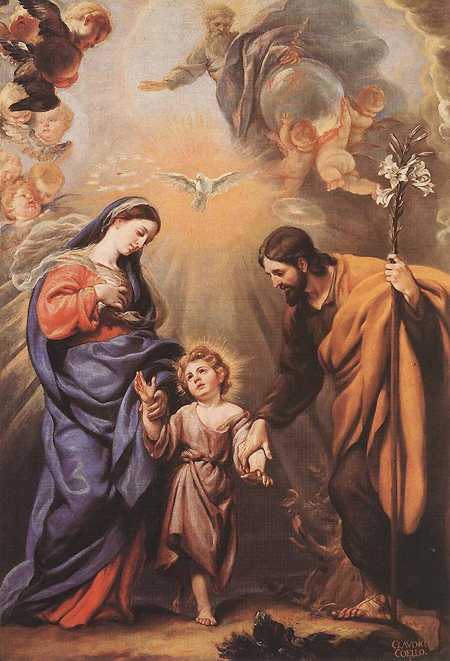
Claudio Coello: Holy Family

Lord God, you revealed yourself as a child. As Mary wondered how God could use her in his mission in the world, so do we wonder how it is that you involve us in your mission. As Joseph’s plans were interrupted with an unexpected pregnancy, so will our own ambitions evolve and shift with the presence of a new life, a tiny life dependent entirely on my wife and me. As our child depends on us for life and sustenance, teach us to recognize more deeply how our sustenance is entirely dependent on you. As our child learns and grows and matures, grow us and teach us and bring us to greater spiritual maturity. Merciful God, just as the news of Jesus’s birth came to humble shepherds, so does the news of your kingdom continue to invite us–the marginalized, the weak–to behold the depth of your love and us. Humble us and shepherd us, that we might recognize how, in your kingdom, you use the weak to lead the strong. Give us grace to lead our child in your way, and in turn be led, through our child, to you.

5 Things I Pray for as a Soon-to-be-Dad.

rabbit family


My wife, Kaile [pronounced Kay-lah for those of you who do not know her], is in week 30 of our first pregnancy. Related to this, there are lots of new concepts and concerns that nothing but writing seems to remedy.

As you read this, you are likely judging me. It is ok! I expect that. I am not naïve enough to think all of these are going to work out just like I hope they will work out. But I do pray for these things. I do desire some iteration of each of these to be made real in my life.

Here they are:

5. Fun Times with Baby

Come on. Who doesn’t love babies? I look forward to having a little person to laugh with [eventually] or even at [more likely]. While our newborn baby thinks to him/herself “my caretakers are supremely ridiculous,” I will be having a great time making faces and cooing as our little one does the baby version of rolling one’s eyes, knowing how utterly silly we both are.

Hopefully all of us will be better off for it.

4. Stronger Connections with other Parents

As recent as this month, people have still mistaken me for a college, or even high school student. At 27, this has gotten old. Maybe it’s the hair. I should begin to comb it sometime. Point sustained. The reality is, I am married. We own a house and a couple cars. We travel. We chose, together, not to have a dog [aha! maybe that’s why it’s hard to imagine me as an adult?].

I look forward to having that connection with others who are currently raising or have already raised children. To experience a significant change in the life journey is to enter into the process of sense-making with others. We will soon be able to compare the narrative of family life with others who are doing the same thing. Eventually, Kaile and I will be able to say, “yeah, that’s great insight on how you disciplined your child,” even if that technique didn’t work for ours. We’ll be able to say to others, “yeah, little [insert name] did okay with potty-training, but junior high was pretty rough.” You get the gist; we will be able to relate in new ways with billions of people.

Oh-it will also be nice to get a little bit more respect about my age.

3. A New Process for Spiritual Formation

For 25 of these 27 years, I have done spiritual formation as a single person. My journey as one of Jesus’s millions of disciples had been done in a certain single kind of way. That changed once when I got married, and will soon change yet again. Soon, I will need to recognize new ways of understanding the journey. This will likely consist of whispering prayers over our child as she/he sleeps. It will involve learning how to apologize to a 7-year-old. It will involve answering questions not as an absolute authority, but as someone who has experienced the hope of God.

It will also surely involve attempting to spiritualize diaper changes.

2. Stronger Bonds in My Marriage

Kaile and I know a new child will bring stress into our marriage. This, I think, is entirely unavoidable. However [go ahead-judge me!], there is also an opportunity to grow. Even writing the previous sentence fills me with wonder. How will Kaile and I learn to depend on one another? How will the challenge of rearing a child bring us toward a greater sense of purpose? How will we come to understand, in a new way, how God blesses the poor in spirit [Matthew 5:3]?

I imagine sitting next to Kaile on a park bench or, heaven forbid, airplane, trying to hush our screaming child. How can we weather that experience and learn to trust one another and receive one another’s input?

For the record, I do not know the answers to these questions. But I think they’re worth asking.

1. A Deeper Knowledge of God’s Love

I still remember a pastor in Chicago sharing a story about his three-day-old son. He reflected on how little the infant had done: “…my son hasn’t done anything! But that’s not why I love him! I love him because he exists!” He went on to make a joke about his son’s breastfeeding tendencies and how that was affecting his [cough cough] intimacy, a joke that he immediately regretted. Needless to say, it was a stressful week for him.

The point about his son stuck with me, though. God does not love us because we enter into the world and cause all kinds of transformation. Most of us are not bubbling fountains of kindness, and we wouldn’t hold a candle to the saints of old. But God didn’t love Mother Teresa or John Wesley or the new pope because of their good deeds. He created us out of love, and he keeps loving us because… well… he just does. He’s God.

I don’t know how my parenting abilities will play out when the rubber meets the road. But I do know that I’m committed. If our child grows up and becomes a promiscuous drug addict, I have to hope that God teaches Kaile and me more about his love, his unconditional, “it’s because I’m God” kind of love. Because we exist, he loves us. He’s God, and he just does that.

To hold a child-our own child-could drive this point home.

Hospitality: A Lesson in Christian Practice.

Night in Chicago

The above picture invites consideration of human relationships. We, the builders of massive cities, complicated technologies, and intricate transportation infrastructure, are still trying to understand our own interpersonal workings. We still struggle with our sometimes unquenchable pursuit of power. Whether we communicate with an iPhone 6 or through the mail, we still seek relational fulfillment and meaning. We desire to make some small difference in the world, no matter how many billions of people live in it.

Almost 20 years ago my dear friend’s family made the decision to leave a very oppressive, controlling community in the American northeast. Improperly calling themselves Christians, they functioned hierarchically under a dictatorial leader, building furniture and other wood products for income. As massive financial profits for the community leader became increasingly evident [he traveled in a Learjet], the desperate need to start afresh galvanized in the family. Because of the abuses of power, they felt forced to leave. In leaving, they left a toxic system, but carried with them a massive frustration with what they had understood to be Christianity. They also leaned into a life of scarcity, for their skills in woodworking did little for them outside the tiny community from which they had come.

After a move to a Midwest city, they struggled to find meaningful employment. Amidst the chaos, a small community church reached out, offering meals, job opportunities, childcare for the four young ones, relational support, and spiritual encouragement. They offered simple, honest, timely hospitality. Because of how God had offered them his overwhelming hospitality, this church had become willing to step in and offer hospitality to a poor, displaced family. It was not from guilt, but from an overflow of love.

I believe it was Shane Claiborne who said that our American problem is “not that we don’t care for the poor, but that we don’t know the poor.” I added the emphasis at the end because that is exactly the problem. It is distraction too that keeps us from acts of hospitality. Possessions, projects, and concern that we are in the right school district also keeps us insulated from the poor. We know how Jesus sent away a young man in Mark 10:21-22 because he had “many possessions,” but somehow we imagine distance from this waffling young man and ourselves. Jesus’s command to leave his possessions behind was a tall order; it was too difficult for this man, to be sure. It seems the command is often too difficult for us as well.

If we take an introspective look in our own lives, it is impossible for many of us not to relate to this fellow. Getting personal here is necessary; excuse my boldness. But honestly, how many poor people do I know? How many do you know? This is a reality check, because we live in a culture that has segregated itself de facto based on income and political affiliation. I’ll leave it to you to read the studies, but most of American society is stratified across these lines. Consider who you live close to: how similar to you are they socioeconomically? Religiously? Ethnically? These factors keep us knowing the poor among us. We are often physically distant from the people who are in desperate need.

The goal here, as stated in the title, is finding ways to show Christian hospitality in a neighborhood. Often it is best to start simply. As a disclaimer, it is important for you to know that my wife and I am not very good at this. However, we are trying. It is also important for you to know that we happen to live in a lower income neighborhood [and we fit right in!]. Over the past year, Kaile and I have been getting to know our next-door neighbor, Rina. We have had lots of conversations, and she has been over for a meal. As our relationship has progressed, I have noticed that she is extremely busy with simply making ends meet. She has little time for taking care of her home. Recently, she received a notice from the City of Grand Rapids that she was required to paint her entire home within 3 weeks, lest fees accrue for “property mismanagement.” Lacking the time and money to hire painters, she has made efforts to complete the project. She will not make the deadline. I offered to get together a few people from my church during an evening chat outside her home. She accepted. Rina does not have a relationship with God. She is not living into her baptism, now many decades ago. I pray our church’s small act of service will plant another tiny seed within Rina, and that God would nurture that seed over the years to come.

Christian hospitality takes many forms. But I am not going to list the various forms it can take; that is something that you must discern within your own context. I desire to simply speak on the subject and to describe how God has worked in my life and in the lives of people around me. I really think the way of Jesus is a pathway to peace and forgiveness in neighborhoods, and that we who are called by Him are called to offer others the deep hospitality that God offers us.

Continuing the opening story will help connect some of the dots here. My friend is now in his mid-twenties. His parents divorced early in life, and both his parents and his siblings have rejected Christian faith in large part because of their negative formational experiences with a corrupt community masquerading as Christians. But my friend has given the church a chance. And amidst the church experiences, he has given Jesus a chance. During several years of living in a home that practiced prayer together, he was offered the hospitality of heart-friends who listened to him and invited him to participate in Christian hospitality. What was the catalyzing factor? It is not clear. Maybe it was meals together in the home with neighbors. Maybe it was afternoon conversations after work. Maybe it was the closeness that comes because of being around others who are practicing their faith actively, who are constantly searching for ways to offer the hospitality Jesus offers us. To be sure, the Holy Spirit is greatly at work when you, as John Wesley said, “do all the good you can, by all the means you can, in all the ways you can, in all the places you can, at all the times you can, to all the people you can, as long as ever you can.” Maybe this is the best definition of hospitality.

Prayers of the [Hurting] People.

start.

Merciful God,

Knowing us better than we know ourselves, you are fully aware of the difficulties we face because you face them with us. So fill us with gratefulness for your mercies that we, with broken spirits, may again turn our eyes toward you, our creator, sustainer, and redeemer. We pray through the interceder, Jesus, who experienced life in its fullness, and through the Holy Spirit, now working in our midst, for unique situations brought about by the complexities of life.

***

For those separated from loved ones by death or great distance, grant your comfort;

For those seeking meaningful employment, grant hope and opportunity;

For young couples desiring direction, grant vision;

For children who are hurting from life’s many systemic evils, grant strength;

For couples who feel they have lost each other over years of marriage, grant restoration;

For aged persons who feel others have abandoned them, grant encouragement;

For mothers and fathers who have lost their children literally or emotionally, grant your faith and healing;

For couples who have sought to conceive, grant patience;

For single persons who desire companionship and intimacy, grant companionship and love;

***

For all people, in every situation life brings, we pray that you, faithful Father, would care for their unique needs. Use your church, the body of Christ on earth, as your instrument; and, in your mercy and for your purposes, use me.

A June Breeze: Unexpected Revelation

The Homestead.

Father’s Day, 2014 was a beautiful Michigan day, humid yet breezy. The little zephyrs whispered through our Grand Rapids home as my wife, Kaile [pronounced Kay-lah] relaxed after morning worship. On the way back from church, we had decided to visit my parents in Big Rapids, just an hour’s drive north. As I write, they still live in my childhood home. As many midwestern tourists and cottage owners will attest, it is just south of Big Rapids that Michigan begins to feel northern. Around exit 131 on US 131 North, drivers crest a hill then traverse a long bridge spanning the Muskegon river. In June, they’re sure to see a fishing boat, far below the freeway overpass, trolling for walleye or trout, and if they happen to be looking up and ahead, they will see the Muskegon’s River’s verdant valley, its fields mostly dominated by stands of thick pine and aged hardwood. This section of lush river valley contains a few small villages-Hersey, Reed City, Rogers Heights-and a small town: Big Rapids.

This is the town that shaped me. This is the community that knew me during most of my earliest years. This is the town in which I sometimes struggled but ultimately began to understand what it meant to follow someone named Jesus. To get to my parents’ place, you pretty much take the first right as you head into town, then take the next left. Their road is at the top of a hill overlooking a golf course. They’re out of town limits slightly, but if one were to walk to the end of their cul-de-sac road, they would see most of the town stretching out to their northeast.

It was always a quiet street.

We knew all the neighbors, some better than others. The Bayless family, wealthy from Amway dollars, lived around the corner in a mansion that always seemed to get bigger. I told all my friend how I once helped weed their garden, and how they let me use their bathroom. They went to our church, but I was usually scared to talk to them. The Murreks, a calm family with mideast ancestry, were down to the right. Just to the south were the Browns, an elderly couple originally from Indiana. Mike Brown would always keep us around as kids by telling stories about years past. When we got lucky, he would tell us about his WWII missions he led. We were transported to another place time as he recounted trips flying back to the American base in England in his injured B-24 bomber. Then there were the Petersens, another elderly couple. Mr. Petersen always took walks in the neighborhood. One time he told my brothers, Phil and John, and me, a riddle. It involved a pirate ship, a monkey, and a peanut. We tried and tried, but to this day have not grasped its dubious meaning. The Powlowski family lived to the north. Jack Powlowski used to shoot moles and gophers with his .22 rifle, which somehow made the boyish version of me both sad and jealous. Jack’s son moved in a little later in my adolescence, and we took care of his little boys, Dennis [who had a very cute form of Alopecia] and his slightly-older brother CJ, a few times. Even as toddlers, they terrorized the neighborhood in the best way possible. One time they hid in the ditch with pinecones, and when my junior-high girlfriends’ dad, Mr. Monfils, drove by, they pelted his van severely. I think he was mad about it. They were, at the most, 4 and 5. Mrs. Harlemm lived to the north on the other side of the street. She took great pride in her yard. I know this because I made the mistake of riding my bike through her yard. I wish I could say this only happened once. I still remember tearing through on my blue BMX cruiser, looking back to see her waving a broom and yelling, “I’ll sick the cops on you!!!” Right across the street lived the Harrises. Nick always played with my brothers and me in the yard. That is, of course, until he got into high school, at which point he became a bit too cool for apple wars in the back yard. We watched reruns of The A-Team with his younger brother, Mitch, in their basement and rode skateboards. One time their tiny dachshund, Scooter, chased me on my bike. I had the ingenious idea of stopping really fast and letting him run past me. The brakes on my 10-speed were far more effective than I had expected, and the neighborhood, initially coming out to their porches because of the loud barking, bore witness to my youthful body cascading over the handlebars and slamming into the dusty ground by the road. Somehow, the most interesting of memories can be stirred up by a gentle summer breeze.

Snap back to Father’s Day, 2014.

After a relaxing Sunday evening of intense political discussion and spiritual questioning, Kaile and I finally could not continue. After a decent rest, we got up [I’m embarrassed to admit it was 10:20am]. Wiping the sleep from our eyes, we said good morning to Greg and Ann, the original homesteaders on this small estate: my parents, Mom and Dad. I was left with the task of making French toast, but the difficulty of this morning task was mitigated by a small beany gift: steamy espresso from my mom’s machine. We all sipped, then after some morning chatter, settled into Sudoku and a crossword puzzle. My Dad read the Wall Street Journal, seemingly one of the more culturally acceptable Murdock-owned news venues. My poor mother had an uncomfortable doctor’s appointment in Grand Rapids that Monday, so they had to take off in the early afternoon. Though we had time for a few still moments and a walk at Hemlock Park, it still felt as if they were rushed. Either way, we would connect down the road. We said our goodbyes, hugs and all, though I do not recall my mother’s newfound cheek-kiss tradition that time around.

Kaile and I had decided to stay for an extra couple hours that afternoon, promising to close the garage door. Kaile had an hour-long phone meeting for her at-home job. I had just a couple small tasks: digging up some ivy and mint to transplant, picking some lettuce, and gathering a cutting from a vine that I hoped to propagate. After my parents drove off and Kaile had begun a pre-meeting nap, I paused before my imminent tasks to take a quick picture of the house. I wanted to make an Instagram post. I had found just the right angle.

Just then, I felt a breeze from days gone by.

It was a breeze that, at once, both sobered and softened me.

It was a warm June breeze that carried with it the smell of sun-warmed fields and garden soil, of wildflowers and sun-dried leaves.

It was a warm June breeze that helped usher in a snapshot of my formative years.

It was a warm breeze that helped me understand so much, yet nothing new at all.

Feeling my cheeks, I realized suddenly that it was not my mild allergies that caused the tears. I wept as the memories flooded in, assisted by abundant recollections of the events that had transpired on this hallowed ground. My humble parents, the gently-aging stewards of this homestead, were gone, and in their absence I was left to soak in the strangeness of becoming reacquainted with a place I had left years ago, though it never left me. Looking down to the pine needles in front of me, it was the string of old bulb-style Christmas lights that my Dad never took the time to cut out of the old spruce tree when we first moved in. There they were, still lying on the same brown needles. Glancing over my shoulder, it was the 1/3 acre garden my parents had faithfully cultivated every year since we came to Big Rapids in 1991. Taking the time to peruse the garden, I realized not much had changed. The perennials, chamomile, asparagus, and rhubarb were in the same spots. I think my parents still pick those little miniature daisies and dry them in the hot shed on bake sheets to make winter tea. I think we still have a family picture somewhere of my younger brother, Phil, dressed only slightly immodestly in large rumpled rhubarb leaves tied on with jute at age 5 or 6. My Dad thought it was a good idea to take a picture on the back deck. I’m glad he did. My walk continued, and I looked through my emotionally-manufactured mist at the rock wall we build over about a decade. When it began my Dad said we would wrap it around the house and to the front yard. By the time I was a teenager, it finally did, just like he said. I remember taking orders from my older brother, John, wearing a crisp, new Civil War hat after a family trip to Pennsylvania. We had begged in the gift shop, and Mom finally granted our request. With sticks as sabers, we fought back the Confederate forces and made heroic stands from behind the rock wall we had helped to build [and would, sometimes begrudgingly, continue building for many more years].

And the trees. The glorious trees.

My Mom loves open spaces. Meadows and sweeping fields delight her. My Dad seems to love fields too. He had decided with my Mom to buy about 100 acres of mostly open land in 2 parcels outside Big Rapids when I was in 6th grade. But he seems to love trees just a little more than fields. They’re both happy when they go on evening walks at their 80-acre plot Northwest of town since it has both fields and open places, even though he has planted countless thousands of Maple, Oak, and Pine trees. As flowers appear and disappear seasonally, trees seem to announce the years like little else. The poplars we planted in our yard when I was little are reaching for the skies. Some of them grew too fast and they had to go. But pretty much all the pines are still there. The pines to the south of the house help form a natural barrier to strong winds. Our old neighbors to the south, the Murrays, never seemed to like them. I’m not sure what the new neighbors think about them, but it does not seem to be a point of concern; they have been far too busy with demolition of the Browns’ old place and construction of their new 5000 square foot place, complete with an in-home gymnasium. A dear friend of mine reminded me the other day of a quote from some Eastern-European poet: “trees are the ribs of childhood.” That guy was on to something.

And the people.

My parents always showed hospitality. Influenced by Hebrew Scriptures and New Testament parables speaking of the need for God’s people to care for the stranger, they always showed care to people around them. This showed up in the many exchange students they hosted over the years, young people from Mexico, Japan, Hong Kong, Spain, Guatemala. It showed up too in their resolve to support other families they knew from church, missionaries with whom they are still in touch. They empowered me, too, for these ends. During the summers before and after my senior year at Spring Arbor University, I remember hosting a junior high Bible study at their place. As it grew from a few lads in June to the point where we could no longer find enough outdoor chairs, so grew the number of cookies my Mom baked on those warm Wednesday evenings.

And the conversations.

I cannot say when it was that my Dad could finally articulate that God is real and present and stable and loving. For me, this realization happened when I was 13, and it was confirmed in our church community at my baptism in the warm waters of the Muskegon River by the Lossings’ place. My Mom grew up in the Free Methodist Church and knew the hymns all by heart. I think her passionate spirituality combined with the profound faith of my Dad’s grandparents were the primary tools of the Holy Spirit as he slowly came alive. Either way, that faith has seeped in over years of time. As I passed the garden shed, the one where he keeps the tractor, I remember my Dad telling me how it, “takes a stronger man to walk away from a fight.” I had gotten into some mildly serious trouble at school and spent a couple days suspended for a series of fights on the grounds. Those words were to shape me more than I ever could have known at the time. Another time, we were working on the garden outside on a Friday. Clearly I was unaware of which Friday it was when he asked if there was anything special about the day. Clueless, I told him I could not crack the code. “Jesus died right about at this time, about two thousand years ago,” he finally responded. It was his way of helping me to see eternal things in the transience of the mundane. I had not even realized it was Good Friday. And Mom; she would drop us off at school, even in early high school before I started driving the old red Ford pickup, and say, “remember who you belong to.” I remembered sometimes then, but even a bit more now as I head toward 30. When I was really little, she introduced me to the Psalms, poetry that bespeaks the transforming consistency of God. Plenty of afternoons kept me sprawled out on the floor of my room, glued to the carpet, sifting through, making sense of these ancient Hebrew texts. My Dad and Mom both still share stories of things long since passed over by time and history, some new and some revisited. They have stories of quiet wisdom from their families and friends and experiences, stories of renewal, stories that help remind us of our small but significant humanity in light of eternal hope in God. Their stories still come piecemeal to my brothers and me and our wives when we linger and listen. When they eventually pass, we hope we will have strained out as many stories as they will have had the audacity to recall.

And my brothers. John is just 18 months older than me, but always wiser. At one point my Dad summed up John in brief: “John marches to the beat of his own drum,” he quipped at dinner one day after John had gone off to college. And it is true; John does things his own way, which is nearly always either the most economical, the most efficient, or the most unique way; and this way was nearly always unimaginable to me. I remember when he set up our first home computer, an old beige Tandy. It was probably 1994. Phil, at the age of 6, looked on, never too interested in that big loud box but okay with the games this newfangled machine offered when it was working. Phil is 21 months younger than me. Both he and John are color blind, and he has finally accepted that I can, in fact, help him pick out clothes for special occasions. When John painted a royal purple ocean for his science project in junior high, Phil never quite could figure out why everyone giggled and fussed over it. Phil is as driven as John, though, but has always kept his gifts and talents a little out of sight. He is incredibly gifted with language, and probably translating, patiently, for a little diabetic Guatemalan couple at Mercy hospital today. He, like both John and my Dad, understands more than he shares [I share, sometimes, even the things I do not understand!]. For a time, Phil tested the fibers of his faith during a season of searching and exploration. It may have been a bike trip he and I did in Spain on the Camino de Santiago–the way of St. James–that helped him slowly recover the depth of commitment to the way of Jesus of Nazareth that we all now see in his life. John is pretty good too at hiding his good deeds; though he wisely hides a lot from the watching world, he cannot hide his patience, his thoughtfulness, his meekness.

Somehow, the most interesting of memories can be stirred up by a gentle summer breeze.

Snap back to Father’s Day, 2014.

The overwhelming realization of the breadth and depth of God’s love is so often made apparent in the overwhelming realization of a family’s love. I did not choose to have two delightful parents who care so deeply for me. Those decisions were made before I made decisions. I did not opt for brothers who would encourage and challenge and support and love me over the length of my life. But I now opt to return the favor. I did not choose to send a warm June breeze on Father’s Day. But I now opt to write about it.

It was that warm June breeze that helped me to revisit so many experiences. Though I did not learn anything new per se, newness of sight was given to me. This profound change of perspective only happens a few times in a lifetime, maybe even only a few times in the worlds’ lifetime, like John’s Gospel in the Bible’s New Testament. I am that blind man who, for the first time ever, saw for himself what was already there. I am that blind man who, trying to make sense of what had happened, simply responded to frustrated religious leaders, “One thing I do know. I was blind, but now I see.”

Missing My Wife: A Prayer for the Dearest Person I Have

Image

Photo credit for the oil painting, “Embrace,” goes to Josie Trudgeon. Her other works can be found at her website. Many thanks to her for offering images that speak beyond written ideas. 

*******

This is a prayer for people who are missing someone dear to them. It came to me during the first night [ever] spent away from my dearest wife, Kaile [pronounced Kay-lah]. 

Gracious God, I ask that you, in your mercy, would reveal to my eyes new dimensions of the depth of your love for me as I, waiting for her return, learn new dimensions of my love for my dear wife. Help us to grow through our time apart, and teach us through our separateness that you are the one and only constant factor in a life of transience and change. May the love we learn to show to each other mirror the love you have for us, and also teach us to love you more. God, it is through our intercessor Jesus that we pray this, and all through the power of the Holy Spirit. Amen.

A Prayer for Anxiety

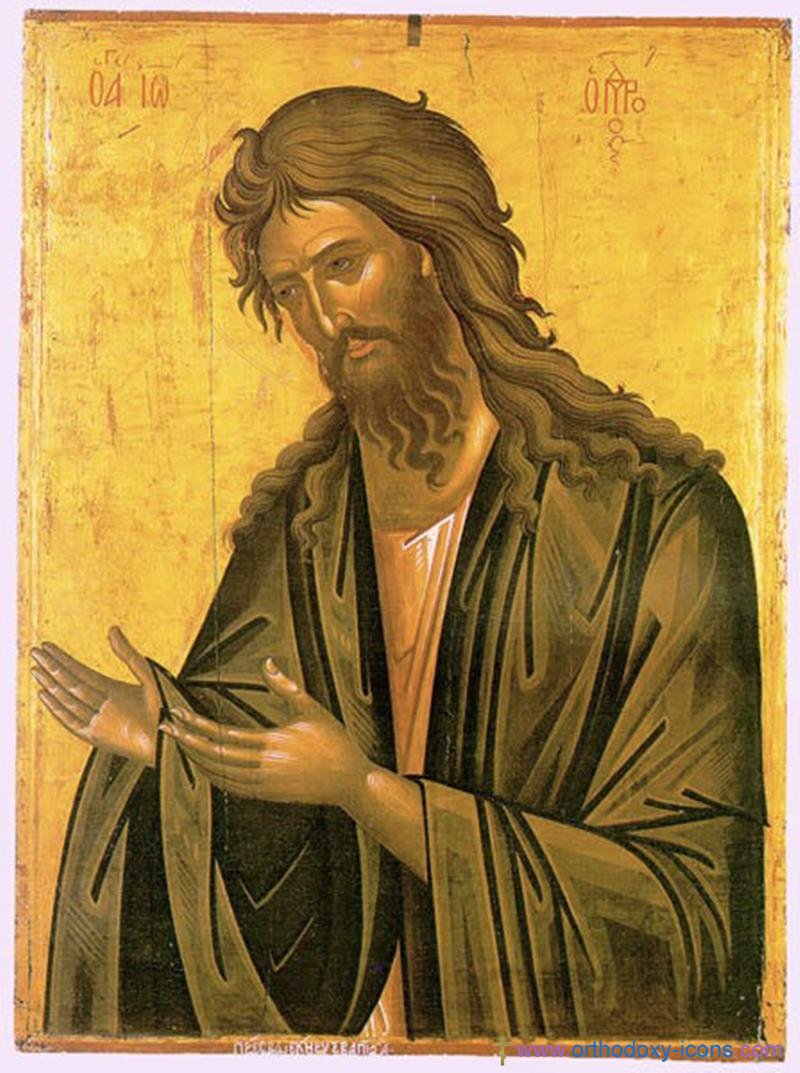
St. John the Baptist

This is a prayer for today, June 2nd 2014.


Or, it is a prayer for any day during which concern gives way to worry.

Or, it is a prayer for a community going through change.

Or, it is a prayer for a family experiencing something new and different together.

Or, it may reflect the response to difficult realities that saints of old faced down before their death or exile.

Or, it may speak to something you are going through currently.

*******


Giver of Life,

Mercifully grant that we, your undeserving inheritors, may steward your gifts well. So imbue us with gratefulness for your love that our anxiety gives way to blissful contentment, our fear to godly anticipation, and our worry to graceful hope; for your sake we ask this through the Son and in the power of the Holy Spirit.

Amen.

A Problem of Our Own Making: Exclusion Through the Centuries

Humanity has always been characterized by a toxic proclivity to exclude. Certainly it is nation versus nation; the ravages of war and genocide blare from the streets and alleys and televisions and radios of the globe. Exclusion in capitalist countries materializes as a war between economic classes. Within families and small communities, exclusion damages or destroys interpersonal relationships.

And we live in light of a host of others who witnessed exclusion before we did. The people of Israel experienced it when they sought refuge in Egypt from the famine that was destroying their land [Gen. 46-47]. In time, Joseph died and the Egyptians turned their Hebrew refugee neighbors into slaves [Exodus 1:8-14]. Later, God would bring them out through his servant Moses, but God taught them a lesson during those difficult years in an oppressive foreign land. In Leviticus 19, Moses outlines laws that tenderly protected impoverished families and sojourners, insisting in verses 9-10 that farmers leave the edges of their fields unharvested so that poor passers-by could gather the excess grain. Next, Moses connects these love-your-neighbor commands explicitly to the experience of, first, xenophobia, then slavery in Egypt: “When a stranger sojourns with you in your land, you shall not do him wrong. You shall treat the stranger who sojourns with you as the native among you, and you shall love him as yourself, for you were strangers in the land of Egypt: I am the Lord your God” [Lev. 19:33-34].

Though they had experienced exclusion, God’s people were not to treat others vengefully. Rather, God taught them to treat foreigners with dignity, and even to give up resources on their behalf. They were to love strangers as themselves. God’s answer to exclusion was not self-preservation; it was hospitality. And though this word may conjure up images of sweet tea on a front porch, hospitality reaches much further. It impacts how we understand our time and resources, beckoning us to understand the stranger in a new way.

Even though we no longer live in an agrarian society, and few of us have literal fields to leave only partially harvested, the practice of hospitality continues. In Matthew 25:31-46, Jesus tells the parable often referred to as the sheep and the goats. The sheep are affirmed for having offered their hospitality- their food, their resources, their time; they sought every opportunity to extend compassion. And yet, they wondered when they had done this for the king in particular. The King, who is Jesus, responds and tells them that every time they extended compassion to “the least of these” they were doing it unto him. What followers of Jesus are shocked to discover is that he himself is the recipient of our hospitality. What we do for the “least of these” is done unto Jesus himself.   

But in the age of the suburb, American culture stratifies people groups via income. In Grand Rapids, Michigan, where I live, certain streets delineate between classes. And institutions, including so many churches, fortify the social stratification process by keeping people from similar demographics packed together. So how exactly can we offer hospitality to the needy and the lost? It may start with something as drastic as an intentional geographic move to a poorer neighborhood. But it may begin with something simpler, such as a dinner invitation to an exchange student, single mom, or busy family. Hospitality can take many forms.

I lived with a group of guys for several years before getting married in 2013. As Christians, we wanted to do our best to practice Christian hospitality. Through God’s grace and his challenge in our lives, we felt led to host a weekly hospitality meal in our home. The six of us would share costs, and one of us would invite a few folks over. They were always invited to stay for prayer after the meal, and many did. We hosted families, couples, people in need, people with much to offer. At each meal, God blessed our conversation. We asked questions and listened, attentive to how God was working through the lives of these dear people. Throughout, we discovered how each meal mirrored, in ever so subtle ways, the hope of God’s people. With every meal, there was sacrifice and sharing; there was honesty and trust; there was hope and imagination. With every meal, we continued an ancient story of people practicing lavish hospitality. God has already provided resources abundant; we simply respond to his quiet call to open our hearts. And just as he opens his heart to us, so do we open our hearts to the hurting and hopeless around us. And we do so knowing that as we serve, we serve our risen Savior, Jesus Christ.        

The Problem with Inviting Jesus into Your Heart

DSC_0120

Ask most Americans what it means to be a Christian, or even what the Gospel of Jesus is, and they will likely respond with a phrase to the effect of, “Jesus died on the cross for your sins so you can go to heaven.” The problem is simple: people are sinful. The solution is simple as well: ask Jesus to forgive you. The effect is said to be remarkable. Jesus decides, after your prayer, not to send you to hell.

Could eternal salvation be so simple? Certainly the details of faith are slightly more complicated than this. However, this prayer can be a starting point. Indeed, many powerful people of God have begun in such a fashion; they prayed a simple I-need-you-Jesus prayer, then followed him.

The difficulty arises when ministry centers entirely on attempting to get people to make decisions to follow Jesus. This may sound counterintuitive, but I have witnessed this very strategy. Most recently, I was present at a winter retreat for junior high students. The retreat was held at a small Christian camp in West Michigan. A couple times per day, we rounded up the tweens for an hour of formation. Essentially, the message was that everyone needs to escape the fires of hell via the I-need-Jesus prayer. The aging yet passionate camp director vividly described the death of Jesus at every gathering. The problem was that this is as far as they got. They touched on the resurrection of Jesus just once. There was nothing about the great cost of discipleship. There was nothing about the kingdom of God [a subject Jesus seemed to emphasize – see the synoptic Gospels]. There was nothing about sanctification, the long Christian word for how God slowly transforms people from the inside out. No, everything was about escaping hell. After all, people could die at any time. And it is scary to imagine what it would be like to die as a rebel from God.

Salvation is absolutely an important message. And it is a lot easier to talk about salvation than discipleship. But maybe the problem lies in the difficulty of letting go of old habits. Everyone, it seems, has heard about the sinner’s prayer. But have they heard about God’s kingdom? Have they heard about the Holy Spirit that was sent at Pentecost to comfort, empower, and guide the church? Have they imagined what the world might be like if the church was truly a forgiving, restoring, loving, generous, honest community?

Sadly, the message of salvation seems to have sanctioned off the work of Jesus to the next world. It is only when we die that we reap the benefits of salvation, the story goes. But this does not appear to be the case for members of the early church. For them, following the risen Christ meant radical life-change. In Acts 2:45 Luke records what following Jesus meant for the earliest believers: “And they were selling their possessions and belongings and distributing the proceeds to all, as any had need.” They also ate together, prayed together, and worshiped God. They had a common life together. I doubt if there was a guy telling everyone to accept Jesus into their heart at these meetings. All they knew was that a change should be made.

To be clear, I do believe our relationship with God is personal. I John 3:1a speaks of this: “See what kind of love the Father has given to us, that we should be called children of God; and so we are.” Saint Paul tells us in Ephesians 1:5 about how God has literally adopted us: “[in love] he predestined us for adoption as sons [it should go without saying that women are part of this in an equal manner] through Jesus Christ, according to the purpose of his will…” And since God is personal, we can follow relationally. The late Robert E. Webber said this: “When someone asks me the question, “Do you have a personal relationship with God?” I always answer, “You’re asking the wrong question. What is important here is not that I in and of myself achieve or create a personal relationship with God, but that God has a personal relationship with me through Jesus Christ, which I affirm and nourish.”[1]

I also believe that belief is important. John’s Gospel brings this into crystal clear perspective. But James tells us the result of life in Jesus: real change. He does not equivocate: “…faith by itself, if it does not have works, is dead [2:17].” Jesus is interested in eternity. But eternity began millennia ago, and time races forward whilst unnamed people are dying without hearing about Jesus. Famines wrack the planet even as human casualties mount from wars and genocide. Christians, I believe, should cease worrying about how God will judge those who have never heard his name, and embody a faith that the world will find peculiar.

Pope Francis is helping to animate this kind of faith. Washing the feet of imprisoned Muslims was certainly an act of humility and love, an act that forces one to ask, “why would he ever do that?” I am not advocating that followers of Jesus cease sharing their faith. I am only suggesting that their sharing should point toward God’s kingdom reality. Individual lives are transformed, as is the church as a corporeal unit.

See, the problem with inviting Jesus into your heart is that he stays there. He stays, instigating change, reminding you of your calling, listening to your cries for hope, helping you to grow deep roots of life changing faith, and spurring you on toward love and good deeds.


[1]Robert E. Webber, The Divine Embrace: Recovering the Passionate Spiritual Life
(Grand Rapids, MI: Baker Books, 2006), 89.