Prayers of the [Hurting] People.

start.

Merciful God,

Knowing us better than we know ourselves, you are fully aware of the difficulties we face because you face them with us. So fill us with gratefulness for your mercies that we, with broken spirits, may again turn our eyes toward you, our creator, sustainer, and redeemer. We pray through the interceder, Jesus, who experienced life in its fullness, and through the Holy Spirit, now working in our midst, for unique situations brought about by the complexities of life.

***

For those separated from loved ones by death or great distance, grant your comfort;

For those seeking meaningful employment, grant hope and opportunity;

For young couples desiring direction, grant vision;

For children who are hurting from life’s many systemic evils, grant strength;

For couples who feel they have lost each other over years of marriage, grant restoration;

For aged persons who feel others have abandoned them, grant encouragement;

For mothers and fathers who have lost their children literally or emotionally, grant your faith and healing;

For couples who have sought to conceive, grant patience;

For single persons who desire companionship and intimacy, grant companionship and love;

***

For all people, in every situation life brings, we pray that you, faithful Father, would care for their unique needs. Use your church, the body of Christ on earth, as your instrument; and, in your mercy and for your purposes, use me.

Missing My Wife: A Prayer for the Dearest Person I Have

Image

Photo credit for the oil painting, “Embrace,” goes to Josie Trudgeon. Her other works can be found at her website. Many thanks to her for offering images that speak beyond written ideas. 

*******

This is a prayer for people who are missing someone dear to them. It came to me during the first night [ever] spent away from my dearest wife, Kaile [pronounced Kay-lah]. 

Gracious God, I ask that you, in your mercy, would reveal to my eyes new dimensions of the depth of your love for me as I, waiting for her return, learn new dimensions of my love for my dear wife. Help us to grow through our time apart, and teach us through our separateness that you are the one and only constant factor in a life of transience and change. May the love we learn to show to each other mirror the love you have for us, and also teach us to love you more. God, it is through our intercessor Jesus that we pray this, and all through the power of the Holy Spirit. Amen.

A Prayer for Anxiety

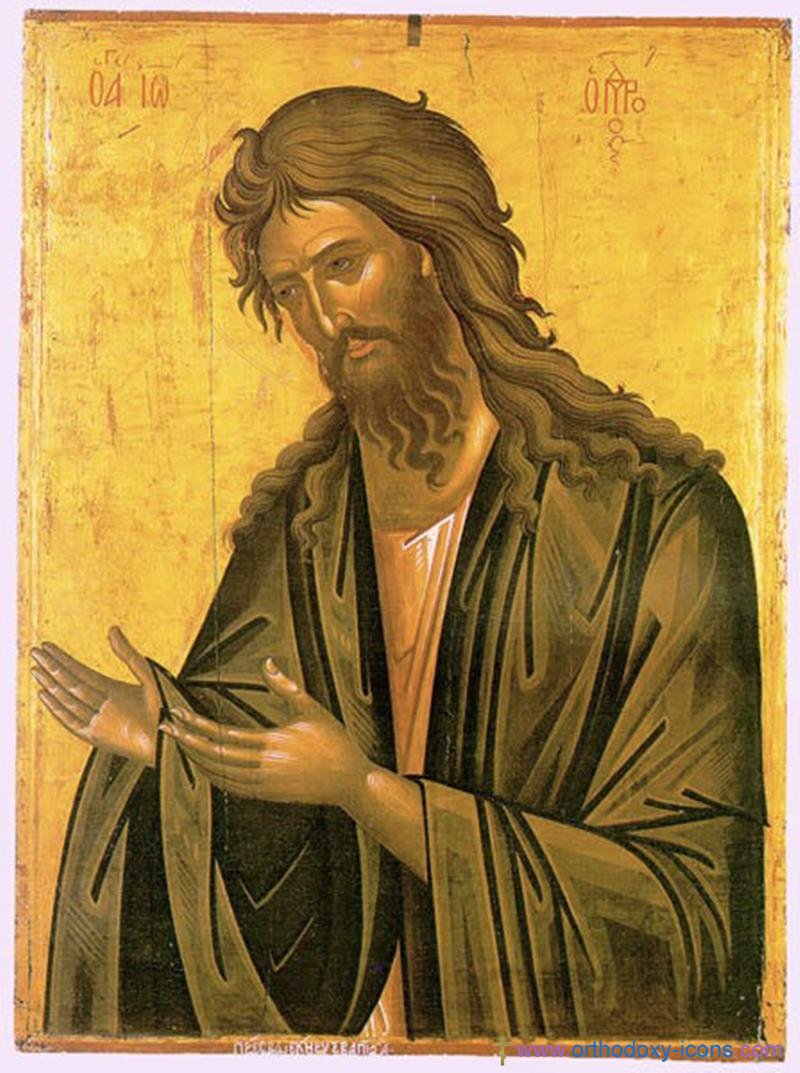
St. John the Baptist

This is a prayer for today, June 2nd 2014.


Or, it is a prayer for any day during which concern gives way to worry.

Or, it is a prayer for a community going through change.

Or, it is a prayer for a family experiencing something new and different together.

Or, it may reflect the response to difficult realities that saints of old faced down before their death or exile.

Or, it may speak to something you are going through currently.

*******


Giver of Life,

Mercifully grant that we, your undeserving inheritors, may steward your gifts well. So imbue us with gratefulness for your love that our anxiety gives way to blissful contentment, our fear to godly anticipation, and our worry to graceful hope; for your sake we ask this through the Son and in the power of the Holy Spirit.

Amen.

The Problem with Inviting Jesus into Your Heart

DSC_0120

Ask most Americans what it means to be a Christian, or even what the Gospel of Jesus is, and they will likely respond with a phrase to the effect of, “Jesus died on the cross for your sins so you can go to heaven.” The problem is simple: people are sinful. The solution is simple as well: ask Jesus to forgive you. The effect is said to be remarkable. Jesus decides, after your prayer, not to send you to hell.

Could eternal salvation be so simple? Certainly the details of faith are slightly more complicated than this. However, this prayer can be a starting point. Indeed, many powerful people of God have begun in such a fashion; they prayed a simple I-need-you-Jesus prayer, then followed him.

The difficulty arises when ministry centers entirely on attempting to get people to make decisions to follow Jesus. This may sound counterintuitive, but I have witnessed this very strategy. Most recently, I was present at a winter retreat for junior high students. The retreat was held at a small Christian camp in West Michigan. A couple times per day, we rounded up the tweens for an hour of formation. Essentially, the message was that everyone needs to escape the fires of hell via the I-need-Jesus prayer. The aging yet passionate camp director vividly described the death of Jesus at every gathering. The problem was that this is as far as they got. They touched on the resurrection of Jesus just once. There was nothing about the great cost of discipleship. There was nothing about the kingdom of God [a subject Jesus seemed to emphasize – see the synoptic Gospels]. There was nothing about sanctification, the long Christian word for how God slowly transforms people from the inside out. No, everything was about escaping hell. After all, people could die at any time. And it is scary to imagine what it would be like to die as a rebel from God.

Salvation is absolutely an important message. And it is a lot easier to talk about salvation than discipleship. But maybe the problem lies in the difficulty of letting go of old habits. Everyone, it seems, has heard about the sinner’s prayer. But have they heard about God’s kingdom? Have they heard about the Holy Spirit that was sent at Pentecost to comfort, empower, and guide the church? Have they imagined what the world might be like if the church was truly a forgiving, restoring, loving, generous, honest community?

Sadly, the message of salvation seems to have sanctioned off the work of Jesus to the next world. It is only when we die that we reap the benefits of salvation, the story goes. But this does not appear to be the case for members of the early church. For them, following the risen Christ meant radical life-change. In Acts 2:45 Luke records what following Jesus meant for the earliest believers: “And they were selling their possessions and belongings and distributing the proceeds to all, as any had need.” They also ate together, prayed together, and worshiped God. They had a common life together. I doubt if there was a guy telling everyone to accept Jesus into their heart at these meetings. All they knew was that a change should be made.

To be clear, I do believe our relationship with God is personal. I John 3:1a speaks of this: “See what kind of love the Father has given to us, that we should be called children of God; and so we are.” Saint Paul tells us in Ephesians 1:5 about how God has literally adopted us: “[in love] he predestined us for adoption as sons [it should go without saying that women are part of this in an equal manner] through Jesus Christ, according to the purpose of his will…” And since God is personal, we can follow relationally. The late Robert E. Webber said this: “When someone asks me the question, “Do you have a personal relationship with God?” I always answer, “You’re asking the wrong question. What is important here is not that I in and of myself achieve or create a personal relationship with God, but that God has a personal relationship with me through Jesus Christ, which I affirm and nourish.”[1]

I also believe that belief is important. John’s Gospel brings this into crystal clear perspective. But James tells us the result of life in Jesus: real change. He does not equivocate: “…faith by itself, if it does not have works, is dead [2:17].” Jesus is interested in eternity. But eternity began millennia ago, and time races forward whilst unnamed people are dying without hearing about Jesus. Famines wrack the planet even as human casualties mount from wars and genocide. Christians, I believe, should cease worrying about how God will judge those who have never heard his name, and embody a faith that the world will find peculiar.

Pope Francis is helping to animate this kind of faith. Washing the feet of imprisoned Muslims was certainly an act of humility and love, an act that forces one to ask, “why would he ever do that?” I am not advocating that followers of Jesus cease sharing their faith. I am only suggesting that their sharing should point toward God’s kingdom reality. Individual lives are transformed, as is the church as a corporeal unit.

See, the problem with inviting Jesus into your heart is that he stays there. He stays, instigating change, reminding you of your calling, listening to your cries for hope, helping you to grow deep roots of life changing faith, and spurring you on toward love and good deeds.


[1]Robert E. Webber, The Divine Embrace: Recovering the Passionate Spiritual Life
(Grand Rapids, MI: Baker Books, 2006), 89.

An Open Letter to Grace Episcopal Church

IMG_0574

It was a sunny April afternoon four years ago that I received an email from Steve Argue with “youth ministry opportunity” in the subject line. At that point I was finishing my senior year at Spring Arbor University, and I had the written goal of serving in a historic urban or suburban church that was effectively rooted in its community. God was faithful in granting the desire in my heart; as I read the email I could not restrain my excitement, even though I had little assurance that anything real would come from this succinct email. However, events were lining up. Already I had been considering seminary here in Grand Rapids, and now I was presented with what was, at the time, at least a strong possibility. After an interview with Father Holmgren and Tina at Rose’s on Reeds Lake, it seemed even more possible. There was a genuine need for someone with experience working with young people, and I deeply desired to offer my gifts to a community seeking to follow the way of Jesus. Plus, I was interviewing alongside a good friend.

Before I knew it, I was headed to HoneyRock Camp in northern Wisconsin in a big van, seated next to Father Holmgren, wondering what the adventure would be like. Needless to say, that first trip was enjoyable. Exploring God’s creation on a kayak alongside fellow journeyers is a recipe for joy. Indeed, this trip was relational treasure. But the journey at Grace has been beyond my capacity to describe.

As one reflects on a four-year season in life, there is an abundance of material from which to pull. Though it’s tough to know where to begin, there are some unarguably hilarious moments – like every single one of Matt Olgren’s announcements – but powerful moments too. I remember my first Harvest Dinner Basket Auction in 2009. Dale Grogan won the [expensive!] bid on Steve Sweetland’s Michigan beer basket – and gave it to John and me. What a warm welcome to the community – it communicated, at once, both trust and generosity. I also remember leading trips to Mel Trotter with our students. We sorted clothing, serving in their massive warehouse. Sheila, one of the workers there, told her story of transformation. Through the power of God manifest in the support of her companions at Mel Trotter, she had forsaken a life of prostitution and brokenness. I remember when Jack Lennon taught us all a new word in Discipleship Formation: “retrograde.” It describes planetary movement, but also related directly to our lesson from the Gospel of Luke. I just can’t remember how right now. This spectrum of hilarious to heart-wrenching is emblematic of the dynamic that I have witnessed at Grace over these years.

My work at Grace has been most closely tied, of course, to ministry with a younger demographic. Gatherings with students have taken various forms: Sunday evening worship and teaching, morning formation, Saturday projects, Thursday evening hangouts at Schulers. Throughout, students have offered their insight, patience, honesty, presence, and trust. It is not easy, much of the time, to know exactly how to communicate the reality of God into the lives of young people. But they have listened, questioned, considered, and embodied so much of the Gospel of Jesus. I remember the time in the stairwell when Colin Grogan told me he was convinced God existed and that he had assurance God was working within his life. I remember sitting at a coffee shop, listening to Emily Batdorf consider the confluence of faith and science and pondering how God has arranged our universe. I know in my heart and from their testimony that many of our students are journeying faithfully with God. I remember quiet conversations, outlandish controversies, and plenty of squirminess during our two-week series on sexuality in early 2012. It has been a quite a time.

Working with the staff at Grace has also been life changing. Tina’s honesty and consistency has helped me grow. Her challenges have worked alongside encouraging feedback. Thanks to her, I understand what a calendar is. Just kidding. Seriously though, she is a blessing to me and to all of us. Father Holmgren has been supportive and gracious at every turn. He has carefully coached me in leadership, communication, pastoral care, and thoroughly enriched my comprehension of church history. Through his example, my insight has been expanded, and my spirituality has been deeply formed. And it is the kind of formation that will remain with me, even though I am sensing that God is gently drawing me out of the Episcopal tradition. God has worked greatly through this pioneer in faith, and I will be forever changed – and forever grateful. John Hamersma and Mary Baas have been such faithful servants, also. I remember making my way to the back of our crowded nave in April of 2013 for the oratorio they coordinated with Grace’s choir and Calvin’s Alumni choir. As we welcomed in brothers and sisters from the Reformed tradition, it reinforced how God had been present in our uniquely Anglican hymnody. Tears ran down my face as I attempted to join in singing “I am the Bread of Life” and “Lift High the Cross.” These songs, through the power of the Holy Spirit and the stewardship of faithful musicians, have soaked into my soul over these four years. I am indelibly changed.

During my time at Grace, our community has been warmly blessed as we have welcomed many new families and individuals. Many of these have been younger families and students. I had the privilege of serving God alongside Kyle Bos for an extended season that came to a necessary end when he left for seminary in 2012. I remember the Easter Vigil – Kyle does too. He was sick for a week after he stayed up all night. But we served, we sang, and we grew spiritually in the relational greenhouse of our church community. Kyle pioneered hospitality afternoons that have continued in his absence. God has been present as we have come together in homes after Sunday worship. Indeed, we have a blessed spiritual family.

Indeed, there is a host of memories. It is not possible to contain them in a letter, however long. And, as always, the Grace community is left the important question of what is to come in the future. According to Revelation 21 and 22, the Scripture I had the privilege of expounding on May 5th, we have an even more exciting hope ahead. What we have to anticipate – eternity with God in a transformed world – this hope shapes our participation in the present. We must continue to foster an attentiveness to how God is leading us to love others and show compassion. We must continue offering hope to the poor and broken. We must continue to advocate for freedom from addiction, confronting the powers that be. My prayers are with each of you as the seasons come and go. And because of the hope that lies ahead, may we continue to love and serve both God and people with faithfulness and singleness of heart, through Christ our Lord. Amen.


Jesus Receives our Hospitality?

Woodcut by Rick Beerhorst

Living near Easttown in SouthEast Grand Rapids, it is nearly impossible to navigate the sidewalks without occasionally seeing Rick Beerhorst, the bespectacled artist who created the image above. It is an image that immediately evokes a sense of togetherness. Truly, the open table is a place where love abounds; both love to the familiar and love to the stranger can be manifest over food and drink. A dear friend gifted this print to my current home. It hangs on a wall still, and it prompted a reflection.

Recently, my fiance and I won the bid on a home that is for sale as a short sale. This is a simple word for a complicated concept, but suffice it to say it is likely that we will be able to move on the deal after 2-4 months. Then, after we are married and move in, we will have a place to establish a place of hospitality in a new and just-married fashion. As we approach the day, there are countless concerns and worries alongside the abounding joys and triumphs. Last night we talked about financial concerns and vocational questions. We also talked about the support and affirmation we consistently receive. Above the din, a clear concern for offering hospitality rises again and again to the surface in our conversations.

All of that aside, we, as Christians, are reminded once again presently of the most subversive event of history: the Resurrection. Indeed, Lent 2013 is over and we now rejoice in the Easter reality, the triumph of Jesus over sin and death. Interestingly, however, it just so happens that in Matthew’s Gospel, right before the narrative about the plot to kill Jesus in chapter 26, Jesus tells a story about the future. It’s the familiar story in chapter 25:31-46 about the sheep and the goats. At the end of our current age, Jesus will return, making all things right and all things good. Amidst the joy, however, there is also accountability.

Put simply, sheep did the right thing. The goats didn’t. And the consequences are significant to say the least. Here is the twofold element of what is so shocking in this story: the sheep were surprised that they were being commended while the goats were equally surprised that they had missed the mark.

The sheep had so integrated habits of hospitality and compassion that they were shocked to realize their actions were “unto me” [me being Jesus]. The goats had so insufficiently established similar habits that they were equally shocked. I can just imagine a contemporary parallel for the goats’ response: “Jesus, remember the time I cut a check to the church in 2006? I’ve even done that a couple times since!” The sheep, the ones who had been faithful stewards, are commended. They probably didn’t even remember the moments Jesus brought to light – times they faithfully gave of themselves and their resources, their time and their talent, their all. But they were rewarded greatly for this.

Hospitality matters to Jesus. Matthew records this story right before the account of Jesus’s suffering on the road to the cross. It is unfortunate that the word “hospitality” often brings to mind a lazy afternoon in Alabama on a wrap-around front porch complete with straw chairs and sweet tea. This is certainly a fine example. But it does not stop there. Hospitality can take on a very rough edge. It can demand much of us. The “least of these” often do not smell or sound particularly nice. And that’s just the beginning.

What is important to note amidst the triumph of Easter is the radical nature of discipleship in the footsteps of Jesus. We rejoice as we serve others because we are freed from being only concerned with ourselves. Jesus himself – God – was concerned for the needs of the created world. As we follow in his footsteps, we too should live lives centered not on what we gain from others, but in how we give to others – and ultimately, to Jesus himself, who somehow, according to Matthew 25, actually receives hospitality from those he created. In this we rejoice greatly.


The Four Calls of a Pastor

What the heck do pastors do?

Sermons, right? That’s what they do. They sit around and think of sermons all day. Well, that is certainly a part of pastoral work, but there is more. In John Stott’s influential book on preaching, Between Two Worlds, he references Samuel Voldeba, who lectured at Calvin Theological Seminary here in Grand Rapids, MI. They were published after his death under the title, “The Pastoral Genius of Preaching.” They contain a simple yet wise explanation of the role of the pastor:

1. Feeding

Pastors are to give nourishment to spiritually hungry people, people who are suffering from a lack of direction, a questioning of identity, a concern about eternity.

2. Guiding

Pastors point the way toward the mission of God seen most clearly in the life, ministry, death, and resurrection of Jesus Christ, the Son. This is the implementation of the Kingdom of God – the tangible presence of God through the Spirit, given at Pentecost.

3. Guarding

Pastors are to name the powers that be: myths of scarcity and meaninglessness, untruths regarding money and fame as the hallmarks of success, sexuality as power over others. Pastors name evil and seek to steer faithful people away from attractive yet insidious ends.

4. Healing

Pastors attend to the many wounds people suffer in the maelstrom of human existence. People do terrible things to one another, and pastors help introduce and re-introduce the reality of God’s healing work for all people.

20130304-162643.jpg

a new perspective on Paul [and Jesus]

I had heard of this small group of trouble makers. As one of the seventy-one members of the ruling council here in Jerusalem, I hear about all the rabble. They had centered their ideologies around a man named Jesus, formerly a very pure, selfless Jewish man from the north of Israel. I still remember all the rumors my friends told me. I think he died something like two or three years ago. Though I had been out of town for several weeks during the the week of his death, I heard all the news; news of miracles, healings, and a significant amount of blasphemy. Evidently Jesus was quite a figure, claiming to be the Son of G-d.

I knew about everything through members of the court and friends. The incarceration, the trial, the torture, the crucifixion, the burial. Jesus even managed to maintain some kind of following even after his death. Supposedly he was raised by G-d from the dead. Everything seemed to make sense except that. I never even considered believing what the Pharisees preach about the resurrection of the Messiah.

Either way, I’ve definitely seen some zealous uprisings in my day; I’ve even partnered with the other side of the Sanhedrin council, the Pharisees, to stop some of them. I mean, good grief, the Sicarii literally assassinated other Jews in the night. Not that Jesus was anything like that rabble. These hearings would often culminate with fairly strong disciplinary action; it isn’t uncommon to put these troublemakers to death. After all, it is a great risk to the future of our culture.

Though I missed out on some of the gossip about Jesus’ death years back, it just so happened that I was around when some of Jesus’ most influential followers were brought in to the court. I think Peter and John were their names. I remember Peter saying some fairly inflammatory things; his views on Jesus were significantly different than mine. And yet, I could not find it in my heart to fully discredit him, or John for that matter. They were fairly uneducated men, but regardless they did perform a healing near the temple. I am still wondering about that. I know the guy they healed.

Fast forward. There I was at the temple, sitting in on a hearing for one of the Jesus-following leaders, Stephen. Near the end of his defense speech, he began speaking directly against me and my council members. He didn’t even specify Pharisee or Sadducee, he just launched in. I remember something about “stiff-necked,” something about “bullheaded,” something about the apparent failures of my ancestors. I remember looking over at a couple friends as Stephen continued. We became enraged, losing control of our emotions in those moments. The next thing I knew, two of my closest friends, Eliot and Jomar, got up and forcefully ordered our council guards to grab Stephen and take him away. Everyone knew Stephen had this coming.

We all got up and followed them to a little valley outside the city. By this point some other townspeople and leaders that weren’t a part of the Sanhedrin had joined our party. They were shouting insults as we scuttled through the dusty streets. I remember resonating with these shouts. My heart beat as one with them. On the way down I had a brief conversation with my friend Saul. Though we were on different sides of the political equation, we connected personally. I related to his position on eliminating the power and influence of the Jesus-following sect.

Angry Jews gather around Saint Stephen with stones.

Previously he had walked into the back of the court just as all the yelling had started. “Can you believe these people?” I recall him whispering. I responded in full agreement. We had maintained a brief conversation on our way out of the city, and I had grabbed a couple stones. As we arrived to the circle, Stephen was standing, but seconds later someone placed a strong kick in the center of his back and he fell forward. He was already bleeding from his mouth at this point. But somehow he looked at peaceful. Then the rocks came. In the next few moments, I remember so vividly the expression on Stephen’s face. I also remember looking over at my friends, Eliot, Jomar, and Saul. The look on Stephen’s face was one of peace. My friends, on the other hand, certainly did not seem to be at peace; in fact, they seemed so utterly twisted with rage that I could barely recognize them as friends. I guess I didn’t feel at peace either for that matter. The look on my friends’ faces and the look on Stephen’s face contrasted; they contrasted each other disturbingly.

I remember I was just about to land a stone to Stephen’s temple when something stopped me. I simply could not throw it. I knew this guy had done something wrong. And yet, I couldn’t muster the fortitude to hurl the stone. It slipped out of my hand, my hood slipped over my head, and I slipped out of the crowd. That was a week ago. I just don’t know what to think. Everything I have ever believed in leads me toward skepticism, yet.. yet this experience has caused me to doubt everything. What did Stephen believe?Recently there have been several more executions. I am honestly feeling caught in the middle of all of this. Saul is really pushing this agenda, and as much as I used to agree with him, I have parted ways more and more in his thinking on these matters. I should probably let you go, I’ve talked your ear off. Also, I need to go to the court. Oh.. Why? Yea, well.. This is my letter of resignation. I’ve got some thinking to do and I’ve had some really interesting conversations with a newer friend, James, who was apparently related to Jesus. I want to hear what he has to say about Stephen, and maybe even Jesus for that matter.

Matthew 2:13-15; Acts 3-8